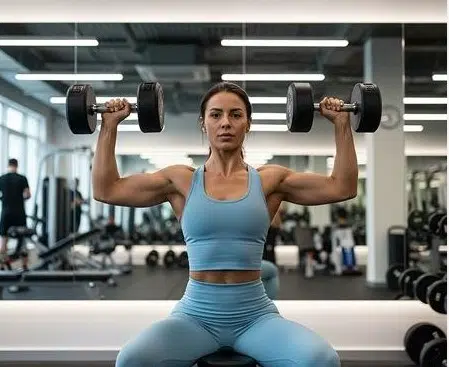
12 Best Gym Shoulder Exercises || with Dumbbells and Free Weights for Beginners
12 Best Gym Shoulder Exercises || with Dumbbells and Free Weights for Beginners
Strong shoulders play an important role in upper-body strength, posture, and everyday movement. Whether you are starting your fitness journey or improving your existing gym routine, training your shoulders with dumbbells and free weights helps develop balanced shoulder muscles and improve overall upper-body performance.
The best gym workout shoulder exercises do not require complicated equipment or advanced training experience. Simple movements such as dumbbell shoulder presses, lateral raises, front raises, and reverse flyes provide an effective starting point for beginners.
Your shoulder muscles include three main sections: the anterior deltoid at the front, the lateral deltoid at the side, and the posterior deltoid at the rear. Each section contributes to different arm movements. Training all three areas, helps develop balanced shoulder strength.
This guide covers 12 effective shoulder exercises using dumbbells and free weights, along with beginner workout tips, proper technique, and common mistakes to avoid.
Why Should Beginners Train Their Shoulders?
Shoulder training supports upper-body development and helps improve your ability to perform everyday activities. Your shoulders are involved in lifting, pushing, reaching, and carrying objects.
Regular resistance training offers several benefits:
- Improved upper-body strength: Shoulder exercises strengthen the muscles involved in pressing and lifting movements.
- Balanced muscle development: Training all three deltoid sections supports more complete shoulder development.
- Better movement control: Controlled resistance exercises help improve coordination and stability.
- Stronger workout performance: Well-trained shoulders support chest, back, and arm exercises.
- Improved physical confidence: Consistent strength training helps beginners build confidence in the gym.
Beginners should focus on proper exercise technique before increasing weight. A controlled movement with a lighter dumbbell is more useful than lifting a heavy weight with poor form.

12 Best Gym Shoulder Exercises with Dumbbells and Free Weights
The following exercises target different parts of your shoulders. Start with manageable weights and perform each movement slowly.
1. Dumbbell Shoulder Press
The dumbbell shoulder press is one of the most effective compound movements for developing shoulder strength. It primarily targets the front and side deltoids while engaging the triceps.
How to perform it:
- Sit on a bench with back support and hold a dumbbell in each hand.
- Position the dumbbells near shoulder level with your palms facing forward.
- Keep your feet firmly on the floor and your back supported.
- Press both dumbbells upward until your arms are nearly straight.
- Slowly lower the weights to the starting position.
Beginner recommendation: Perform 2 to 3 sets of 8 to 12 repetitions.
Avoid arching your lower back or using momentum to push the weights upward.
2. Dumbbell Lateral Raises
Dumbbell lateral raises target the lateral deltoids, which contribute to the width and rounded appearance of your shoulders.
How to perform it:
- Stand upright with a dumbbell in each hand.
- Keep your arms beside your body and your elbows slightly bent.
- Raise both arms outward until they reach approximately shoulder height.
- Pause briefly at the top.
- Lower the dumbbells slowly.
Beginner recommendation: Perform 2 to 3 sets of 10 to 15 repetitions.
Choose light-weights because this movement requires control. Avoid swinging your body or lifting your arms too high.
3. Dumbbell Front Raises
Front raises focus on the anterior deltoids. They are useful for beginners who want to strengthen the front portion of their shoulders.
How to perform it:
- Stand straight with a dumbbell in each hand.
- Hold the weights in front of your thighs.
- Keep a slight bend in your elbows.
- Lift one or both arms forward until they reach shoulder height.
- Lower the weights gradually.
Beginner recommendation: Perform 2 sets of 10 to 12 repetitions.
Keep your torso stable throughout the movement. Avoid leaning backward to lift heavier weights.
4. Bent-Over Dumbbell Reverse Flyes
Reverse flyes focus on the rear deltoids, which are often overlooked in beginner workout routines. They also involve muscles around the upper back.
How to perform it:
- Hold a dumbbell in each hand.
- Bend forward at your hips while keeping your back neutral.
- Allow your arms to hang beneath your shoulders.
- Raise both arms outward with slightly bent elbows.
- Squeeze your shoulder blades gently and lower the weights slowly.
Beginner recommendation: Perform 2 to 3 sets of 10 to 12 repetitions.
Use light dumbbells and avoid rounding your back.
5. Arnold Dumbbell Press
The Arnold press is a variation of the traditional shoulder press. It involves rotating your hands as you press the dumbbells upward.
How to perform it:
- Sit upright with a dumbbell in each hand.
- Begin with your palms facing toward your body.
- Hold the dumbbells in front of your shoulders.
- Press the weights upward while gradually rotating your palms forward.
- Reverse the movement as you lower the dumbbells.
Beginner recommendation: Perform 2 sets of 8 to 10 repetitions.
Start with light weights and learn the rotation before increasing resistance.
6. Single-Arm Dumbbell Shoulder Press
This exercise trains one shoulder at a time. It also challenges your core muscles to maintain a stable position.
How to perform it:
- Stand or sit with one dumbbell near shoulder height.
- Keep your abdomen engaged and your torso upright.
- Press the dumbbell overhead.
- Lower it slowly to the starting position.
- Complete your repetitions before switching arms.
Beginner recommendation: Perform 2 sets of 8 to 10 repetitions per arm.
Avoid leaning sideways or rotating your body during the press.
7. Dumbbell Shrugs
Dumbbell shrugs primarily target the upper trapezius muscles. These muscles sit around your upper back and neck and contribute to shoulder-girdle strength.
How to perform it:
- Stand upright with dumbbells beside your thighs.
- Keep your arms straight and your shoulders relaxed.
- Lift your shoulders upward toward your ears.
- Pause briefly at the top.
- Lower your shoulders slowly.
Beginner recommendation: Perform 2 to 3 sets of 12 repetitions.
Do not roll your shoulders in circles. Use a straight upward and downward movement.

8. Seated Dumbbell Lateral Raises
Seated lateral raises provide another way to train the side deltoids. Sitting helps limit unnecessary body movement and encourages controlled repetitions.
How to perform it:
- Sit on a bench with your feet flat on the floor.
- Hold light dumbbells beside your body.
- Keep your elbows slightly bent.
- Raise your arms outward to shoulder height.
- Lower the dumbbells slowly.
Beginner recommendation: Perform 2 sets of 10 to 15 repetitions.
Avoid using heavy weights or swinging your arms.
9. Dumbbell Upright Row
The dumbbell upright row works the upper trapezius and shoulder muscles. However, this movement does not suit everyone, especially people who experience shoulder discomfort.
How to perform it:
- Stand upright with a dumbbell in each hand.
- Hold the weights in front of your thighs.
- Keep your hands relatively close to your body.
- Raise the dumbbells toward your lower chest with your elbows moving outward.
- Lower the weights under control.
Beginner recommendation: Perform 2 sets of 8 to 10 repetitions using a comfortable range of motion.
Stop if you experience shoulder pain. Choose lateral raises instead if upright rows feel uncomfortable.
10. Dumbbell Around the World
This movement involves guiding light dumbbells through a controlled arc around your upper body. It requires shoulder mobility and coordination.
How to perform it:
- Stand upright with very light dumbbells.
- Begin with your arms slightly in front of your thighs.
- Slowly move your arms outward and upward.
- Follow a comfortable range of motion without forcing your shoulders.
- Return to the starting position.
Beginner recommendation: Perform 1 to 2 sets of 8 repetitions.
Keep the weights light. This exercise is not suitable for forcing your shoulders through painful positions.
11. Dumbbell Rear Delt Row
The rear delt row helps strengthen the back portion of your shoulders while involving the upper-back muscles.
How to perform it:
- Hold a dumbbell in each hand.
- Hinge forward at your hips with a neutral back.
- Allow your arms to hang beneath your shoulders.
- Pull your elbows outward while bringing the dumbbells toward your upper torso.
- Lower the weights slowly.
Beginner recommendation: Perform 2 to 3 sets of 10 to 12 repetitions.
Keep your elbows away from your torso to emphasize the rear shoulders.
12. Dumbbell Farmer’s Carry
The farmer’s carry is a functional strength exercise involving your shoulders, grip, upper back, and core.
How to perform it:
- Pick up two dumbbells with a comfortable weight.
- Stand tall with your arms straight beside your body.
- Keep your shoulders relaxed and your abdomen engaged.
- Walk forward with controlled steps.
- Place the dumbbells down safely after completing the distance.
Beginner recommendation: Perform 2 rounds of 20 to 30 seconds.
Maintain an upright posture and avoid allowing the dumbbells to pull your shoulders forward.

Beginner Shoulder Workout Routine at the Gym
If you are new to strength training, you do not need to perform all 12 exercises in one session. A short routine with a few well-selected movements provides a practical starting point.
Here is a beginner-friendly dumbbell shoulder workout:
| Exercise | Sets | Repetitions |
| Dumbbell shoulder press | 2 | 10 |
| Dumbbell lateral raises | 2 | 12 |
| Bent-over reverse flyes | 2 | 12 |
| Dumbbell front raises | 2 | 10 |
| Dumbbell shrugs | 2 | 12 |
Start with light resistance and rest for approximately 60 to 90 seconds between sets. Train your shoulders around twice per week, with adequate recovery between sessions.
Adjust the routine according to your fitness level and recovery. Beginners should not feel pressured to increase weights every week.
Tips for Safe and Effective Shoulder Training
Good exercise technique is important when performing gym workout shoulder exercises. Your shoulders are involved in many upper-body movements, so poor training habits often lead to unnecessary discomfort.
Follow these practical tips:
1. Warm up before training: Spend 5 to 10 minutes on light cardio and gentle shoulder movements before lifting weights.
2. Choose manageable weights: Select dumbbells that allow you to complete each repetition with control.
3. Maintain proper posture: Keep your back neutral and avoid excessive movement through your lower back.
4. Control each repetition: Lift and lower weights smoothly instead of relying on momentum.
5. Train all shoulder sections: Include movements for the front, side, and rear deltoids.
6. Allow recovery time: Give your shoulders time to recover between demanding resistance-training sessions.
7. Stop when pain occurs: Muscle effort is normal, but sharp pain or persistent joint discomfort requires attention.
Common Shoulder Workout Mistakes Beginners Should Avoid
Some beginners make simple training mistakes that reduce exercise quality and increase unnecessary strain.
- Lifting excessive weight: Heavy dumbbells often lead to poor movement control.
- Ignoring rear deltoids: Focusing only on shoulder presses and front raises leaves the rear shoulders undertrained.
- Using momentum: Swinging your arms reduces control over the exercise.
- Skipping warm-ups: Starting heavy resistance exercises without preparation is a poor training habit.
- Training without recovery: Repeated demanding shoulder sessions leave insufficient time for recovery.
- Ignoring discomfort: Continuing an exercise despite shoulder pain is not a sensible training approach.
Focus on consistent technique and gradual progress rather than trying to lift heavier weights during every session.

Frequently Asked Questions
1. What are the best shoulder exercises for beginners at the gym?
Dumbbell shoulder presses, lateral raises, front raises, and reverse flyes are useful beginner exercises. They target different shoulder sections and require relatively simple movements.
2. How often should beginners train shoulders?
Most beginners benefit from training shoulders around twice per week, with recovery time between demanding sessions. Your schedule should also account for chest and back workouts, which involve the shoulder muscles.
3. Are dumbbells effective for shoulder development?
Yes. Dumbbells provide resistance for pressing, raising, and pulling movements. They also allow each arm to work independently, which helps you identify differences in strength between sides.
4. Which dumbbell weight should a beginner use?
Start with a weight that allows you to perform 8 to 15 controlled repetitions without losing proper technique. The appropriate weight differs between exercises and individuals.
5. Do shoulder exercises help improve posture?
Strengthening the rear deltoids and upper-back muscles supports balanced upper-body development. However, posture also depends on daily habits, mobility, and overall muscle strength.
6. Should beginners perform shoulder exercises every day?
No. Daily demanding shoulder workouts are unnecessary for most beginners. Allow adequate recovery and avoid repeatedly training sore muscles with heavy resistance.
Final Thoughts
Building stronger shoulders takes consistency, patience, and proper exercise technique. The 12 gym workout shoulder exercises in this guide provide beginners with different ways to train the front, side, and rear deltoids using dumbbells and free weights.
Start with basic movements such as dumbbell shoulder presses, lateral raises, and reverse flyes. As your technique improves, gradually introduce other exercises into your routine.
Remember that effective shoulder training does not depend on lifting the heaviest weights. Focus on controlled repetitions, balanced muscle development, and sufficient recovery. These habits support steady progress and help you build a sustainable gym workout routine.