The 8 Best Gym Exercises for Beginners | A Practical Guide to Starting Strong
The 8 Best Gym Exercises for Beginners | A Practical Guide to Starting Strong
Starting at the gym is one of the best decisions you can make for your health. However, let us be honest walking in for the first time can feel confusing. Where do you start? What should you actually be doing? The good news is that getting results does not require complicated routines or heavy weights right away.
Focusing on the best gym exercises for beginners gives you a solid foundation, reduces injury risk, and builds the kind of habit that actually sticks. This guide is written for anyone starting fresh whether you are a woman building confidence, a man trying to get stronger, or someone returning after a long break. You will get a clear picture of what to do, why it works, and how to structure your week.
Key Takeaways:
- Train 3 days per week with rest days in between.
- Focus on form before adding weight.
- Full-body workouts work better than splits for beginners.
- Recovery is when your muscles actually grow, don’t skip it.
Common Mistakes That Slow Progress
Even with a solid plan, beginners make avoidable errors. Here are the ones that matter most:
- Going too heavy too soon : Ego lifting leads to bad form and injury
- Skipping rest days : Muscles repair during rest, not during training
- No warm-up or cool-down : This is how strains happen
- Being inconsistent : One gym visit a week produces almost no results
- Comparing yourself to advanced lifters : They’ve been at this for years
Progress in the gym is nonlinear. Some weeks feel great, others feel flat. What matters is showing up consistently and adding a little more weight or one more rep over time. That is the whole formula.
Why Beginners Should Focus on Fundamental Movements
Before jumping into specific exercises, it is worth understanding the logic behind beginner training. Your body needs time to learn movement patterns before it can handle serious load. Compound movements exercises that use more than one muscle group at a time teach your nervous system to coordinate muscles together, which is exactly what builds functional strength.
Beginners who skip this foundation and go straight to isolation machines or heavy lifting often plateau quickly or get hurt. Starting with the right exercises means, you are investing in your body’s long-term performance, not just short-term gains. Think of it as learning to walk before you run.
Expert Tip: Research in strength training consistently shows that beginners make the fastest progress in their first 3–6 months. This is called “newbie gains,” and you will only capture those gains if you train consistently with good form.
The Non-Negotiable Warm-Up
One of the most skipped parts of any workout and one of the most important is the warm-up. A proper 5–10 minute warm-up increases blood flow to your muscles, raises your core temperature, and gets your joints ready to handle load. Think of it as prepping your engine before a drive.
A good beginner warm-up includes light cardio (a brisk walk or 5 minutes on the bike), dynamic stretches like leg swings and arm circles, and a few bodyweight reps of whatever you’re about to lift. Skipping this step is how most gym injuries happen, especially for people just starting out.
Quick Tip: Do not treat the warm-up as optional. Even 5 minutes of movement before lifting dramatically reduces your chance of pulling something.
The 8 Best Gym Exercises for Beginners
These eight exercises form the core of any solid beginner program. They cover every major muscle group, are safe when done correctly, and give you measurable results fast.
1. Squats — The Foundation of Lower Body Training
Muscles worked: Quads, hamstrings, glutes, calves, core
The squat is one of the most natural human movements — you do a version of it every time you sit down or stand up. That’s exactly why it’s one of the best gym exercises for beginners. It trains the biggest muscles in your body, burns a lot of calories, and builds the kind of strength that carries over into real life.
How to do it:
- Stand with feet slightly wider than hip-width apart
- Keep your chest up and spine neutral
- Lower until your thighs are roughly parallel to the floor
- Drive through your heels to return to standing
Start with bodyweight only until your form feels natural. Once you’re confident, progress to goblet squats using a light dumbbell, then eventually a barbell.
Quick Tip: If your heels lift off the floor during squats, try widening your stance slightly or elevating your heels on a small plate.
2. Push-Ups — Upper Body Strength Without a Machine
Muscles worked: Chest, shoulders, triceps, core
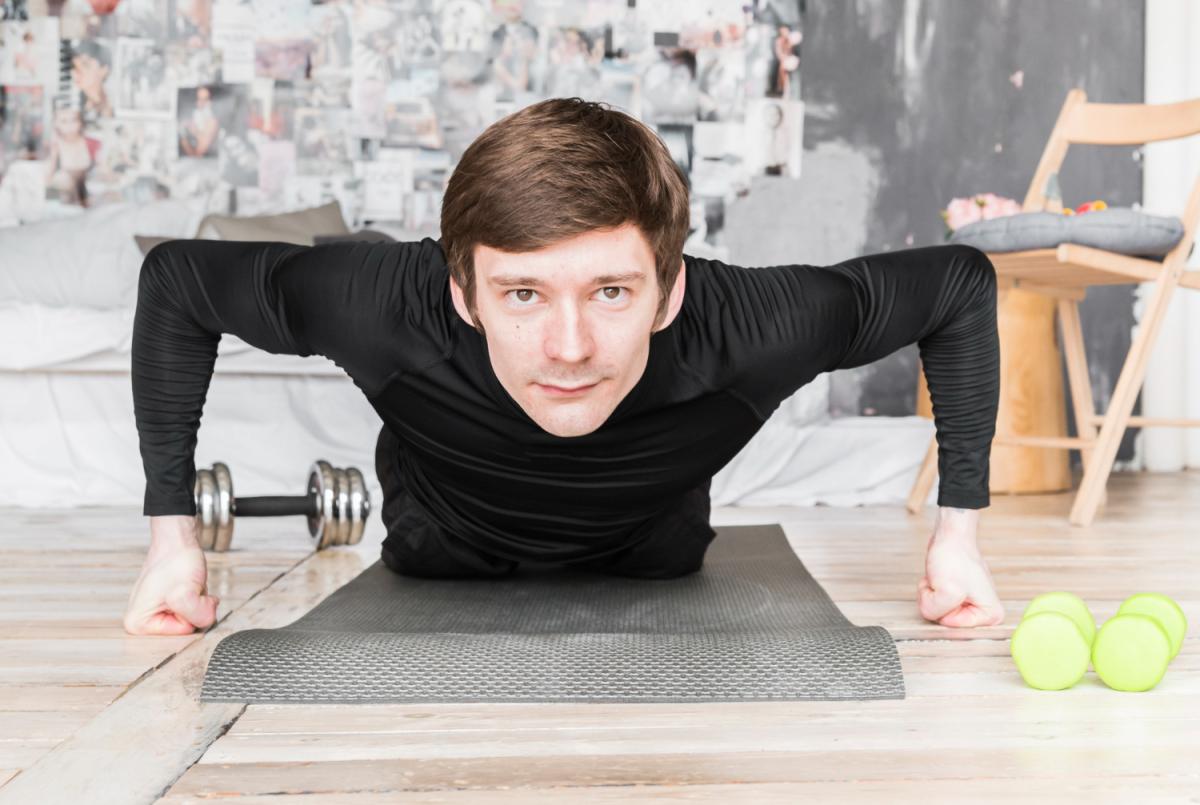
Push-ups get a bad reputation for being “too basic,” but they’re genuinely effective — especially when done with strict form. They build chest and shoulder strength, train your core to resist rotation, and require zero equipment. For beginners, they’re one of the safest upper body exercises you can do.
How to do it:
- Place hands just outside shoulder-width
- Keep your body in a straight line from head to heels
- Lower your chest to just above the floor
- Push back up with control
If the full push-up is too hard, start with hands elevated on a bench. That reduces the load and makes the movement more manageable while you build strength.
3. Dumbbell Bench Press — Chest Training Done Right
Muscles worked: Chest, front shoulders, triceps
The dumbbell bench press is a smarter starting point than the barbell version for most beginners. It allows each arm to move independently, which helps fix muscle imbalances early on. It’s also easier to get into position safely without needing a spotter.
How to do it:
- Lie flat on a bench with a dumbbell in each hand at chest height
- Press both weights up until arms are fully extended
- Lower slowly back to chest level, keeping elbows at roughly 45 degrees
Start light – lighter than you think you need. Getting the range of motion right matters more than the weight at this stage.
4. Deadlifts — Full-Body Strength in One Movement
Muscles worked: Glutes, hamstrings, lower back, core, forearms
The deadlift looks intimidating but it’s one of the most practical movements you can learn. It’s also one of the best gym exercises for beginners who want to build total-body strength quickly. Done correctly, it improves posture, strengthens the posterior chain, and translates directly to everyday activities like lifting bags or moving furniture.
How to do it:
- Stand with feet hip-width apart, barbell or dumbbells in front
- Hinge at the hips, keeping your back flat
- Grip the weight and brace your core
- Stand tall by extending hips and knees simultaneously
- Lower with control
Expert Tip: Start with a Romanian deadlift using light dumbbells before moving to a conventional barbell deadlift. It’s easier to maintain form and understand the hip hinge pattern.
5. Lat Pulldowns — Building a Strong Back
Muscles worked: Lats, biceps, rear shoulders
A lot of beginners skip back training because they can’t see it in the mirror. That’s a mistake. A strong back improves posture, protects your spine, and makes all your other lifts more stable. The lat pulldown machine is the perfect place to start because it lets you control the load precisely.
How to do it:
- Sit at the cable station and grip the bar wider than shoulder-width
- Pull the bar down toward your upper chest, squeezing your shoulder blades together
- Let the bar rise slowly with control
Never pull behind your neck — this puts unnecessary strain on your cervical spine. Always pull to the front.
6. Dumbbell Shoulder Press — Building Shoulder Strength Safely
Muscles worked: Shoulders, triceps, upper traps
Strong shoulders improve the way you look and function. The seated dumbbell press is safer for beginners than the barbell overhead press because it’s easier to control, doesn’t require a rack, and lets you work on each shoulder independently.
How to do it:
- Sit on an upright bench with dumbbells at shoulder height
- Press the weights overhead until arms are straight
- Lower slowly back to starting position, keeping core engaged
Keep your lower back from arching, if you notice your back lifting off the bench, the weight is too heavy.
7. Lunges — Single-Leg Strength and Balance
Muscles worked: Quads, hamstrings, glutes, calves
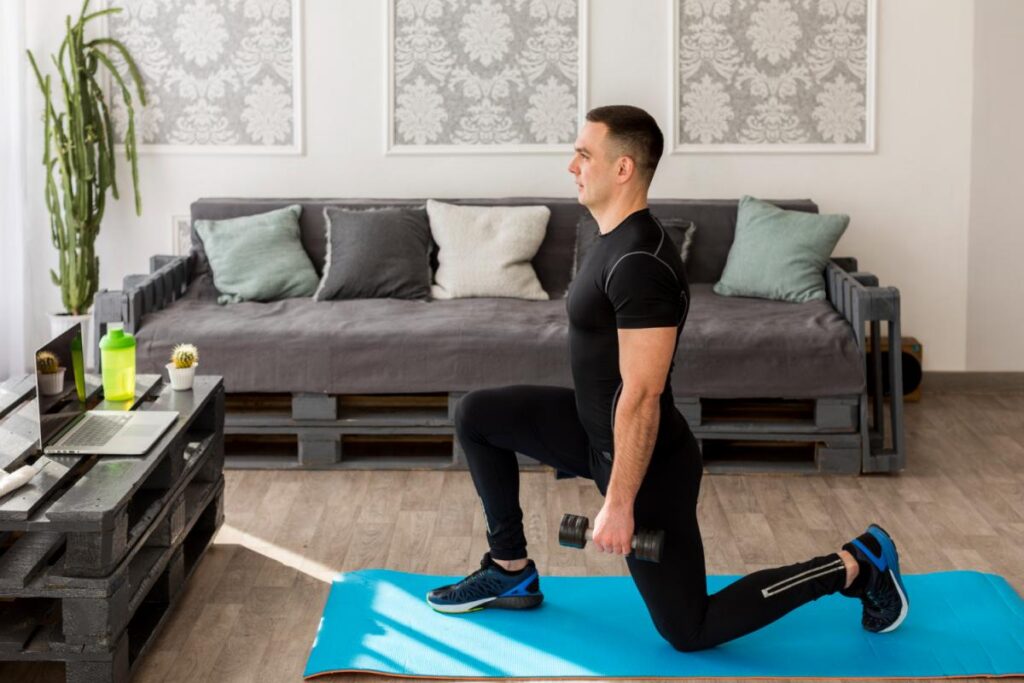
Lunges are worth doing because they train each leg individually, which catches strength imbalances early. They also improve balance and hip mobility, two things most people lack. Lunges are among the best gym exercises for beginners who want functional lower-body strength rather than just gym-mirror results.
How to do it:
- Step forward with one foot
- Lower your body until both knees are bent at roughly 90 degrees
- Push back to the starting position and repeat on the other leg
Start without weights, focus on keeping your front knee tracking over your toe, and add dumbbells only when the movement feels stable.
8. Plank — Core Stability That Actually Transfers
Muscles worked: Abs, obliques, lower back, glutes, shoulders
A strong core doesn’t come from sit-ups, it comes from exercises that teach your body to resist movement. The plank does exactly that. It builds the kind of core stability that supports every other lift you’ll do and reduces your risk of lower back pain.
How to do it:
- Start in a forearm plank position with elbows under shoulders
- Keep your body in a straight line, no sagging hips, no raised backside
- Hold and breathe steadily
Begin with 20–30 second holds and work up from there. Quality of position matters more than duration.
Beginner Workout Plan: How to Put It All Together
| Day | Focus | Exercises |
| Monday | Full Body | Squats, Push-Ups, Lat Pulldown, Plank |
| Tuesday | Rest or Light Walk | Active recovery |
| Wednesday | Full Body | Deadlifts, Dumbbell Bench Press, Lunges, Shoulder Press |
| Thursday | Rest | Full recovery |
| Friday | Full Body | All 8 exercises, lighter load |
| Saturday | Optional Cardio | 20–30 mins walking, cycling, or swimming |
| Sunday | Rest | Full rest |
This beginner gym workout weekly plan hits every major muscle group, gives you three full-body training days, and still includes enough recovery time to let your body adapt. You don’t need a gym workout plan for beginners male or female, this works for everyone. The movements are the same; adjust the weights based on your strength.
Free Beginner Gym Workout Plan for Females: What’s Different?
Nothing about the exercises above needs to change for women. The movements, rep ranges, and progressions are the same. What often differs is the starting weight and the personal goal, many women prioritize glutes, legs, and core, which means squats, lunges, deadlifts, and planks become especially valuable.
For a gym workout plan for beginners female, consider adding hip thrusts and cable kickbacks once the eight core exercises feel comfortable. These target the glutes directly and complement the compound movements well. A free gym workout plan for beginners female doesn’t need to be complicated — consistency with these fundamentals produces real, visible results.
Gym Workout for Beginners to Lose Belly Fat
Spot reduction the idea that you can burn fat from a specific area by exercising it is a myth. You cannot “lose belly fat” by doing 100 crunches. What actually works is building muscle through compound exercises (which raises your resting metabolism) combined with a calorie deficit through diet.
The best gym exercises for beginners already address this. Squats, deadlifts, and push-ups burn significant calories and build lean muscle across your whole body. Add 20–30 minutes of moderate cardio two or three times a week, and keep your nutrition consistent. That combination is what actually changes body composition over time.
Q&A: Common Questions From Beginners
Q: How many days a week should a beginner go to the gym?
A: Three days per week is the sweet spot. It gives you enough frequency to build momentum without burning out or overtraining.
Q: Should I do cardio and weights on the same day?
A: Yes, you can. Do your strength training first while you’re fresh, then finish with 15–20 minutes of cardio. This order preserves energy for the lifts that matter most.
Q: How long before I see results?
A: Most beginners notice strength improvements within 2–3 weeks and visible changes in 6–8 weeks, provided training and nutrition are consistent.
Q: Is the gym workout plan for beginners male different from female?
A: The exercises are identical. Men typically prioritize upper body volume, while women often focus more on lower body and glutes — but the foundational movements work the same for everyone.
Q: Can I follow this plan to lose belly fat?
A: Yes. These compound exercises burn calories and build muscle, which changes body composition over time. Combine training with a healthy diet for best results.
Building the Habit Is the Real Work
The best gym exercises for beginners aren’t a secret. Squats, deadlifts, push-ups, planks these movements have been around for decades because they work. What separates people who transform their health from those who give up after a month isn’t talent or genetics. It’s consistency.
Your first few weeks in the gym will feel awkward. The weights will feel light sometimes and embarrassingly heavy other times. That’s normal. Every person you see in the gym who looks like they know what they’re doing once stood exactly where you are now. Follow this plan, show up three times a week, focus on form, and let the progress build on itself. Six months from now, you will be the one who looks like they know what they’re doing.
Disclaimer:
Article by bestgymexercises.com for informational purposes only and fitness guidance for real people starting their gym journey.