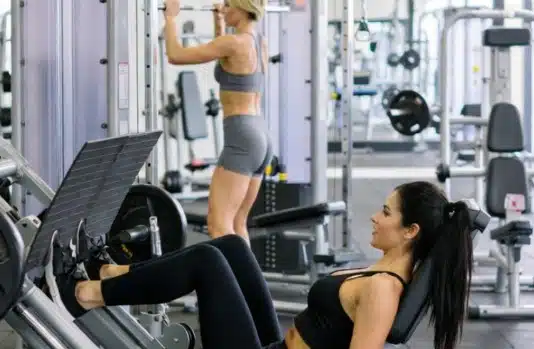
Gym Machine Workout Routines for Women | A Useful Guide for Strength | Fat Loss and Confidence
Gym Machine Workout Routines for Women | A Useful Guide for Strength | Fat Loss and Confidence
Walking into a gym for the first time, surrounded by rows of machines you have never touched, is genuinely intimidating. Most women standing in that moment do not need motivation. They need a clear plan. That is exactly where gym machine workout routines for women come in. Machines remove a lot of the guesswork. They guide your movement, keep your form controlled, and let you build strength without needing years of training experience. Whether your goal is fat loss, muscle tone, or simply feeling stronger in your body. In this guide you will get practical and no-fluff starting point.
Why Gym Machines Are a Smart Starting Point for Women
Free weights get a lot of attention online, but machines have real advantages, especially when you are new to resistance training. A machine locks you into a specific range of motion, which means you are less likely to recruit the wrong muscles or compromise your joints under load. For beginners, that kind of support matters.
There is also a confidence factor. Many women report feeling less self-conscious on machines compared to the free weight area of most gyms. You set your weight, sit down, and focus entirely on the movement. No one is watching for your form to break, and you are not holding a barbell overhead while figuring things out. That psychological ease is not small. It helps you show up consistently, and consistency is what produces real results over time.

How to Build a Gym Machine Workout Routine for Beginners Female
Start With the Right Machines
You do not need to use every piece of equipment in the gym. As a beginner, four to five machines cover everything you need. The leg press, chest press, lat pulldown, seated row, and glute bridge machine are your foundation. These target your largest muscle groups, which means more calories burned, faster strength gains, and a more functional body overall.
Stick with these for four to six weeks before adding anything new. Your nervous system needs repetition to learn movement patterns, and switching machines every session slows that process down significantly.
Set Your Weight and Reps Correctly
A good starting weight for a gym machine workout routine for beginners female is one where the last two reps of each set feel genuinely difficult, but your form stays clean throughout. For most exercises, that means three sets of 10 to 12 reps. If you finish a set and feel like you had five more reps in the tank, the weight is too light.
Avoid the temptation to load the machine based on what someone else is using. Choose your weight based on how your body responds, not on comparison. Progress comes from challenging yourself relative to your own baseline, not someone else’s.

Full Body Gym Machine Workout Routine (Beginner-Friendly)
A full body routine three times per week is one of the most efficient training structures for beginners. You work every major muscle group in each session, which means more frequent muscle stimulation and faster adaptation compared to splitting body parts across different days.
Here is a straightforward full body gym machine workout routine you follow:
| Muscle Group | Machine | Sets | Reps |
| Legs | Leg Press | 3 | 10-12 |
| Glutes | Glute Bridge Machine | 3 | 12 |
| Chest | Chest Press Machine | 3 | 10-12 |
| Back | Lat Pulldown | 3 | 10-12 |
| Shoulders | Shoulder Press Machine | 2 | 10 |
| Core | Ab Crunch Machine | 3 | 12-15 |
Keep rest periods between 60 and 90 seconds. Shorter rest periods keep your heart rate elevated and add a cardiovascular element to your session without needing extra time on a treadmill.

Machine Only Workout Program Full Body: Your Weekly Schedule
What a Realistic Week Looks Like
One of the most common mistakes women make when starting out is training too frequently without enough recovery. More sessions do not automatically mean better results. A machine only workout program full body, done three times per week with rest days in between, gives your muscles time to repair and grow stronger between sessions.
A practical weekly structure looks like this:
- Day 1: Full body workout
- Day 2: Rest or 20-30 minutes of light walking
- Day 3: Full body workout
- Day 4: Rest
- Day 5: Full body workout
- Day 6 and 7: Rest or active recovery
This structure works for most women regardless of their fitness level at the start. It is sustainable, which matters far more than intensity in the early weeks.

How Long Each Session Should Be
A focused 45-minute session is enough. You do not need to spend two hours in the gym to see results from a machine only workout program full body. What matters is effort level during those 45 minutes, not the total time you spend there. Get in, work through your exercises with intention, and leave. That habit, repeated three times per week, will produce visible changes within six to eight weeks for most people.
Gym Workout Plan for Beginners Female: Breaking Down Each Session
Day 1: Lower Body Focus
On lower body days, your primary machines are the leg press, leg curl, and glute bridge machine. These three exercises cover your quadriceps, hamstrings, and glutes, which are the largest and most metabolically active muscles in your body.
Move through each rep slowly. Two seconds on the way down, one second pause, two seconds on the way up. This tempo increases time under tension, which is one of the most reliable drivers of muscle growth and toning. Rushing through reps turns your workout into a momentum exercise rather than a strength exercise.
Day 2: Upper Body Focus
Upper body sessions built around the chest press, lat pulldown, and seated row do more than build visible muscle. They fix posture, strengthen the muscles around your shoulders and spine, and make everyday activities like lifting, carrying, and reaching significantly easier.
A gym workout plan for beginners female that includes these three exercises regularly produces noticeable postural changes within a few weeks. Women who sit at desks for long hours benefit from this especially, since lat pulldowns and seated rows directly counter the forward rounding that develops from prolonged sitting.
Day 3: Full Body Combination
Your third session of the week combines both upper and lower body work. This is not about adding more volume. It is about reinforcing the movement patterns you practiced on days one and two while keeping your training balanced across all muscle groups.
By the third session, your body is more adapted to the movements than it was on day one. You will likely find your form improving naturally, and you may feel ready to add a small amount of weight to certain machines. Track that progress. It is the clearest sign that the program is working.

Gym Machine Workout Routines for Women for Fat Loss and Toning
Why Strength Training Burns More Fat Than You Think
Many women approach the gym with cardio as their primary fat loss tool. Cardio burns calories during the session, but strength-focused gym machine workout routines for women produce a metabolic effect that extends well beyond the workout itself. Building muscle increases your resting metabolic rate, meaning your body burns more calories at rest, not just during exercise.
A combination of consistent machine training and a reasonable calorie deficit produces faster and more sustainable fat loss than cardio alone. Research published in the journal Obesity consistently shows that resistance training preserves lean muscle during a calorie deficit, whereas cardio-only approaches tend to result in muscle loss alongside fat loss.
Toning Versus Bulking: Setting the Record Straight
The fear of “getting bulky” prevents many women from lifting with any real intensity. The truth is straightforward. Women produce significantly less testosterone than men, which means building large amounts of muscle requires years of highly specific, high-volume training and, in most cases, specific nutritional protocols. Casual gym machine training does not produce that outcome.
What it does produce is a leaner, more defined physique. The “toned” look that most women aim for comes from reducing body fat while maintaining or slightly increasing muscle mass. That combination is exactly what gym machine workout routines for women are designed to support when followed consistently.

How to Progress Without Hitting a Plateau
The Simple Method That Works
Once you finish a set and it feels too easy, it is time to progress. The simplest approach is to add one or two reps to each set before increasing the weight. Once you hit 14 to 15 reps with good form, increase the weight by the smallest increment available on the machine, typically 2.5 to 5 kilograms, and return to 10 to 12 reps at the new weight.
This method, often called progressive overload, is the single most important principle in any strength training program. Without it, your body adapts to the same stimulus and stops changing. With it, you are consistently giving your muscles a new reason to grow stronger.
Track Your Sessions
Write down the machine, the weight you used, the number of sets, and the number of reps after every session. This takes about two minutes and gives you a clear picture of your progress over weeks and months. Many women find this practice motivating because the numbers do not lie. Even when the mirror feels slow to show results, the numbers show steady forward movement.
It’s recommended keep a training log from your very first session. Looking back at where you started six months in is one of the clearest confirmations that the work is producing results.
Common Mistakes That Slow Your Progress
Skipping Warm-Ups
A proper warm-up primes your joints and muscles for the work ahead. Five minutes on a stationary bike followed by a lighter set on each machine before your working sets is enough. Skipping this step increases your injury risk and reduces the quality of your first few sets, which matters when your total session is only 45 minutes.
Changing Your Program Too Often
Social media makes it tempting to switch programs every few weeks. Resist that. Your body needs consistent exposure to the same movements to adapt and improve. Switching from one gym machine workout routine to another every two weeks resets that adaptation process repeatedly and stalls your progress. Commit to one program for at least eight weeks before evaluating whether to change anything.
Ignoring Nutrition
Training and nutrition are not separate topics. You build muscle in the gym but the repair and growth happen while you rest, fueled by what you eat. Protein intake is particularly important. Aim for 1.6 to 2.2 grams of protein per kilogram of body weight daily. Without adequate protein, your muscles do not recover as effectively between sessions, and your results slow considerably.

Realistic Results: What to Expect and When
Strength improvements tend to appear within two to three weeks for most beginners. This is largely neurological at first: your brain gets better at recruiting muscle fibers, which makes you stronger even before your muscles physically grow.
Visible changes in body composition, like reduced body fat and more defined muscle, typically take six to twelve weeks depending on your starting point, nutritional consistency, and sleep quality. Comparing your progress to others in the gym is one of the least useful things you do. Everyone starts from a different baseline and responds to training differently.
Focus on your own trajectory. Small, steady improvements across weeks and months add up to significant long-term results. Women who follow a structured gym machine workout routine and stick with it for three months consistently report meaningful changes in strength, posture, and energy levels, not just aesthetics.
Frequently Asked Questions
How many times per week should women train on machines?
Three to four sessions per week is sufficient for most beginners. More than that without adequate recovery tends to slow progress rather than accelerate it.
Do machines work as well as free weights?
For beginners, machines are equally effective and safer. As you build experience, a combination of both is ideal, but machines alone produce solid results for months.
How long before I see results?
Strength improvements show up within two to three weeks. Body composition changes are visible around six to twelve weeks with consistent training and nutrition.
Do I need a personal trainer to follow this routine?
Not necessarily. A structured plan with clear exercises, sets, and rep ranges gives you enough direction to train independently. That said, a few sessions with a trainer early on to check your form on key machines is worth considering.
Is cardio still necessary?
Light cardio two to three times per week supports cardiovascular health and aids recovery. It is not essential for fat loss when your strength training is consistent, but it adds value overall.
Where to Go From Here
Starting a gym machine workout routine is one of the most practical fitness decisions you make. Machines lower the barrier to entry, reduce injury risk, and let you build real strength without needing a trainer standing next to you every session. The plan laid out in this guide gives you a structured starting point that covers all major muscle groups, fits into three 45-minute sessions per week, and scales with you as you get stronger.
Show up consistently, track your progress, and adjust your weights as the work gets easier. The results follow from those three habits more reliably than anything else. For more detailed programs, exercise breakdowns, and training guidance.