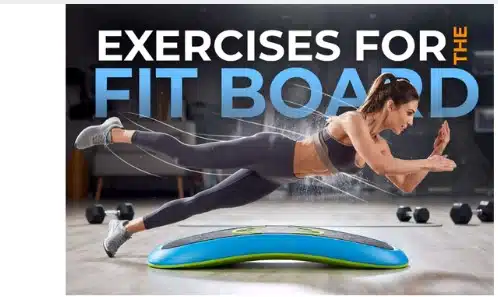
Exercises For The Fit Board || The Complete Workout Guide You Need Right Now
Exercises For The Fit Board || The Complete Workout Guide You Need Right Now
If you have been searching for a low-impact workout tool that actually targets your core without demanding an expensive gym membership, the Fit Board deserves your attention. Exercises for the Fit Board work by combining balance training with functional movement, so your core muscles stay engaged the entire time, not just during the “hard” parts of a set.
Whether you picked one up after watching the Simply Fit Board Shark Tank pitch or grabbed one on a friend’s recommendation, the board is more capable than most people realize on day one. The workouts range from beginner-friendly standing twists to more demanding push-up and plank variations. This guide covers every angle, from how to use the board safely on your first session to progressions that will genuinely challenge you months down the line.
Key Takeaways
- Exercises for the Fit Board primarily work the core, but upper body and leg exercises are fully possible on the same board.
- Beginners should always practice near a wall before attempting freestanding twists.
- The board works on carpeted surfaces, making home workouts practical with no extra setup.
- Adding light hand weights while twisting increases calorie burn without requiring a different piece of equipment.
What Is the Fit Board and Why Does It Work?
The Fit Board is a curved plastic balance board designed so you stand on it and twist your hips from side to side. The curve underneath creates controlled instability, which forces your stabilizer muscles, particularly in your core, lower back, and ankles, to fire constantly throughout the movement. That continuous muscle engagement is what separates it from exercises where you rest briefly between reps.
The Simply Fit Board Shark Tank episode made the product a household name when mother-daughter inventors Linda Clark and Gloria Hoffman demonstrated the twist on live television in Season 7. Lori Greiner invested $125,000 for a 20 percent stake, and within seven months, sales climbed from $575,000 to $9 million. That sales spike was not driven by marketing alone; people bought it, used it, and saw results for general fitness and everyday mobility.

How to Use the Fit Board Safely Before Your First Workout
Before you get into any structured exercises for the Fit Board, your setup matters. Place the board on a hard, flat floor or firm carpet. Stand next to a wall or hold a sturdy chair for support. Put one foot on the edge first and let the board tilt toward the ground. Then step your second foot onto the opposite edge.
Once both feet are on the board, find your center of gravity by shifting your weight until the board sits relatively level. Begin rocking gently side to side. Once that feels stable, start rotating your hips in a semicircular motion. The key detail that most people miss is this: the twist comes from your waist, not your knees. Rotating from the knees puts unnecessary stress on your joints and removes most of the core benefit.
Quick Tip:
Spend your first two sessions near a wall, even if you feel confident. The board’s instability increases significantly once you start twisting at speed, and catching yourself on a wall is much safer than catching yourself on the floor.

Beginner Exercises For The Fit Board
The Standing Twist
This is the foundation movement for the board and the exercise most closely associated with the Simply Fit Board how to use tutorials available on the company’s website and YouTube channel. Stand on the board with feet roughly hip-width apart and arms relaxed at your sides or folded across your chest. Slowly rotate your hips left and right, letting the board rock with the movement. Aim for 30-second intervals with 15 seconds of rest. Build up to three sets.
This movement directly targets the obliques and transverse abdominis. A 2011 publication from the American College of Sports Medicine confirmed that balance training improves core stability measurably over time, even with low-intensity exercises like this one.
Static Balance Hold
Stand on the board with feet shoulder-width apart and hold the board flat without letting either edge touch the ground. Keep your spine neutral and your gaze fixed on a point at eye level on the wall in front of you. Hold for 30 seconds to one minute. This sounds passive, but your deep stabilizer muscles are working hard the entire time.
Balance board exercises for beginners often start here because the hold teaches your nervous system how to respond to the board’s instability before adding dynamic movement. Once you hold it comfortably for 60 seconds, progress to the standing twist.
Intermediate Exercises For The Fit Board
Squats on the Board
Stand on the board and sink into a squat, lowering until your thighs approach parallel with the floor. Keep your chest up, your weight in your heels, and your core tight. Push back to standing and squeeze your glutes at the top. The board’s instability recruits your hip stabilizers and calves in addition to the standard quad and glute engagement you’d get from a floor squat.
Do 3 sets of 10 to 12 reps. If you lose balance during the descent, practice bodyweight squats next to the board first and return to board squats once your balance has improved.
Lunges with Board Support
Place your front foot on the board and your back foot on the floor in a standard lunge stance. Lower your back knee toward the ground, hold briefly, and return. The front foot on the board adds a balance challenge to an already demanding lower body exercise. This variation also builds ankle stability because your front foot must constantly make micro-adjustments to keep the board steady.
Expert Tip:
Keep your front knee directly over your ankle throughout the lunge. Any forward drift beyond your toes increases joint stress and reduces the muscular benefit of the exercise.
Core-Focused Exercises For The Fit Board
Forearm Plank on the Board
Place your forearms on the board and extend your legs behind you in a standard plank position. Your feet should be roughly shoulder-width apart. Hold for 20 to 45 seconds, focusing on keeping your hips level and your lower back from sagging. The board’s instability forces your obliques and transverse abdominis to work significantly harder than a floor plank because the surface beneath your arms shifts constantly.
This is one of the exercises for the Fit Board that transitions well from beginner to advanced by simply increasing hold time or adding shoulder taps. Tap your right shoulder with your left hand, return to the plank, and repeat on the other side.
Plank to Push-Up
Start in a forearm plank on the board. Press up onto your right hand, then your left, moving into a high plank position. Lower back down to your forearms one arm at a time. That counts as one rep. This movement challenges your shoulders, chest, triceps, and core simultaneously, and the board adds rotational demand throughout the transition.
Upper Body Exercises For The Fit Board
Push-Ups
Place both hands on the edges of the board and position yourself in a high plank with feet on the floor. Lower your chest toward the board, keeping your elbows at a 45-degree angle from your body rather than flaring them out wide. Push back up to the starting position. The board’s slight give forces your stabilizer muscles in the wrists, forearms, and shoulders to engage throughout the movement.
This is one of the more advanced exercises for the Fit Board because maintaining board stability while managing a push-up demands significant upper body and core control. Start with modified push-ups from your knees if needed.
Seated Dips
Sit on the board with your hands behind you, fingers pointing toward your body. Extend your legs out in front and lean back slightly on bent elbows. Straighten your arms to press up and then lower back down slowly. This targets the triceps while also demanding core engagement to keep your lower back from collapsing.
Cardio Exercises For The Fit Board
Mountain Climbers
Place your hands on the board in a high plank position. Drive your right knee toward your chest, return it to the starting position, and immediately drive your left knee up. Alternate legs at a controlled pace, increasing speed as your balance improves. Mountain climbers on the board elevate heart rate quickly while simultaneously working your shoulders, arms, and core.
The instability of the board makes this harder than a standard floor mountain climber, so scale your speed down initially and build up over time. Three 30-second intervals with 20 seconds of rest is a solid starting point for cardio-based exercises for the Fit Board.
Twisting Jump Squats
Stand on the board in your standard twist position. Add a small hop between each hip rotation, letting the board guide your movement. This is an advanced drill and should only be attempted once you’re fully comfortable with the standing twist and basic squats on the board. The plyometric component spikes your heart rate and builds explosive power in your legs and hips.
How to Build a Weekly Routine with the Fit Board
A realistic schedule for most people using the Fit Board at home is four sessions per week, alternating between core-focused days and full-body days. Here’s a simple structure:
| Day | Focus | Duration |
| Monday | Core: Standing Twist, Forearm Plank, Plank to Push-Up | 20 minutes |
| Wednesday | Full Body: Squats, Lunges, Push-Ups, Mountain Climbers | 25 minutes |
| Friday | Core: Static Hold, Seated Dips, Twist with Hand Weights | 20 minutes |
| Saturday | Cardio: Mountain Climbers, Twisting Jump Squats, Standing Twist intervals | 15 minutes |
This structure keeps sessions short enough to stay consistent while covering the major muscle groups across the week. Most people find the board works best as a complement to other activities like walking, cycling, or resistance training rather than as a standalone fitness program.
Simply Fit Board Reviews: What Real Users Say
Simply Fit Board reviews across platforms consistently highlight two things: people enjoy the novelty of the workout and appreciate that it’s low impact on the knees and hips. Users with joint issues report being able to twist and hold without discomfort that floor-based core exercises often cause.
The common criticism in reviews is that the board alone won’t replace a full workout program. Fitness professionals who’ve assessed it generally position it as a solid core and balance tool for $30 to $40, not a complete cardio machine. For context, the Simply Fit Board price typically sits around $30 on Amazon and in retail stores, making it one of the more affordable balance boards available. Some weighted versions and bundles with workout DVDs run slightly higher, up to $120 for a complete kit with accessories.
Q&A Section
Q1: Is the Fit Board suitable for people with knee problems?
Yes, in most cases. The board’s primary movement is a rotational twist from the waist, which keeps direct stress off the knees. That said, check with a physiotherapist if you have an existing knee injury before starting any new workout program.
Q2: How long before you see results from Fit Board exercises?
Most people notice improved core stability and better posture within three to four weeks of consistent use, especially when doing four sessions per week. Visible changes in waist definition take longer and depend heavily on diet and overall activity level.
Q3: Do exercises for the Fit Board work for weight loss?
They contribute to a calorie deficit when combined with a solid diet and other forms of exercise. The standing twist and cardio-based movements elevate heart rate, but the board alone will not drive significant weight loss without broader lifestyle changes.
Q4: What is the best surface to use the Fit Board on?
Hard floors and firm carpets both work well. The board was specifically designed to work on living room carpets, which was one of the questions raised during the Simply Fit Board Shark Tank pitch. Avoid using it on plush or deep pile carpet, which can interfere with the board’s rocking motion.
Q5: Do I need shoes to use the Fit Board?
The board’s surface is slip-resistant, and many users prefer socks or bare feet for better sensory feedback. Avoid using it in completely smooth-soled footwear like dress shoes or slippers.
FAQs
What muscles do Fit Board exercises target?
The board primarily works the obliques, transverse abdominis, and lower back. Secondary muscles include the glutes, quads, calves, and shoulders, depending on which exercises you do.
Is the Simply Fit Board good for seniors?
Yes, it is frequently recommended for older adults because it improves balance, which directly reduces fall risk. Beginners, including seniors, should always start near a wall and take time to build confidence before attempting unsupported twisting.
How many calories does the Fit Board burn?
Calorie burn varies by body weight, intensity, and exercise selection. Moderate twisting sessions burn roughly 150 to 250 calories per 30 minutes for a 150-pound person.
Do I need to buy the Simply Fit Board specifically, or will any balance board work?
Most curved balance boards work for the exercises in this guide. The Simply Fit Board is one of the best-known options due to its Shark Tank exposure and affordable price point, but other boards with a similar curved design produce comparable results.
Are balance board exercises for beginners different from standard beginner workouts?
The exercises themselves overlap, including squats, lunges, and planks, but the balance requirement changes the difficulty level. Balance board exercises for beginners need more attention to body positioning and stability before adding speed or load.
Wrapping It All Up
The Fit Board holds up as a practical, affordable, and genuinely versatile fitness tool. The exercises covered here span from the basic standing twist to push-ups, mountain climbers, and weighted squat progressions, so there is room to grow with it regardless of your current fitness level.
Start slow, respect the learning curve, and work near a wall until you are fully comfortable. Add the board to your existing routine rather than replacing everything else with it, and you will notice real improvements in core stability, posture, and coordination. The board’s portability means there’s no excuse tied to gym schedules or weather. Keep the session’s consistent, progress the difficulty gradually, and the results follow.