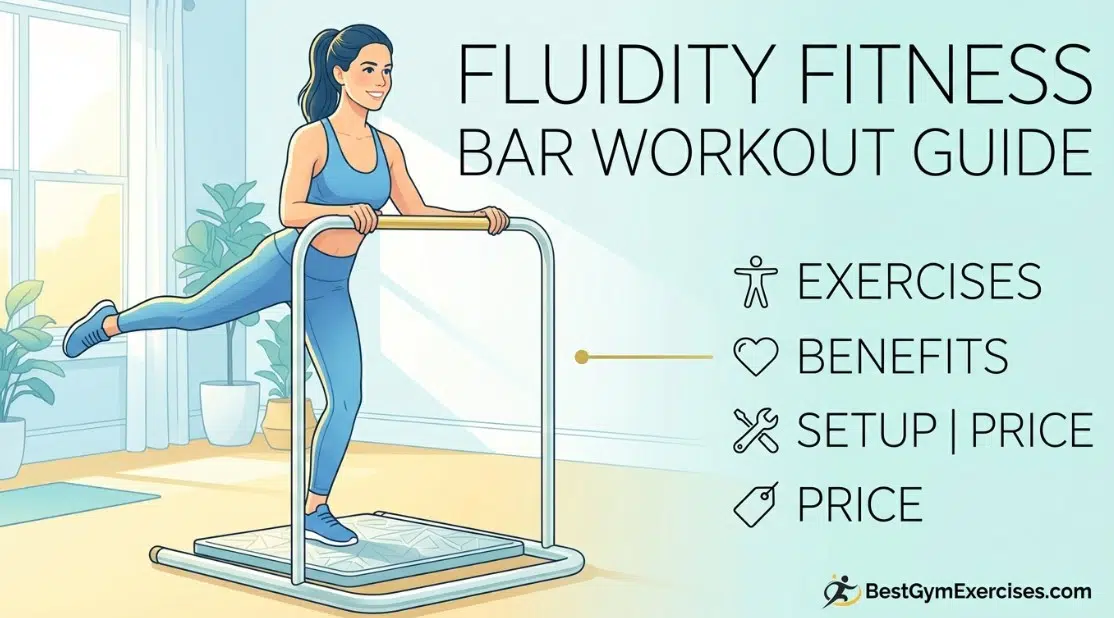
Fluidity Fitness Exercise Bar Workout || Exercises, Benefits, Setup and Price
Fluidity Fitness Exercise Bar Workout || Exercises, Benefits, Setup and Price
A home workout does not need a room full of machines to help you build strength, improve balance, and move with greater control. The Fluidity Fitness Exercise Bar Workout Combines barre-inspired movements with a strong support bar and adjustable workout platform giving you a structured way to Trans at home.
Its design encourages controlled movements, upright posture, and exercises that target the legs Glutes, Core, and upper body.
For beginners, the support bar offers a reference point during movements that required balance, more experienced exercisers often appreciated the focus on precision rather that heavy weights.
Before, investing in this type of equipment, however, it is worth understanding how it works, which exercise suit your goals, and what to consider when buying a used or new unit. In this guide we will explains the setup exercises, benefits limitations, and price considerations, so, you can decide whether this home fitness approach fits your routine.
Key Takeaways :
- Check the machine’s condition, included accessories, and total cost before purchasing.
- The Fluidity bar supports barre-inspired strength, balance, and flexibility exercises.
- Beginners should start with basic movements and use the bar for stability.
- A short routine combining pliés, leg lifts, calf raises, and core work offers a practical starting point.
- The equipment requires enough floor space and a secure, correctly assembled frame.
Expert Tip: Track your repetitions and note which movements feel stable. Increase one variable at a time, such as repetitions or sets. This makes progress easier to assess and helps you identify exercises that need adjustment.
What Is a Fluidity Fitness Exercise Bar Workout?
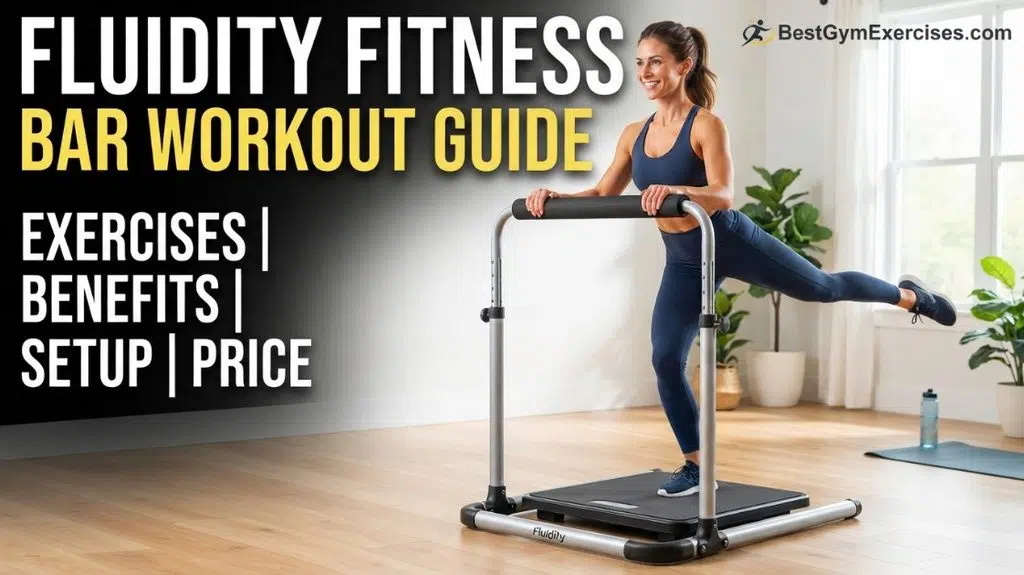
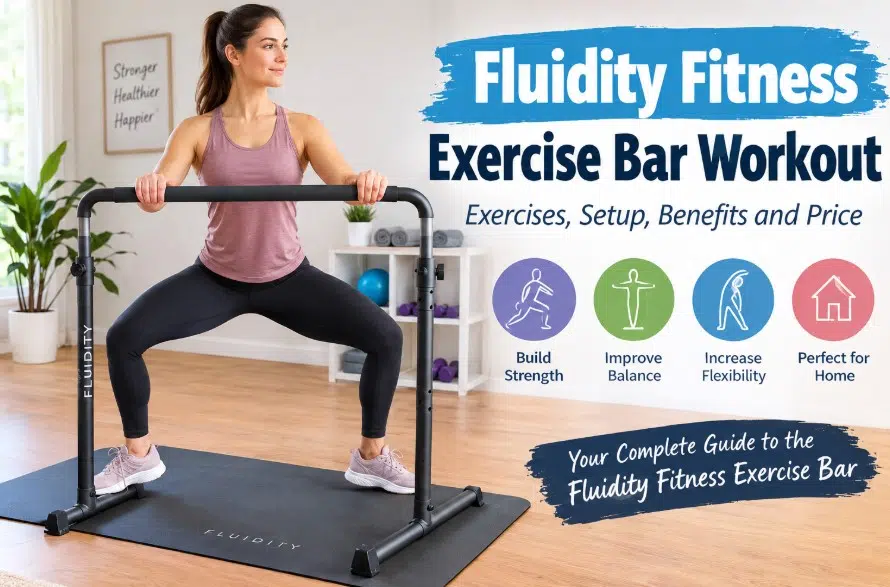
Fluidity is a home fitness system associated with barre-style training. The equipment typically features a horizontal support bar, a folding frame, and a mat or platform for floor exercises. It is depending on the model, the setup also includes instructional workout materials and accessories.
The training approach combines small, controlled movements with bodyweight resistance. Exercises often involve bending the knees, lifting the heels, extending the legs, and maintaining a stable torso. The bar provides support during standing movements, while floor exercises target the abdominal muscles, hips, and glutes.
Unlike a traditional weight machine, the system relies mainly on bodyweight, positioning, and repeated movements. The challenge comes from maintaining good technique throughout each repetition.
How Does the Workout Differ From Regular Gym Training?
Traditional gym training often uses dumbbells, barbells, cables, or resistance machines to provide measurable external resistance. Barre training places greater emphasis on posture, balance, muscular endurance, and controlled movement.
For example, a set of squats with dumbbells focuses on leg strength under an external load. A barre-style plié uses a wide stance and controlled knee bending to challenge the thighs and glutes without requiring heavy weights.
Neither method is automatically better. Your choice depends on your goals. If you want to improve movement control and add variety to home exercise, barre training is a useful option. If your priority is progressively increasing strength for heavy lifting, you will need additional resistance or a different training program.
How the Fluidity Fitness Evolved Bar Setup Works
The Fluidity fitness evolved bar setup is designed to provide a stable handhold during standing exercises and a supporting structure for selected floor movements. Its folding design helps reduce storage demands compared with a permanent barre installation.
Setting Up the Equipment Safely
Start by reading the instructions supplied with your particular model. Place the equipment on a level, firm surface with enough room to extend your arms and legs without hitting furniture. Check that the frame is fully opened and locked before placing weight on the bar.
Inspect the frame, joints, locking mechanisms, and bar for visible damage. If you purchased a used unit, check for missing parts and signs of instability. Do not use the equipment if a locking mechanism fails or the frame shifts under light pressure.
Keep the surrounding floor dry and remove loose rugs that might slide during exercise. If the equipment includes a mat, position it according to the manufacturer’s directions.
Adjusting Your Position
Stand facing the bar and hold it lightly rather than pulling your body toward it. Your shoulders should remain relaxed, your chest comfortable, and your spine in a natural position. Adjust your distance from the bar until you have enough room to bend your knees and move your hips.
The bar should assist your balance without doing the work for your legs. During each movement, keep your feet firmly planted unless the exercise specifically requires a heel lift. Start with a small range of motion and increase it only when you remain steady.
Quick Tip: Before your first full session, practise standing, releasing the bar, and returning your hands to it. This simple check helps you understand your balance and the equipment’s stability.
Benefits of Fluidity Exercise for Strength and Mobility
Fluidity Exercise focuses on controlled bodyweight movements. A well-planned routine offers several practical benefits, although the results depend on consistency, exercise technique, and your overall activity level.
1. Improved Muscular Endurance
Repeated pliés, calf raises, and leg lifts challenge the muscles of the lower body. Working through controlled repetitions, helps develop muscular endurance, which is useful for everyday activities such as climbing stairs and standing for longer periods.
You do not need to perform dozens of repetitions immediately. Start with a comfortable number, maintain good form, and increase your workload gradually. If your technique deteriorates, finish the set rather than forcing extra repetitions.
2. Better Balance and Body Control
Standing exercises often require you to coordinate your legs, hips, and torso while keeping your weight centred over your feet. Holding the bar provides support while you learn each movement.
Over time, consistent practice may improve your balance and movement awareness. However, the bar does not remove every risk of falling. People with significant balance difficulties should use appropriate supervision and follow advice from a qualified healthcare professional when needed.
3. Greater Movement Range
Gentle, controlled movements through a comfortable range help you practise hip, knee, and ankle movement. Some routines also include stretching for the hips, thighs, and calves.
Improved flexibility varies from person to person. Avoid bouncing or forcing a joint into an uncomfortable position. Stretching should create mild tension, not sharp pain.
4. Core Engagement
Many barre exercises require you to keep your torso steady while your legs move. This encourages the abdominal and trunk muscles to contribute to posture and control.
Core engagement does not mean holding your breath or tightening every muscle as hard as possible. Breathe naturally and maintain a position that allows you to move without excessive arching or twisting.
5. A Convenient Home Exercise Option
Home equipment removes the need to travel to a gym for every session. You still need to schedule workouts and follow a balanced plan, but a short session fits around work, family responsibilities, and other commitments.
The equipment also has limitations. It does not replace every type of resistance training, and the available exercises depend on the model and accessories.
Best Fluidity Fitness Exercise Bar Workout Moves for Beginners
Start with five to ten minutes of gentle warm-up activity, such as marching in place and moving your ankles, hips, and shoulders. Then choose four or five exercises from the list below. Keep the bar within reach during standing movements.
1. Supported Plié Squat
Stand with your feet slightly wider than your hips and turn your toes outward only as far as your hips comfortably allow. Hold the bar lightly and bend your knees while keeping your chest upright.
Lower yourself through a comfortable range, then press through your feet to return to standing. Keep your knees aligned with the direction of your toes. Perform 8 to 12 repetitions.
This exercise trains the thighs and glutes. Reduce the depth if your knees feel uncomfortable, and avoid forcing your feet into an exaggerated outward angle.
2. Standing Leg Lift
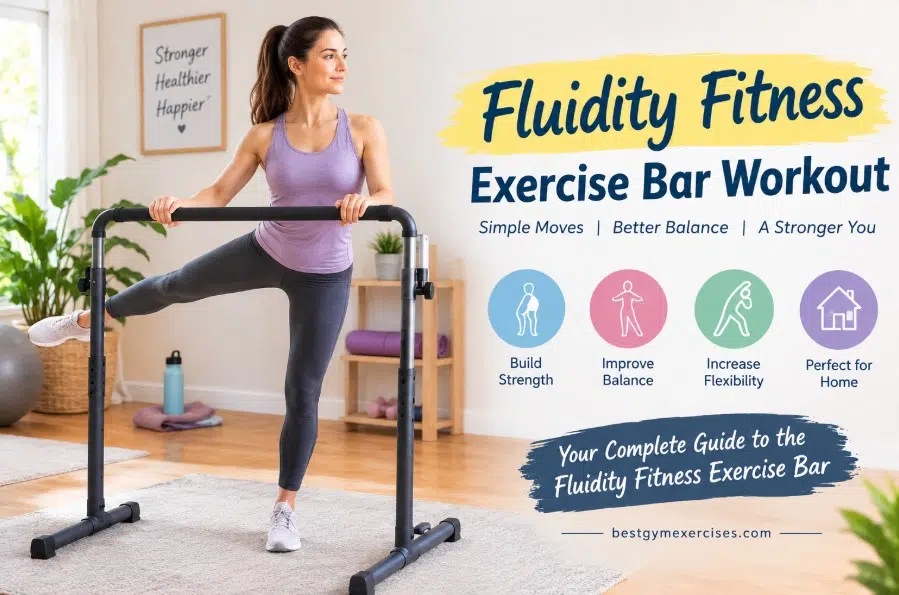
Stand upright with both hands resting lightly on the bar. Shift your weight onto one leg and lift the opposite leg a short distance to the side. Keep your hips facing forward and avoid leaning your torso.
Lower the leg slowly and repeat for 8 to 10 repetitions before switching sides. The exercise targets the muscles around the outer hip, which contribute to hip control during walking and other movements.
Use a smaller lift if you struggle to remain steady. A higher leg lift is not automatically more effective.
3. Calf Raises
Stand with your feet parallel and hold the bar for support. Slowly lift your heels, rise onto the balls of your feet, and pause briefly at the top. Lower your heels with control.
Complete 10 to 15 repetitions. This movement works the calf muscles and practises ankle control. Keep your weight distributed across the front of your feet rather than rolling onto the outer edges.
If your calves fatigue quickly, begin with fewer repetitions and take a longer rest between sets.
4. Standing Hamstring Curl
Hold the bar and bend one knee, bringing your heel toward the back of your thigh. Keep your upper leg close to its starting position and avoid arching your lower back.
Lower your foot slowly and complete 8 to 12 repetitions on each side. This movement works the hamstrings, which help bend the knee.
Use a small range of motion at first. If you experience cramping, pause, relax the leg, and resume only when comfortable.
5. Supported Rear Leg Extension
Stand facing the bar with your feet parallel. Move one leg behind you without leaning forward or arching your back. Squeeze your glute gently, then return your foot to the starting position.
Perform 8 to 12 repetitions per side. The movement focuses on the gluteal muscles and encourages control around the hip.
Keep the leg lift modest. Moving the leg too high often causes the lower back to arch, reducing the quality of the movement.
6. Floor-Based Abdominal Curl
Sit or lie on the mat according to the instructions for your equipment. Bend your knees and keep your feet supported. Place your hands lightly beside your head or across your chest, then lift your head and shoulders a small distance.
Lower slowly and repeat 8 to 12 times. Avoid pulling your neck forward. If the movement causes neck or back pain, stop and choose a more comfortable core exercise.
A Practical 20-Minute Home Workout Plan
The following plan gives beginners a simple way to combine the exercises without making the session too demanding. Allow extra time for setup and learning the movements during your first few sessions.
| Workout stage | Exercise | Repetitions or time |
| Warm-up | Marching and gentle mobility | 4 minutes |
| Lower body | Supported plié squat | 10 repetitions |
| Hips | Standing leg lift | 8 each side |
| Lower legs | Calf raises | 12 repetitions |
| Glutes | Rear leg extension | 10 each side |
| Hamstrings | Standing hamstring curl | 10 each side |
| Core | Floor-based abdominal curl | 8 to 12 repetitions |
| Recovery | Gentle walking and comfortable stretches | 3 minutes |
Rest for 30 to 60 seconds between exercises, or longer when needed. Repeat the circuit only if you still have enough time and your technique remains controlled.
How Often Should You Train?
For beginners, two sessions per week provide a sensible starting point. Leave recovery time between sessions and notice how your muscles feel the following day. As the movements become familiar, increase repetitions or add a second set.
The Fluidity Fitness Exercise Bar Workout should form part of a broader activity plan rather than your only form of exercise. Walking, suitable aerobic activity, and resistance training with progressively challenging loads help address different fitness needs.
If you are returning after a long break, begin with fewer repetitions. Progress depends on your current fitness, sleep, recovery, and consistency.
Fluidity Exercise Machine vs. Traditional Barre Workouts
The Fluidity Exercise Machine offers a dedicated structure for home barre exercises. A traditional barre class typically uses a fixed wall-mounted bar or a sturdy portable barre, with an instructor demonstrating movements and correcting technique.
| Feature | Fluidity home system | Barre class |
| Location | Home | Studio or gym |
| Equipment | Dedicated folding frame and bar | Fixed or portable barre |
| Instruction | Depends on included or separately sourced materials | Instructor-led |
| Scheduling | Flexible | Class timetable |
| Social interaction | Usually individual | Group setting |
| Space | Requires storage and workout space | No home storage required |
| Ongoing cost | Equipment and possible accessories | Class fees or membership |
A home system suits people who prefer exercising privately and following a schedule of their own. A class is useful for those who benefit from instructor feedback, group motivation, and corrections to exercise technique.
Before buying, compare the equipment with a simple sturdy support bar or a mat-based routine. If you are unsure whether barre suits you, try a beginner class first.
Fluidity Fitness Evolved Price: What Buyers Should Know
The Fluidity Fitness Evolved Price varies according to the model, condition, included accessories, seller, and location. Older fitness equipment is often listed through resale marketplaces, so a displayed asking price does not necessarily represent its final selling price.
Rather than relying on an outdated price quoted in an article, compare current listings and verify the precise model. A $25 listing, for example, might refer to an accessory, a partial set, or a used item with missing components. It should not be treated as the confirmed price of a complete machine.
What to Check Before Purchasing
Review the following points before paying:
- Frame condition: Look for bent parts, loose joints, rust, or cracks.
- Locking system: Check whether the frame opens and locks securely.
- Accessories: Confirm whether the mat, workout guides, and original attachments are included.
- Shipping: Large equipment might cost more to deliver than expected.
- Returns: Check the seller’s return policy and whether the item is sold as-is.
- Availability: Confirm the product is in stock and the seller is offering the exact model shown.
Ask for recent photographs of the actual unit if you are purchasing second-hand. If possible, inspect the frame in person and test its stability according to the manufacturer’s instructions.
Is the Equipment Worth the Cost?
Value depends on how often you intend to use it and which exercises you want to perform. A dedicated system offers a structured barre setup, while a mat and a suitable resistance band provide a lower-cost way to begin general home exercise.
If your primary goal is building substantial muscle strength, compare the price with adjustable dumbbells or resistance equipment. If your main interest is controlled barre movement, balance, and muscular endurance, the dedicated system might better suit your preferences.
Check current prices before making a decision. Do not assume every advertised model includes the same parts or workout materials.
Who Should Use a Fluidity Fitness Bar?
This style of training suits beginners who want a structured introduction to controlled bodyweight movements. It also appeals to experienced exercisers seeking variety in their weekly routine.
Adults who prefer low-impact exercise often appreciate the absence of jumping in many barre movements. However, low impact does not mean every exercise suits every person. Deep knee bends, prolonged standing, or floor transitions might be uncomfortable for some people.
Older adults should begin with movements that match their balance, mobility, and strength. People recovering from an injury or managing persistent joint pain should seek advice from an appropriate healthcare professional before starting a new exercise routine.
The equipment is less suitable for anyone expecting heavy resistance training from the bar alone. It also requires enough room to assemble, use, and store the frame safely.
Safety Tips for Better Results
Good technique matters more than the number of repetitions. Begin with a comfortable range of movement and keep your breathing steady. Stop if you experience sharp pain, dizziness, chest discomfort, or unusual shortness of breath.
Use the bar as a light support rather than pulling against it. Keep your knees aligned with your toes during squats and pliés. Avoid locking your knees forcefully at the top of a movement, and return to the starting position slowly.
Clean the equipment according to the manufacturer’s directions and inspect it regularly. Keep children and pets away while the frame is being opened, folded, or used.
Frequently Asked Questions
1. Is Fluidity Fitness suitable for complete beginners?
Yes, beginners often start with supported pliés, calf raises, and small standing leg lifts. Begin with a few repetitions and focus on steady movement. Check the equipment instructions before use and seek professional guidance if balance or joint problems affect your exercise choices.
2. Does Fluidity exercise help with weight loss?
It contributes to physical activity and energy expenditure, but weight loss depends on overall energy balance, eating habits, and activity levels. Combining barre exercises with regular walking or other aerobic exercise and suitable resistance training provides a more complete fitness plan.
3. How long should a beginner workout last?
A 15 to 20-minute session is a reasonable starting point, including warm-up and recovery. Shorten the session if your technique deteriorates or you become excessively tired. Increase the duration gradually as your fitness improves.
4. Is the Fluidity Fitness Evolved system worth buying second-hand?
It depends on the price, condition, included accessories, and your intended use. Check the frame, locks, bar, and mat carefully. Compare several current listings and include delivery costs before deciding whether the used equipment offers good value.
5. Do I need special shoes or clothing?
Wear comfortable clothing that allows free movement. Footwear depends on the exercise and the manufacturer’s guidance. Choose a stable surface and avoid socks on slippery flooring. If you prefer exercising barefoot, check whether the floor and equipment provide adequate grip and comfort.
Choose a Routine You Will Follow
A Fluidity Fitness Exercise Bar Workout offers a practical way to practise barre-inspired movements at home, with an emphasis on balance, controlled strength, and muscular endurance. Start with basic exercises, use the support bar correctly, and increase your workload at a comfortable pace. Check the frame and accessories before purchasing, particularly when buying second-hand.
Remember:
The equipment has a specific purpose and does not replace every form of strength or aerobic training. For our website readers the most useful starting point is a short routine performed consistently, with exercises selected for your current ability and fitness goals.
Moreover, good technique, gradual progression, and regular recovery matter more than completing a demanding session on your first day.