
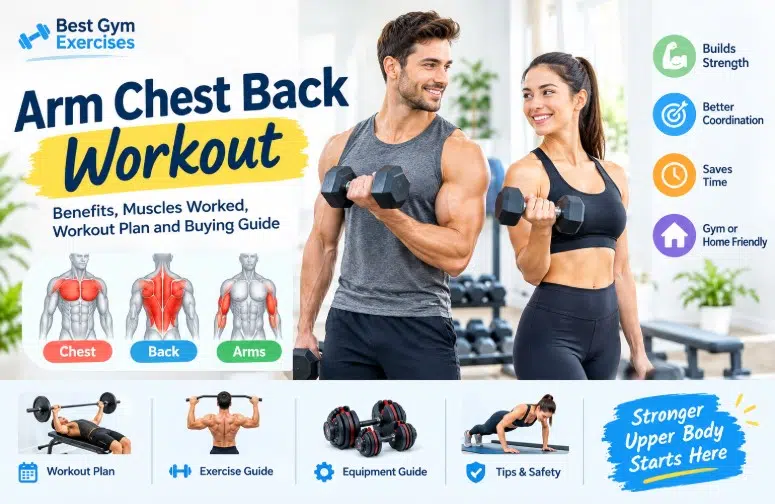
Arm Chest Back Workout || Benefits, Muscles Worked, Workout Plan ||and Buying Guide
Arm Chest Back Workout || Benefits, Muscles Worked, Workout Plan ||and Buying Guide
If you find upper-body training to be fragmented, combining your arms, chest, and abs into a well-planned session provides a clear way to train your arms, chest, and abs. The arm chest back workout combines pressing, pulling, curling, and extension movements into one routine, so your session covers several key upper-body muscles without a long list of exercises.
Balance is essential. Your chest needs pressing work, your abs need strong pulling movements, and your biceps and triceps need direct work after a big lift. This structured approach helps overtraining while minimizing muscle growth.
A good routine allows room for recovery and consistent progress. At Best Gym Exercises, the goal is to keep the training advice practical enough for a busy gym session or home setup. You do not need a complicated program or expensive equipment. You just need the right exercises, sensible volume, good technique, and a plan you are willing to repeat. Consistency will always best complexity when you are trying to build sustainable fitness habits over time.
Key Takeaways
- Train chest and back with a balanced mix of pressing and pulling exercises.
- Use direct biceps and triceps work after your larger compound movements.
- Choose sets and repetitions according to your training goal and experience.
- Progress gradually instead of adding weight before your technique is ready.
- Dumbbells, bands, a pull-up bar, or a basic barbell setup give you several useful options.
What Is an Arm Chest Back Workout?
An arm chest back workout combines three closely related areas of upper-body training. Chest exercises rely heavily on the pectoral muscles, triceps, and front shoulders. Back exercises train the lats, rhomboids, traps, and other muscles involved in pulling. Arm exercises then give the biceps and triceps more direct attention.
This format works well when you want one focused upper-body session without splitting every muscle into a separate day. It also gives you room to alternate pressing and pulling movements. You might perform a chest press followed by a row, then finish with curls and triceps extensions.
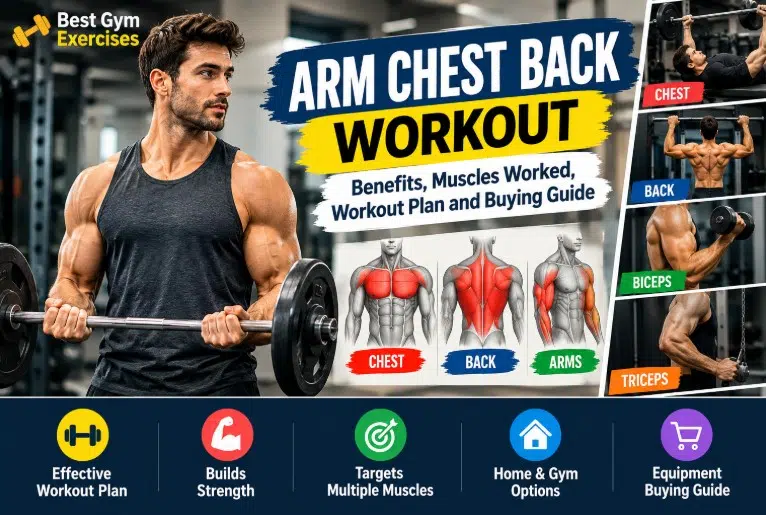
Benefits of Training Chest, Back and Arms Together
Builds Balanced Upper-Body Strength
A well-planned routine trains both sides of the upper-body movement pattern. Pressing exercises strengthen the muscles used to push an object away from you, while rows and pull downs train the muscles used to pull. Direct arm work fills in the gaps.
This balance matters because pressing alone leaves out much of your upper-body musculature. The 2026 American College of Sports Medicine position stand emphasizes regular resistance training and individualizing load and volume around the person’s goals and preferences.
Makes Training More Efficient
Combining these areas often saves time compared with giving each muscle its own session. You still need recovery between demanding sessions, but one structured workout gives you useful upper-body work in a single visit.
A person training three days per week might use this session alongside lower-body and full-body sessions.
Supports Better Muscle Coordination
Chest presses, rows, pull-ups, and many arm exercises involve several joints and muscles working together. Learning to control these movements improves your ability to produce force while keeping the movement organized.
Do not make every set exhausting. Leave enough energy for good technique. If your shoulders move excessively or you swing through curls, reduce the load and regain control.
Muscles Worked in an Arm Chest Back Workout
| Muscle group | Main muscles | Useful exercises |
| Chest | Pectoralis major and minor | Bench press, push-ups, dumbbell press |
| Back | Latissimus dorsi, rhomboids, traps | Rows, pull-ups, pulldowns |
| Biceps | Biceps brachii, brachialis | Dumbbell curls, hammer curls |
| Triceps | Triceps brachii | Pressdowns, extensions, close-grip presses |
| Shoulders | Front and rear deltoids | Presses, face pulls, raises |
Your chest receives most of its direct work from pressing and fly movements. Your back receives more varied demands because vertical pulls and horizontal rows emphasize different movement patterns. Your biceps also assist during many pulling exercises, while your triceps contribute during pressing.
That overlap is one reason exercise order matters. Large compound movements usually deserve your best concentration and strength. Smaller isolation movements fit well later in the session when the main lifts are complete.
How to Structure Your Workout
Start with five to ten minutes of general movement followed by a few lighter sets of your first exercise. Your warm-up should prepare the joints and movement pattern without leaving you tired.
For most general strength and muscle-building sessions, use a moderate repetition range and choose a load you control throughout the set. ACSM’s 2026 guidance notes that muscle growth is associated with higher weekly training volume, while strength-focused training generally uses heavier loads and fewer repetitions.
Rest longer after demanding compound exercises and shorter after simple isolation movements. There is no prize for finishing as quickly as possible. The quality of your next set matters more than shaving a few minutes from the session.
The Best Arm Chest Back Workout Plan
Here is a practical gym routine for an intermediate trainee. Beginners should start with fewer sets and spend more time learning technique.
| Exercise | Sets | Reps | Rest |
| Barbell or dumbbell bench press | 3 | 6–10 | 2–3 min |
| Lat pull down | 3 | 8–12 | 90 sec |
| Chest-supported row | 3 | 8–12 | 90 sec |
| Incline dumbbell press | 2 | 8–12 | 90 sec |
| Dumbbell curl | 2 | 10–15 | 60–90 sec |
| Triceps press down | 2 | 10–15 | 60–90 sec |
| Face pull | 2 | 12–15 | 60 sec |
Begin with the first press while you are fresh. Follow it with a vertical pulling movement, then a row. This arrangement gives your chest and back comparable attention before you move into direct arm training.
You do not need every set to reach muscular failure. Leave some effort in reserve when technique deteriorates. Over several weeks, add repetitions before increasing the load.
Barbell Chest Workout Without Bench
A barbell chest workout without bench requires a little creativity because a standard bench press is unavailable. The barbell floor press is one practical option. It limits shoulder extension because your upper arms meet the floor, while still providing a strong pressing movement.
Push-ups are another useful choice, even though they do not use a barbell. A weighted push-up, resistance-band push-up, or slow-tempo push-up gives you several progression options. A landmine press also provides a pressing pattern with a different shoulder angle.
A bench is not essential for every chest session. ACSM’s 2026 guidance notes that home-based training, bodyweight movements, and elastic bands support strength and muscle development, which is useful for people training without a full commercial gym.
Chest and Back Day Workout
A chest and back day workout often works well when you alternate push and pull movements. For example, perform a dumbbell press, rest, and then complete a row. After another rest period, return to the next chest movement.
This approach gives one muscle group time to recover while you train the other. It also keeps the session organized. Avoid pairing exercises simply because they look different. Choose movements that cover different patterns without creating unnecessary fatigue.
A simple sequence is bench press, pull down, incline dumbbell press, seated row, cable fly, and face pull. Add direct arm work if your weekly program needs it.
Chest and Bicep Dumbbell Workout
A chest and bicep dumbbell workout suits home trainees and gym users who prefer independent arm movement. Dumbbells also help you notice strength differences between your left and right sides.
Try dumbbell bench press for three sets of (8 to 10) repetitions, incline dumbbell press for two sets of (8 to 12), alternating curls for three sets of (10 to 12), and hammer curls for two sets of (10 to 15). Keep your elbows stable during curls and lower the weights under control.
If you train at home, adjustable dumbbells save space. A pair of moderate-weight dumbbells plus a stable bench covers a large number of useful chest and arm movements. If space is limited, resistance bands provide another option.
Beginner Arm Chest Back Workout
Beginners often benefit from a shorter routine. Start with push ups or a machine chest press, lat pull downs, seated rows, dumbbell curls, and triceps press downs. Perform two sets of each exercise and use a weight that allows controlled repetitions.
The first few weeks should focus on learning the movement. Keep your chest lifted during rows, avoid shrugging through pull downs, and keep your elbows comfortable during pressing. Increase the workload slowly once the exercises feel familiar.
Consistency matters more than complicated programming. ACSM’s 2026 position stand places strong emphasis on regular participation and notes that simple routines are often more useful than complex methods for general trainees.
Intermediate Arm Chest Back Workout
An intermediate trainee with solid technique is ready to use more volume. One option is three sets each for a main chest press, vertical pull, and row, followed by two or three sets each for an additional chest exercise, biceps exercise, and triceps exercise.
Track your exercises in a notebook or phone. Record the load, repetitions, and sets. If you press 25 kg dumbbells for 8, 8, and 7 repetitions one week, aim to improve those numbers before jumping to a heavier pair.
A stronger session after several weeks still represents progress. During fatigue or poor sleep, keeping the same load is reasonable.
How Often Should You Train These Muscles?
Your weekly schedule determines how often this workout belongs in your routine. If your other sessions already include pressing and pulling movements, one dedicated upper-body session might provide enough direct work.
For a simple plan, train major muscle groups at least twice per week.
Avoid placing two demanding upper-body sessions back to back. Give the muscles and connective tissues time to recover, especially after increasing your training volume or load.
Common Mistakes to Avoid
One common mistake is adding too many exercises. More movements do not automatically mean better results. Six to eight well-selected exercises often provide plenty of work for one session.
Another issue is using weight you cannot control. Swinging curls, half-range rows, and rushed presses reduce the quality of the movement. Keep a stable body position and use a range of motion suited to your mobility.
Also, watch your weekly balance. If chest pressing receives much more attention than pulling, add rows, pull downs, or pull-ups. If your elbows or shoulders hurt during a movement, stop and review your technique rather than pushing through sharp pain.
Quick Tip:
Use a simple progression rule. Pick a repetition range, such as 8 to 12. Keep the same weight until you reach the upper end of the range with controlled technique across your planned sets. Then make a small increase in resistance and build the repetitions again.
This approach keeps progression measurable without forcing heavier weights too soon.
Expert Tip:
Think about your weekly training volume rather than judging one workout in isolation. Your chest, back, biceps, and triceps receive work from several exercises, so count those overlapping sets when planning your week.
For example, rows train your back while also involving the biceps. Pressing trains your chest while also involving the triceps. Direct arm exercises should complement those movements rather than bury the same muscles under unnecessary volume.
Buying Guide: Equipment for Your Workout
A useful routine does not require a room full of equipment. Start with the items that give you the widest exercise selection.
Adjustable dumbbells are useful for presses, rows, curls, and several shoulder movements. A pull-up bar gives you a strong vertical pulling option. Resistance bands are inexpensive, portable, and useful for rows, presses, curls, triceps work, and warm-ups.
If your budget is around $80, prioritize one versatile item rather than buying several low-quality pieces. A good resistance-band set or basic adjustable equipment often gives a beginner more exercise options than buying several single-purpose accessories.
If you have more space and budget, a stable bench, adjustable dumbbells, and a pull-up solution form a practical home setup. A barbell and plates are useful additions once you have enough room and experience to use them safely.
How to Choose Equipment for Your Space
For a small home, choose equipment those stores easily. Adjustable dumbbells and bands take less space than a full rack. For a garage gym, a bench, rack, barbell, plates, and pull-up attachment give you more loading options.
For commercial gym users, focus on movements suited to your body and training goal. You do not need every machine available.
Safety and Recovery
Good training includes recovery. Sleep, nutrition, rest days, and sensible progression all influence how well you handle resistance exercise. Increasing volume and weight together often raises fatigue quickly.
Warm up before heavy sets and keep repetitions controlled. Stop an exercise if you experience sharp or unusual pain. People with an injury, medical condition, or long period away from exercise should seek professional guidance before demanding resistance training.
Arm Chest Back Workout FAQ
Is it good to train arms, chest and back together?
Yes, for many trainees it is a practical upper-body arrangement. Chest pressing, back pulling, biceps work, and triceps work fit naturally into one session. Your weekly schedule and recovery determine whether the format suits you.
How many exercises should I do for chest, back and arms?
Start with four to six exercises if you are new to training. More experienced lifters might use six to eight movements, depending on their weekly volume. Focus on quality rather than filling the session with similar exercises.
Is an arm chest back workout suitable for home training?
Yes. Push-ups, resistance-band rows, band pull downs, dumbbell presses, curls, and triceps extensions provide plenty of options. A home routine does not need to copy a commercial gym workout.
How many times per week should I train these muscles?
Look at your entire weekly program. Training major muscle groups at least twice per week is a useful general target, but the number of sessions, sets, and exercises should match your experience, goals, and recovery.
Is a chest and back workout suitable for beginners?
Yes, provided the exercise selection and workload match the beginner’s ability. Start with simple movements, lighter resistance, controlled repetitions, and fewer sets. Add volume gradually as technique improves.
Build Your Routine Around Progress, Not Exercise Count
A strong-arm chest back workout does not depend on having the longest routine in the gym. It depends on choosing movements that train your chest, back, biceps, and triceps without creating unnecessary overlap or fatigue. Start with manageable resistance, learn each movement, record your performance, and increase the workload gradually. Consistency will ultimately yield the best results over time.
Use dumbbells, bands, bodyweight exercises, or barbells according to your space and experience. Most importantly, give your body enough recovery to adapt.
A simple routine performed consistently gives you a better foundation than a complicated plan you struggle to maintain. Build your weekly schedule around steady progress, good technique, and realistic training volume, and then adjust it as your strength and experience develop.