Best Glute-Building Machines for Effective Workouts
|
Getting your Trinity Audio player ready...
|
Best Glute-Building Machines for Effective Workouts
Walk into any gym these days and you will notice something: more people are serious about training their glutes. This is not just about looking good in jeans anymore. Strong glutes improve everything from your running speed to how well you recover from a long day on your feet. They stabilize your hips, protect your knees, and can even help prevent lower back pain.
The gluteal muscles, mainly the gluteus Maximus, Mediums, and Minimums, are some of the most powerful in your body. When you train them properly, you are investing in better movement patterns, improved posture, and yes, a more defined backside.
While bodyweight exercises and free weights definitely have their place, gym machines offer something unique: they let you isolate these muscles in ways that are difficult to achieve otherwise. You get consistent resistance, better stability, and the ability to really focus on the muscle you are trying to work.
This guide walks you through the most effective machines and equipment for building stronger, more developed glutes. Whether you are just starting out or you have been training for years, you will find practical tips and realistic approaches that actually work.
Key Takeaways
| What You Need to Know | Why It Matters |
| Isolation matters for glute growth | Machines help you target glutes without your quads or hamstrings taking over |
| Progressive overload drives results | Gradually increasing weight or reps forces your muscles to adapt and grow |
| Form beats ego every time | Using proper technique with lighter weight builds more muscle than sloppy heavy reps |
| Variety prevents plateaus | Rotating between different machines and angles keeps your muscles challenged |
| Recovery is non-negotiable | Your glutes grow during rest, not during the workout itself |
| Consistency trumps perfection | Showing up regularly with decent workouts beats perfect programming you can’t stick to |
Quick Tip:
Keep your back flat and your core engaged throughout the movement. Arching your lower back to get your leg higher does not give you better glute activation; it just risks injury. Find a range of motion where you feel it in your glutes without compromising your spine position.
Understanding Why Machines Work for Glute Development
Before we jump into specific equipment, it helps to understand what makes machines so effective for glute training. When you are doing a barbell squat, your body has to stabilize itself in multiple directions. That is great for overall strength, but it also means your glutes might not get maximum activation because other muscles are busy keeping you balanced.
Machines change this equation. They handle the stability part for you, which lets you put more mental focus on squeezing your glutes and controlling the movement. This mind-muscle connection is not just gym bro science. When you can actually feel the target muscle working, you are more likely to recruit the right muscle fibers and get better results.
Another advantage is that machines often provide resistance throughout the entire range of motion. With free weights, there are usually sticking points where the exercise gets easier or harder. Machines maintain consistent tension, which means your glutes are working hard from start to finish.
The Best Machines and Equipment for Building Glutes
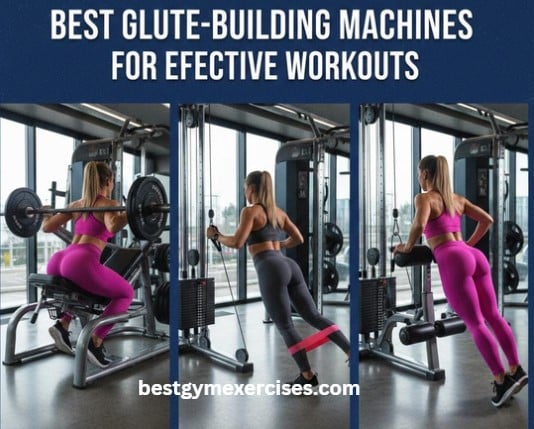
Glute Kickback Machine
The glute kickback machine, sometimes called a donkey kick machine, does one thing exceptionally well: it isolates your gluteus maximus. You position yourself on the pad, place one foot on the platform, and push back against the resistance. It is a simple movement, but that simplicity is exactly why it works.
What makes this machine stand out is how little it involves other muscle groups. Your quads barely participate. Your hamstrings play a minimal role. It is almost pure glute activation, which is rare in compound exercises. The adjustable resistance also means you can start light to nail your form, and then progressively add weight, as you get stronger.
When you use this machine, fight the urge to swing your leg back quickly. That momentum might make you feel powerful, but it is robbing your glutes of the work they should be doing. Instead, push back slowly and deliberately. At the top of the movement, pause for a second and really squeeze your glute. Then control the weight as your leg comes back to the starting position. That controlled eccentric phase is where a lot of muscle growth happens.
Hip Thrust Machine
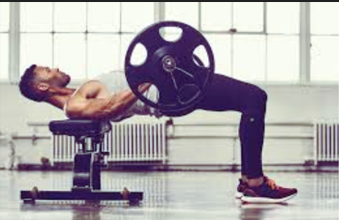
If there is one exercise that has become synonymous with glute training in recent years, it’s the hip thrust. The machine version takes what makes barbell hip thrusts great and makes them more accessible. You sit on the machine, position the pad against your hips, and thrust upward against the resistance.
The beauty of this setup is that it maintains consistent resistance throughout the movement. With a barbell, the resistance decreases slightly at the top. The machine keeps tension on your glutes from the bottom all the way to full hip extension. This is also safer for your lower back because the machine guides the movement path and you do not have to worry about a loaded barbell shifting position.
You can typically load this machine heavier than you might feel comfortable loading a barbell hip thrust, especially when you are training alone. This is huge for progressive overload. Strong glutes require heavy resistance, and the hip thrust machine lets you push those limits safely.
At the top of each rep, drive through your heels and squeeze your glutes as hard as you can. Think about pushing your hips toward the ceiling. Your back should stay relatively neutral. One common mistake is overextending the lower back at the top, which shifts tension away from the glutes. If you find yourself doing this, reduce the weight and focus on the squeeze instead.
Quick Tip: Before you start your set, adjust the pad height so it sits comfortably across your hips. If it is too high or too low, either you will feel it pressing into your ribcage or sliding down toward your thighs, neither of which is ideal for maintaining proper form.
Cable Machine with Ankle Strap
Cable machines might be the most versatile piece of equipment in the gym for glute work. Attach an ankle strap to the low pulley and you have countless exercise options: kickbacks, side leg raises, standing abductions, fire hydrants, and more. Each variation hits your glutes from a different angle.
The constant tension from the cable is what makes this so effective. Unlike free weights where gravity dictates the resistance curve, cables provide resistance that matches the direction you are pulling. This means your glutes stay engaged throughout the entire movement, not just at certain points.
Cable kickbacks are particularly good for targeting the upper portion of your glutes. Stand facing the machine, lean slightly forward from your hips, and kick one leg straight back. The cable resistance fights against you the entire way, creating a strong contraction at the end range when your glute is fully shortened.
For side-lying or standing abductions with the cable, you’re working your gluteus medius and minimus. These smaller glute muscles do not get much attention from squats and lunges, but they are critical for hip stability. Weak glute medius muscles are a common culprit in knee pain and IT band issues.
Control is everything with cable exercises. Do not let momentum carry the movement. Pull against the cable with your glute, hold briefly, then resist as the weight pulls your leg back. If you catch yourself swinging your leg, the weight is too heavy.
Quick Tip: Position yourself far enough from the machine that there is tension on the cable even in the starting position. If the weight stack is resting between reps, you are losing that constant tension advantage.
Leg Press Machine (High and Wide Foot Position)
Most people use the leg press as a quad exercise, but adjust your foot position and it becomes an excellent glute builder. Place your feet high on the platform and spread them wider than shoulder width. This shifts the emphasis away from your quads and loads up your glutes and hamstrings instead.
The higher foot position increases hip flexion at the bottom of the movement, which is exactly what your glutes need for maximum activation. The wider stance also allows for better glute engagement compared to a narrow, quad-focused position.
One advantage of the leg press is that it is relatively easy on your lower back compared to squats. If you have back issues or you are already fatigued from earlier exercises, the leg press lets you continue loading your glutes without additional spinal stress.
Don’t lock out your knees at the top of each rep. Keep a slight bend to maintain tension on the glutes. When you press, think about pushing through your heels rather than the balls of your feet. This heel drive naturally recruits more glute muscle fibers.
Going too deep can cause your lower back to round and your pelvis to tuck under, which puts unnecessary stress on your spine. Lower the platform until your thighs are roughly parallel to the platform or slightly below, then drive back up. You should feel a stretch in your glutes at the bottom without your back losing its natural curve.
Quick Tip: If you’re not feeling this exercise in your glutes, experiment with your foot position. Move your feet slightly higher or wider until you find the sweet spot where you really feel your glutes working.
Smith Machine for Hip Thrusts and Split Squats
The Smith machine gets a bad reputation in some fitness circles, but for certain glute exercises, it’s genuinely useful. The guided bar path provides stability that can be helpful when you’re learning a movement or when you want to push heavy weight safely.
Smith machine hip thrusts are popular because the bar stays in a fixed path. You don’t have to worry about it rolling during the setup or shifting during the movement. This lets you focus entirely on the squeeze and the contraction. Use a pad or a folded yoga mat under the bar to protect your hipbones.
Bulgarian split squats on the Smith machine are another solid option. The fixed bar path helps with balance, which is one of the trickiest parts of this exercise. You can elevate your rear foot on a bench, position yourself under the bar, and really load the working leg without worrying about tipping over.
Split squats hammer your glutes when done correctly. The key is to keep most of your weight on the front leg and focus on driving through that front heel. If you’re feeling it mostly in your quads, try taking a longer stride. Lean your torso forward slightly from the hips rather than staying perfectly upright.
Quick Tip: The Smith machine bar does not weigh the same as a standard barbell. Most are lighter, around 15-20 pounds instead of 45. Keep this in mind when tracking your progress and do not compare your Smith machine numbers directly to your barbell numbers.
Equipment Beyond Machines
Step-Up Platform or Plyometric Box
Sometimes the simplest equipment delivers the best results. A sturdy platform or plyo box opens up a world of single-leg glute exercises that challenge balance, coordination, and strength simultaneously.
Weighted step-ups are deceptively effective. You step onto the platform with one foot, drive through that heel, and lift your entire body weight plus whatever dumbbells or kettlebells you are holding. The glute of your working leg has to fire hard to extend your hip and get you up onto the box.
The height of your step matters. If the box is too low, the exercise becomes too easy and you do not get much glute activation. If it is too high, you might compensate by pushing off too hard with your bottom leg or leaning too far forward. A good starting point is a height where your thigh is parallel to the ground when your foot is on the box.
Lateral step-ups add a different challenge. You stand beside the box and step up sideways. This variation really lights up your gluteus medius because it has to work to stabilize your hip as you lift yourself up. It is functional strength that translates directly to activities like hiking, climbing stairs, and even just walking on uneven surfaces.
Quick Tip: Don’t push off with your bottom foot to help yourself up. That is cheating your working leg out of the full benefit. Instead, keep your bottom foot light and drive entirely through the heel of the foot that is on the platform.
Resistance Bands (Mini Bands and Long Bands)
For such inexpensive pieces of equipment, resistance bands punch way above their weight class when it comes to glute training. Mini bands that loop around your thighs or ankles create constant tension that forces your glutes to work harder throughout every exercise.
Place a mini band just above your knees during squats and suddenly you have to actively push your knees out against the band. This engages your glute medius in a way that regular squats do not. The same principle applies to glute bridges, hip thrusts, and even lying leg raises.
Banded lateral walks are a staple for glute activation. They look simple but they burn. Step sideways while maintaining tension on the band, keeping your knees pushed out and your hips low. Your glutes have to work constantly to keep the band stretched.
Long resistance bands work great for adding resistance to exercises like kickbacks, pull-through, and Romanian deadlifts. Anchor the band to a sturdy post or rack, and you have variable resistance that increases as you stretch the band further.
The mind-muscle connection you develop with bands is valuable. Because they provide constant tension and you can really feel them working against you, it is easier to focus on squeezing the right muscles. This awareness carries over when you move to heavier weight training.
Quick Tip: Bands come in different resistance levels, usually color-coded. Start with a lighter band and focus on perfect form. Once you can do 15-20 reps with a strong squeeze and no form breakdown, move up to the next resistance level.
Cable Squat with Rope Attachment
Here is an exercise that does not get enough attention: the cable squat with a rope attachment on the low pulley. You face away from the machine, hold the rope between your legs, and squat down while the cable provides resistance throughout the movement.
This setup creates a unique resistance angle that keeps tension on your glutes even at the top of the squat, which is where traditional squats tend to lose tension. The cable also encourages a more upright torso position, which reduces stress on your lower back while keeping the focus on your glutes.
At the bottom of the squat, you should feel a deep stretch in your glutes. Do not bounce out of this position. Pause briefly, then drive through your heels and squeeze your glutes to stand back up. The rope should stay close to your body throughout the movement.
Quick Tip: Position yourself far enough from the machine that the cable is taut even when you are standing. This ensures you are working against resistance through the full range of motion.
Stair Climber and Incline Treadmill
Not all glute work has to be strength training. The stair climber and incline treadmill offer cardiovascular benefits while still challenging your glutes, especially if you use them strategically.
The stair climber mimics the movement of climbing actual stairs, which naturally engages your glutes with each step. The key is to not lean heavily on the handles. Light hand support for balance is fine, but if you are putting significant weight through your arms, you are reducing how hard your glutes have to work.
Take full steps and really push through your heels. Avoid staying on your toes or taking tiny rapid steps. Full range of motion means better glute activation. Start with a moderate pace you can maintain for 15-20 minutes and focus on feeling each step in your glutes.
The incline treadmill works similarly. Set a steep incline, anywhere from 8-15%, and walk at a moderate pace. Do not hold onto the rails. Keep your core engaged and take full strides, pushing off through your entire foot. This extended hip motion recruits your glutes effectively while giving you a cardio workout.
Quick Tip: For an extra challenge, try intervals. Go at a moderate pace for 2-3 minutes, then increase the speed or incline for 30-60 seconds. This variation keeps your muscles guessing and prevents adaptation.
Expert Tips for Maximizing Glute Growth
Building impressive glutes takes more than just showing up and using these machines. Here are seven expert-level strategies that separate those who see results from those who plateau:
1. Prioritize glute exercises early in your workout:
Your glutes are large, powerful muscles that perform best when you are fresh. If you save them for the end of your leg day, after squats and leg extensions, you will not be able to give them the intensity they need. Start with one or two dedicated glute exercises when your energy and focus are highest.
2. Use the full range of motion on every rep:
Partial reps have their place in advanced training, but for consistent growth, full range of motion is crucial. This means fully lengthening the muscle at the bottom of the movement and fully contracting it at the top. Both phases contribute to muscle development in different ways.
3. Slow down your eccentric phase:
The lowering portion of each exercise, when your muscle is lengthening under load, creates significant muscle damage that stimulates growth. Take 2-3 seconds to lower the weight in a controlled manner. This builds more muscle than dropping the weight quickly.
4. Train your glutes 2-3 times per week:
Recovery matters, but so does frequency. Training your glutes multiple times per week with adequate rest between sessions typically produces better results than hammering them once a week. You might do heavy work on one day and higher rep work on another.
5. Progressive overload is not just about adding weight:
Yes, gradually increasing the weight is important. However, you can also progress by adding reps, adding sets, decreasing rest time, or improving your form and control. Track your workouts and make sure you’re improving in some measurable way over time.
6. Don’t neglect your glute medius and minimus:
Everyone wants a bigger gluteus maximus, but the smaller glute muscles matter for both function and appearance. Include exercises like lateral band walks, side-lying hip abductions, and single-leg balance work to develop these stabilizing muscles.
7. Eat enough to support muscle growth:
You can’t build muscle in a significant caloric deficit. If you are serious about growing your glutes, you need adequate protein, around 0.7-1 gram per pound of body weight, and enough total calories to support recovery and growth. Sleep matters too; aim for 7-9 hours consistently.
Building an Effective Glute Training Program
Having access to great equipment is one thing. Knowing how to use it strategically is another. Here is how to structure your glute training for maximum results.
Sample Weekly Layout
Lower Body Day 1: Strength Focus
This session emphasizes heavier weight and lower reps. The goal is to progressively overload your glutes with challenging resistance.
- Hip Thrust Machine: 4 sets of 8-10 reps
- Leg Press (Feet High and Wide): 4 sets of 10-12 reps
- Cable Kickbacks: 3 sets of 12-15 reps per leg
- Smith Machine Bulgarian Split Squats: 3 sets of 10 reps per leg
Rest 2-3 minutes between sets for the first two exercises. They’re your heavy compound movements and you need adequate recovery. For the isolation exercises, 60-90 seconds between sets is sufficient.
Lower Body Day 2: Volume and Activation
This session uses lighter weights and higher reps. Focus on feeling every contraction and building a strong mind-muscle connection.
- Banded Glute Bridges: 3 sets of 20 reps
- Weighted Step-Ups: 3 sets of 12 reps per leg
- Cable Side Abductions: 3 sets of 15 reps per leg
- Glute Kickback Machine: 3 sets of 15-20 reps per leg
- Incline Treadmill Walk: 15-20 minutes at 10-12% grade
Keep rest periods shorter here, around 45-60 seconds. The lighter weight and metabolic stress from shorter rest creates a different stimulus that complements your heavy day.
Optional Add-On: Active Recovery Day
If you’re training hard, active recovery can help. This isn’t a workout; it’s movement to promote blood flow and recovery.
- Stair Climber: 15-20 minutes, easy pace
- Banded Lateral Walks: 2 sets of 20 steps each direction
- Bodyweight Glute Bridges: 2 sets of 15 reps, slow and controlled
This light session can help reduce soreness and keep you moving between harder training days.
Balancing Volume and Recovery
More isn’t always better. Your glutes need time to recover and adapt. If you are training them intensely three times per week, make sure you are getting adequate rest, eating enough, and managing stress. Poor recovery will stall your progress faster than poor programming.
Listen to your body. Some muscle soreness is normal and even expected, but joint pain or lingering fatigue that does not improve with rest are signs you might be overdoing it. Scale back before a minor issue becomes a real injury.
Common Mistakes That Limit Glute Development
Even with the right equipment, certain mistakes can sabotage your results. Here are the most common pitfalls and how to avoid them.
Using too much weight too soon:
Ego lifting might make you feel strong, but if your form breaks down, you’re not building muscle effectively. Start with a weight you can control for the full range of motion. Master the movement pattern first, and then gradually add resistance.
Relying only on compound exercises:
Squats and deadlifts are great, but they’re not optimal for glute isolation. Your quads and hamstrings take over too much of the work. Include dedicated glute exercises where the glutes are the primary mover.
Rushing through reps:
Fast, bouncy reps reduce time under tension and decrease muscle fiber recruitment. Slow down. Control the weight through the entire movement. Feel the muscle working.
Skipping warm-ups:
Your glutes often do not activate well when you’re cold. Spend 5-10 minutes doing light cardio and activation exercises with bands before your main workout. This primes your nervous system and helps you feel the working muscle better during your sets.
Training the same way every session:
Your body adapts to repeated stimuli. If you do the exact same workout every time, eventually it stops being challenging. Rotate exercises, adjust your rep ranges, and change your training variables regularly.
The Reality About Results and Expectations
Building significant glute muscle takes time. If you’re new to training, you might see noticeable changes within 6-8 weeks of consistent work. If you’re already trained, progress comes more slowly. The key is consistency over months, years, not days, and weeks.
Genetics play a role in muscle shape and size, but everyone can improve their baseline. Some people build glutes relatively easily while others have to work harder for smaller gains. Focus on your own progress rather than comparing yourself to others.
Spot reduction is a myth. You cannot lose fat from just your glutes or just your abs. Fat loss happens systemically based on your overall caloric balance and genetics. Building muscle and losing fat are separate processes that sometimes require different nutritional approaches.
Supplements are not magic, but protein powder can help you hit your daily protein targets more easily. Creatine monohydrate has solid research supporting its use for strength and muscle gains. Beyond that, focus on whole foods, adequate calories, and quality sleep before spending money on supplements.
Making It Sustainable
The best training program is the one you’ll actually stick with. Do not design a routine so complex or time-consuming that you cannot maintain it. Three focused 45-minute sessions per week will get you better results than an elaborate program you abandon after two weeks.
Find exercises you enjoy, or at least do not hate. Training should be challenging but not miserable. If you absolutely despise certain machines, swap them for alternatives that work similar muscles. Adherence matters more than perfection.
Track your workouts. Write down what you did exercises, sets, reps, and weights. This simple habit keeps you accountable and lets you see progress over time. When motivation wanes, looking back at how much you have improved can reignite your drive.
Final Thoughts
Building stronger, more developed glutes is absolutely achievable with the right approach. These machines and equipment give you the tools you need. The hip thrust machine, cable stations, leg press, and even simple resistance bands each offer unique advantages for targeting your glutes effectively.
Remember that equipment is just one piece of the puzzle. Progressive overload, proper form, adequate recovery, and good nutrition all matter just as much. The machines make the work more efficient and focused, but they do not replace consistency and effort.
Start with the basics. Master the fundamental movements on each machine. Focus on feeling your glutes work rather than just moving weight from point A to point B. Add weight gradually. Be patient with the process.
Your glutes are capable of impressive strength and growth. Give them the right stimulus, enough recovery, and adequate fuel, and they’ll respond. Whether your goal is athletic performance, injury prevention, or aesthetics, the investment you make in proper glute training pays dividends across every area of fitness and daily life.
Get started with one or two of these machines. Learn how they feel. Pay attention to what works for your body. Adjust as needed. The results will come if you put in the work consistently over time.