


Dumbbell Leg Workout for All Abilities | Beginner to Advanced Guide
Look, I get it. Not everyone has access to a fancy gym with leg press machines and smith racks. Maybe you work out at home, or perhaps your gym’s squat rack is always occupied. Here is the good news: you can build seriously strong legs with nothing more than a pair of dumbbells. I have seen beginners transform their lower bodies and watched experienced lifters maintain their gains during home workout phases using just these simple tools.
A dumbbell leg workout for all abilities is not about settling for less. It is about training smarter with what you have. Whether you are just starting out or you have been lifting for years, dumbbells offer something genuinely valuable: they force each leg to work independently, they are easier on your joints than heavy barbells, and they fit in a closet when you are done. Let us talk about how to make them work for you.
Key Takeaways
✓ You don’t need a gym full of equipment – A pair of dumbbells can build strong, functional legs for any fitness level
✓ Form beats weight every time – Master the movement pattern with lighter weights before adding load
✓ Each leg works independently – Dumbbells help identify and fix strength imbalances that barbells often hide
✓ Progressive overload is essential – Add weight, reps, or increase difficulty every few weeks to keep progressing
✓ Recovery matters as much as training – Give your legs 48 hours between hard sessions and prioritize sleep and nutrition
✓ Consistency wins – Training legs twice per week with these five exercises will produce results if you stick with it for months, not weeks
✓ Listen to your body – Adjust the program based on your limitations, goals, and how you feel each day
✓ Start where you are – Whether you’re a complete beginner or an experienced lifter, there’s a progression level that fits your current ability
One-Sentence Summary
Building strong legs with dumbbells comes down to mastering five fundamental movements, progressively challenging yourself over time, and giving your body adequate recovery between sessions.
Quick Tips (For Immediate Results)
Before Your Workout:
- Warm up for 5-10 minutes with light cardio and dynamic stretches
- Start with lighter weights to nail your form first
- Keep water nearby and stay hydrated throughout
During Your Workout:
- Breathe in on the easy part, exhale on the hard part
- If your form breaks down, the weight is too heavy
- Push your knees outward during squats and lunges to protect your joints
- Take the full 2 seconds to lower the weight (don’t just drop it)
After Your Workout:
- Stretch each muscle group for 30 seconds minimum
- Give your legs 48 hours before training them hard again
- Track your weights and reps so you know when to progress
What Makes Dumbbells So Effective for Leg Training
You might wonder if dumbbells can really match the results, you would get from bigger equipment. The short answer is yes, but with some important differences that actually work in your favor.
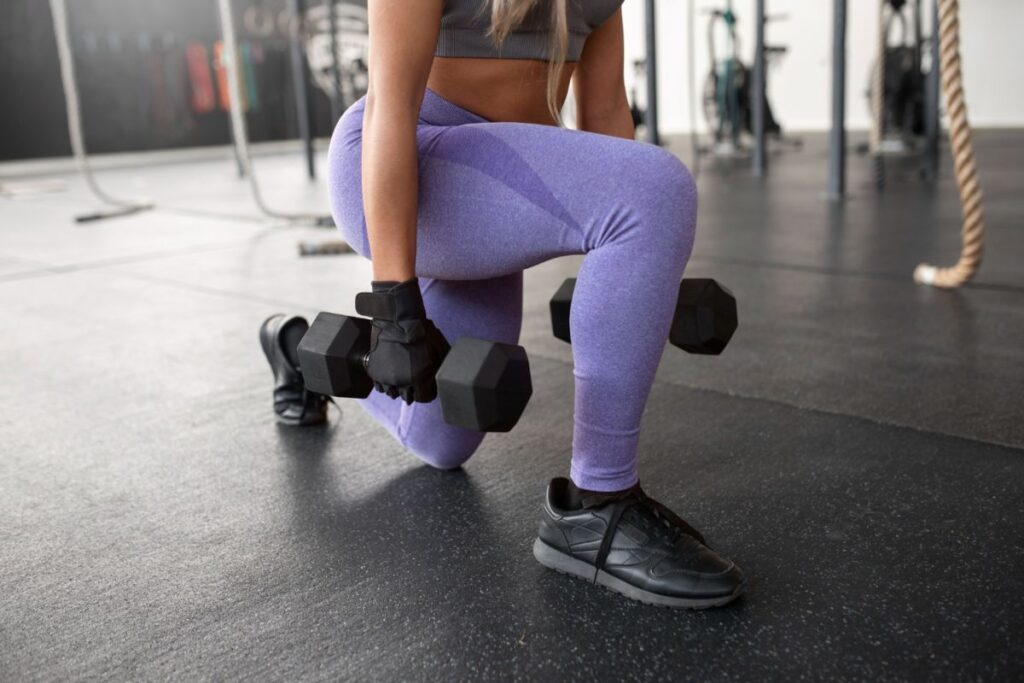
First, there is the balance factor. When you are holding dumbbells instead of balancing a barbell on your back, each leg has to stabilize independently. This means your stronger leg cannot compensate for your weaker one, which often happens with barbell work. Over time, this creates more development that is balanced and reduces injury risk.
Second, dumbbells are genuinely more accessible. You can pick up a decent set for less than a month’s gym membership, and they take up minimal space. I have worked with people who train in their living rooms, garages, even hotel rooms when traveling. That consistency matters more than having perfect equipment.
Third, the range of motion feels more natural. You are not locked into a fixed path like you are with machines or even barbells. Your body can move the way it wants to move, which tends to be easier on knees, hips, and ankles, especially as you get older or if you are dealing with previous injuries.
Getting Ready: What Everyone Should Know
Before jumping into specific exercises, let us cover some ground rules that apply whether you are brand new to strength training or you have been at it for years.
Start every session with a proper warm-up. I am talking about five to ten minutes of movement that gets your heart rate up and warms your muscles. Jog in place, do some jumping jacks, ride a stationary bike if you have one. Then do some dynamic stretches: leg swings forward and back, side to side, some hip circles, maybe a few bodyweight squats. Cold muscles do not perform well and they are more prone to injury.
Form beats weight every single time. I see this mistake constantly, people grabbing dumbbells that are too heavy and then compensating with poor technique. It is not about ego. If you cannot maintain proper form throughout your entire set, the weight is too heavy. Drop down, master the movement pattern, and then add weight gradually.
Listen to your body, but also know the difference between good discomfort and bad pain. Your muscles should feel challenged and tired. Your joints should not hurt. If something feels wrong, not just hard but actually wrong, stop and reassess your form or the exercise itself.
The Foundation Exercises
These five movements form the core of any solid dumbbell leg routine. Each one targets different muscles, and together they work everything from your hips down to your ankles.
Goblet Squats
Think of goblet squats as the entry point to proper squatting mechanics. You hold a single dumbbell vertically at chest height with both hands, which keeps your torso upright almost automatically. This position makes it much easier to maintain good form compared to back squats.
Stand with your feet about shoulder-width apart, toes pointing slightly outward. Before you bend your knees, push your hips back like you are reaching for a chair behind you. Then let your knees bend as you lower down. Keep your chest up and your weight centered over your midfoot. When your thighs reach parallel with the floor, or as low as you can go with good form, press through your heels to stand back up.
This exercise hammers your quads while still working your glutes and hamstrings. Your core gets involved too, which is a nice bonus.
For beginners, try three sets of ten to twelve reps. If you’re more experienced, push it to four sets of twelve to fifteen reps. Advanced lifters can add a two or three second pause at the bottom of each rep before standing, which makes it significantly harder without adding weight.
Romanian Deadlifts
Here is where we really target the back of your legs. Romanian deadlifts are all about the hip hinge, which is one of the most important movement patterns you can master.
Hold a dumbbell in each hand, arms hanging straight down in front of your thighs. Stand tall, then soften your knees slightly. This is not a stiff-legged movement. Now hinge at your hips, pushing them backward as you lower the dumbbells toward the floor. Keep your back flat, not rounded. The dumbbells should track down close to your legs.
You will feel a stretch in your hamstrings as you lower down. When you feel that good stretch, usually around mid-shin level, reverse the movement by driving your hips forward to stand back up. Squeeze your glutes at the top.
Beginners should start with three sets of eight to ten reps. Intermediate lifters can do four sets of ten to twelve. Advanced folks, try four sets of twelve to fifteen, but slowdown that lowering phase to really emphasize the eccentric contraction.
Step-Ups
Step-ups mimic real-world movements better than almost any other leg exercise. Think about climbing stairs or hiking uphill. This is functional strength at its finest.
You will need a bench, a sturdy box, or even a staircase. Hold a dumbbell in each hand at your sides. Place your right foot entirely on the elevated surface, and then drive through that heel to lift your body up until you are standing on the bench. Step back down with control and repeat.
The key here is not to push off with your bottom foot. Let the elevated leg do all the work. Also, choose a height that allows your knee to bend at about ninety degrees when your foot is on the platform.
Start with three sets of eight reps per leg if you are new. Intermediate level means four sets of ten per leg. Advanced lifters can try four sets of twelve per leg, and make it harder by using a higher bench or adding a knee drive at the top.
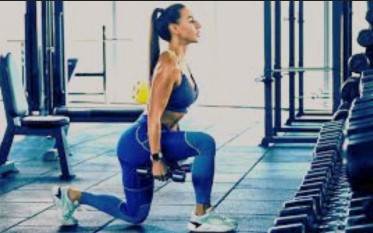
Lunges
Lunges are tough, there is no getting around it. However, they are incredibly effective for building leg strength and improving balance.
Stand with dumbbells at your sides. Step forward with your right leg, landing on your heel first. Lower your body straight down until both knees form roughly ninety-degree angles. Your back knee should hover just above the floor. Then push through your front heel to return to the starting position.
Keep your torso upright throughout the movement. A common mistake is leaning forward, which puts unnecessary stress on your front knee.
Beginners, start with three sets of six reps per leg. Intermediate folks can handle four sets of eight per leg. Advanced lifters should try four sets of ten per leg, and consider doing walking lunges instead.
Calf Raises
Don’t skip calf training. Strong calves matter for athletic performance, injury prevention, and honestly, they look good too.
This one’s straightforward. Hold a dumbbell in each hand, arms hanging at your sides. Stand with your feet about hip-width apart. Rise up onto the balls of your feet as high as you can, pause for a moment at the top, then lower your heels back down with control.
For an extra challenge, stand on a step or a weight plate so your heels can drop below the level of your toes. This increases the range of motion and makes the exercise more effective.
Beginners should do three sets of twelve reps. Intermediate level is four sets of fifteen. Advanced lifters can push to four sets of twenty, but keep the tempo slow and controlled. Bouncing through calf raises wastes half the benefit.

Putting It All Together
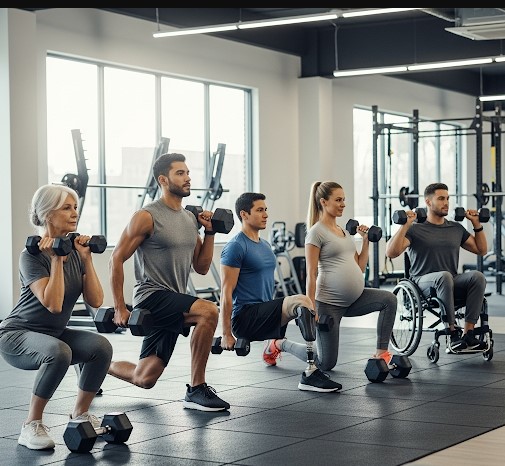
Now that you know the exercises, let us talk about how to organize them into actual workouts based on your experience level.
If You’re Just Starting Out
Your main goals right now are learning proper form and building a foundation of strength. Do not worry about lifting heavy yet.
Start with goblet squats, three sets of ten to twelve reps with about ninety seconds rest between sets. Move on to Romanian deadlifts, three sets of eight to ten reps. Then do step-ups, three sets of eight reps per leg. Follow with lunges, three sets of six reps per leg. Finish with calf raises, three sets of twelve.
Take your time with rest periods. Sixty to ninety seconds between sets is perfectly fine.
For Intermediate Lifters
You have the basics down and you’re ready to increase volume and intensity. You can handle more sets and reps, and you should be pushing closer to failure on each set.
Do four sets of twelve to fifteen reps of goblet squats with sixty seconds rest. Four sets of ten to twelve Romanian deadlifts. Four sets of ten step-ups per leg. Four sets of eight lunges per leg. Finish with four sets of fifteen calf raises.
At this level, focus on progressive overload. Add weight when the prescribed reps start feeling too easy, or increase reps before moving up in weight.
Advanced Training Approach
You are chasing that last bit of adaptation. Your workouts should be challenging, and you understand how to push yourself safely.
Goblet squats with a pause: four sets of fifteen reps, holding the bottom position for two to three seconds. Romanian deadlifts with a slow eccentric: four sets of twelve to fifteen, taking three to four seconds to lower the weight. High bench step-ups with knee drive: four sets of twelve per leg. Walking lunges: four sets of ten per leg. Slow tempo calf raises: four sets of twenty.
Rest periods can be shorter now, forty-five to sixty seconds. Your work capacity should handle this pace.
Making It Work for Your Body
One size does not fit all in fitness. You might need to adjust these programs based on your individual circumstances.
If you are dealing with knee issues, reduce the depth of your squats and lunges. Stopping at a quarter squat or half squat still provides training stimulus while being gentler on your joints. For step-ups, use a lower platform.
If you want to build more endurance, shorten your rest periods to thirty to forty-five seconds and keep the reps on the higher end. If pure strength is your goal, increase the weight and extend rest periods to ninety to one hundred twenty seconds.
Don’t have the time for a full workout? Cut one exercise or drop a set from each movement. Something is always better than nothing is. I would rather see you do three solid exercises well than rush through five with poor form.
Some days you will feel strong and energetic. Other days you will feel flat. That is normal. Adjust your working weights accordingly.

Recovery Matters as Much as Training
Your muscles do not grow during workouts. They grow during recovery. After you are done training, spend five to ten minutes cooling down and stretching.
Sit on the floor and reach for your toes to stretch your hamstrings. Stand and pull one ankle toward your glutes to stretch your quads. Do a figure-four stretch for your glutes by crossing one ankle over the opposite knee and sitting back. Stretch your calves by pressing your heel into the floor against a wall with your leg straight.
Give your legs at least forty-eight hours before training them hard again. You can do upper body work or light cardio in between, but your legs need that recovery time to adapt and grow stronger. Ignore this advice and you’ll just spin your wheels, making minimal progress while feeling constantly tired.
Sleep matters too. If you’re not getting seven to eight hours most nights, your recovery will suffer no matter how perfect your training is. Nutrition plays a role as well, make sure you’re eating enough protein and overall calories to support muscle growth and recovery.
Hydration often gets overlooked, but your muscles are about seventy-five percent water. When you are dehydrated, your performance drops and recovery slows down. Aim for at least half your body weight in ounces of water daily, more if you are sweating heavily during workouts.
Common Mistakes and How to Fix Them
Even with the best program, certain errors can hold you back. Let us address the most frequent ones I see.
Rushing through reps is probably the biggest mistake. People swing the weights up and let them drop, thinking more reps done faster equals better results. It does not. Controlled movement under tension is what builds muscle. Take at least two seconds on the way down and one second on the way up.
Another common issue is letting your knees collapse inward during squats and lunges. This puts tremendous stress on your knee joints and limits how much force you can produce. Focus on pushing your knees outward throughout the entire movement, tracking them over your toes.
Not going through a full range of motion cuts your results in half. Unless you have a specific limitation, take each exercise through its complete range. Half squats build half the muscle compared to deep squats.
Holding your breath during lifts is dangerous and counterproductive. Breathe in during the easier part of the movement and exhale during the hard part. For squats, breathe in as you lower and out as you stand. For Romanian deadlifts, breathe in as you hinge down and out as you stand up.
Adjusting Over Time
Your body adapts to whatever stress you place on it. That is good news because it means you are getting stronger, but it also means you need to keep challenging yourself.
Every few weeks, change something about your training. Add weight, increase reps, slow down your tempo, shorten rest periods, or add an extra set. These small progressions keep your muscles adapting.
If you have been following the beginner program for a couple of months and everything feels manageable, move up to the intermediate plan. Do not rush it though. There is no prize for advancing quickly if your form suffers.
Pay attention to how your body responds. If you are constantly sore, struggling to complete workouts, or losing motivation, you might be overdoing it. Scale back slightly and let your body catch up.

Why This Approach Works
The simplicity of this dumbbell leg workout for all abilities is actually its greatest strength. You are not constantly switching exercises or chasing the latest trend. You are mastering fundamental movement patterns and gradually getting stronger at them.
These exercises work because they match how your body naturally moves. Squatting, hinging, stepping, and lunging are all patterns you use every day outside the gym. Building strength in these movements makes everyday life easier.
The unilateral work, exercises that train one leg at a time like step-ups and lunges, helps identify and fix strength imbalances before they become problems. Most people are significantly stronger on one side, and bilateral exercises can hide this.
Your Path Forward
Building strong legs does not require complicated equipment or expensive memberships. It requires consistency, proper technique, and gradually increasing demands on your muscles. These five dumbbell exercises provide everything you need to develop powerful, functional legs regardless of where you are starting.
Pick the program that matches your current ability level. Commit to training your legs twice a week with at least two days between sessions. Focus on adding a little more weight or a few more reps every few weeks. Watch your form in a mirror or record yourself on your phone to check your technique. Be patient with the process. Meaningful strength gains take months, not weeks.
The path is not always linear. You will have good days and frustrating ones. You will plateau and then break through. That is how it works for everyone.
What separates people who achieve their goals from those who do not is not talent or genetics, it is simply showing up consistently and doing the work even when it’s not exciting. Your legs will respond if you give them a reason to adapt. Now you know exactly how to do that.
Quick Reference Table: Exercise Overview:
| Exercise | Primary Muscles | Beginner | Intermediate | Advanced | Key Focus |
| Goblet Squat | Quads, Glutes, Core | 3×10-12 | 4×12-15 | 4×15 (2-3 sec pause) | Keep chest up, weight on heels |
| Romanian Deadlift | Hamstrings, Glutes | 3×8-10 | 4×10-12 | 4×12-15 (slow lower) | Hip hinge, flat back |
| Step-Up | Quads, Glutes, Calves | 3×8/leg | 4×10/leg | 4×12/leg (high bench) | Drive through heel |
| Lunge | Quads, Hamstrings, Glutes | 3×6/leg | 4×8/leg | 4×10/leg (walking) | 90-degree angles, upright torso |
| Calf Raise | Calves | 3×12 | 4×15 | 4×20 (slow tempo) | Full range, controlled movement |
Rest Periods: Beginner: 60-90 sec | Intermediate: 60 sec | Advanced: 45-60 sec
Expert Tips (Advanced Strategies)
Progressive Overload Without Heavier Weights:
If you have maxed out your dumbbell weight, you are not stuck. Try tempo training: take 4-5 seconds to lower on Romanian deadlifts or add a 3-second pause at the bottom of goblet squats. This increases time under tension and creates new adaptation without needing heavier weights.
Fix Muscle Imbalances:
Notice one leg is significantly weaker? Start every unilateral exercise (step-ups, lunges) with your weaker leg. Do the same number of reps on your stronger side, even if it feels too easy. Within 4-6 weeks, the gap will close.
The Deload Week Strategy:
Every 4-6 weeks, reduce your training volume by 40-50% for one week. Keep the same exercises but do fewer sets or lighter weights. This planned recovery actually helps you come back stronger and prevents burnout. Most people skip this and plateau because they never fully recover.
Breathing for Maximum Power:
For exercises like goblet squats, try the “brace and breathe” technique. Take a deep breath at the top, brace your core hard, perform 2-3 reps while holding that breath, then exhale and reset. This creates intra-abdominal pressure that protects your spine and lets you lift more weight safely.
Smart Exercise Order:
Always do the most demanding exercise first when you are freshest. Goblet squats or Romanian deadlifts should come before lunges or calf raises. Your performance on compound movements matters most for overall leg development.