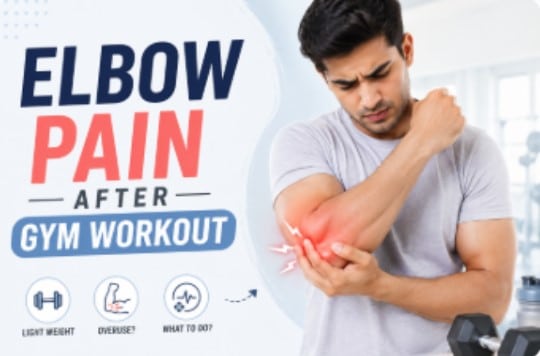
Elbow pain after gym workout | Why Your Elbows Hurt After the Gym | And How to Fix It for Good
Elbow pain after gym workout | Why Your Elbows Hurt After the Gym | And How to Fix It for Good
You pushed hard at the gym, finished strong, and felt great walking out. Then the next morning, your elbows are stiff, sore, or sending a sharp pain up your arm every time, you grip something. Sound familiar? Elbow pain after gym workout sessions is one of the most common complaints among lifters, and it catches many people off guard because the elbow is not usually the muscle you were focused on training.
Whether you’re a beginner who showed up for the first time or a regular lifter who added too much weight too fast, this kind of pain is telling you something specific. This article breaks down exactly what is happening, why it matters, and how to handle it the right way.
Key Takeaways, Elbow pain after gym workout
- Elbow pain after lifting is usually a soft tissue issue, not a bone problem.
- Inner elbow pain and outer elbow pain come from completely different causes.
- Grip strength and forearm tightness are two underrated contributors most lifters ignore.
- Rest alone will not fix tendon pain; you need progressive loading and targeted rehab.
- Spending around $120 on a quality physiotherapy assessment early saves you months of setbacks.
Quick Tip
Before every upper-body session, spend three minutes doing wrist circles, forearm stretches, and light band pull-aparts. This prepares the elbow joint, forearm tendons, and shoulder muscles before load is applied. It takes almost no time and reduces the risk of elbow irritation meaningfully.

The Two Types of Elbow Pain You Need to Know
Not all elbow pain is the same, and treating it the wrong way makes it worse. The first thing you need to do is figure out where exactly the pain is sitting.
Inner elbow pain after workout sessions usually points to medial epicondylitis, or what most people call “golfer’s elbow.” This affects the tendons on the inside of your elbow, which connect to the muscles you use for gripping, curling, and pulling movements. If you feel a sharp ache or a burning sensation on the inner side of your elbow after bicep curls, rows, or pull-ups, that is where to look.
Outer elbow pain from lifting weights is typically lateral epicondylitis, better known as “tennis elbow.” This affects the outer tendons and usually flares up after repetitive gripping or extension-based movements like tricep pushdowns, reverse curls, or even heavy bench pressing. The irony is that tennis elbow is actually more common among gym-goers than tennis players.
Why Elbow Pain After First Day at Gym Happens So Often
If you walked into a gym for the first time and woke up with sore elbows the next morning, you are not unusual. This is genuinely one of the most reported issues among beginners.
Your tendons, ligaments, and connective tissue adapt to load much more slowly than your muscles do. On your first day, you might feel strong enough to lift heavy, and your muscles handle it reasonably well. However, the tendons around your elbow are not conditioned to absorb that sudden stress. The result is inflammation and microtearing in the tissue, which your body registers as pain.
The other factor is form. New lifters often bend their wrists during curls, flare their elbows wide on pressing movements, or grip the bar in a way that puts unnecessary tension on the forearm tendons. You might not notice any of this while you’re in the moment, but your elbows definitely do.
Elbow Pain After Lifting Dumbbells: What’s Actually Happening
Dumbbell training is a specific culprit because each arm moves independently. With a barbell, both arms share the load and compensate for each other. With dumbbells, your weaker side has nowhere to hide.
Elbow pain after lifting dumbbells often happens when your wrist position is off. If your wrist bends back during a dumbbell curl or dips forward during a press, the forearm tendons take on a different angle of stress than they are designed to handle. Over time, this adds up, and the first place you feel it is the elbow.
Another factor is the range of motion. Dumbbells allow a much deeper stretch at the bottom of movements like a hammer curl or an incline dumbbell curl. If you are not warmed up properly or if your forearm muscles are tight from previous sessions, that deep stretch pulls on the tendon attachment points near the elbow, causing pain during or after the lift.
Elbow Pain When Lifting and Gripping: The Forearm Connection
Elbow pain when lifting and gripping is a clear sign that your forearm flexors or extensors are overloaded. The muscles in your forearm attach to the bony prominences on either side of your elbow. When those muscles are tight, fatigued, or inflamed, the tendons where they attach start to get irritated.
Most gym programs focus entirely on biceps, triceps, and shoulder muscles. Very few people spend time stretching or strengthening their forearm muscles separately. This creates an imbalance where the forearms are constantly recruited during almost every upper-body lift but never directly trained or recovered properly.
Grip-dependent exercises make this worse. Heavy deadlifts, pull-ups, rows, and barbell curls all demand a strong, sustained grip. If your forearms are already fatigued from a previous session, adding more grip work on top of it is a fast route to tendon pain around the elbow.
How to Relieve Elbow Pain From Lifting
This section is the most practical part of the article. Here is what actually works.
1. Take the Right Kind of Rest
Total rest for weeks is not usually the answer. Complete inactivity causes tendons to lose their structure and become weaker. What you need is relative rest, which means stopping the movements that cause pain while keeping light activity going.
If barbell curls hurt, stop doing them for now. But light band work or very low-weight dumbbell exercises that do not reproduce the pain are usually fine. Movement promotes blood flow to tendons, which are notoriously slow healers because of their limited circulation.
2. Apply Ice Right After the Workout
Ice reduces acute inflammation in the first 24 to 72 hours. Apply it to the painful area for 15 to 20 minutes, wrapped in a thin cloth to avoid skin damage. Do this two to three times in the hours following a workout where you felt the pain come on.
After the acute phase passes, heat becomes more useful. A warm pack or warm water soak helps loosen tight forearm tissue and improves circulation to the area.
3. Stretch Your Forearms Consistently
This one is easy to do and often skipped. Extend your arm straight in front of you, palm facing up, and use your other hand to gently pull your fingers down toward the floor. Hold for 30 seconds. This stretches the forearm flexors. Flip it over, palm facing down, and pull the fingers upward to stretch the extensors. Do both stretches multiple times per day, not just before the gym.
4. Fix Your Grip and Wrist Position
For most lifters, switching to a neutral wrist position during curls and pressing movements makes an immediate difference. This means keeping your wrist in line with your forearm, not letting it break forward or backward under load. Using a thicker grip can also reduce the amount of forearm tension during pulling exercises.
5. Strengthen the Forearms Directly
Wrist curls, reverse wrist curls, and farmer’s carries are simple exercises that build the forearm muscles and take stress off the tendons. Start light. Two sets of 15 to 20 reps twice a week is enough to start making a difference within a few weeks.

Inner Elbow Pain From Lifting Weights: When It Gets Serious
Most cases of inner elbow pain from lifting weights resolve with rest, stretching, and form correction within four to eight weeks. Nevertheless, some do not.
If your pain has lasted longer than two months, is getting progressively worse, or is accompanied by numbness or tingling in your fingers, you need to see a doctor or physiotherapist. Persistent medial epicondylitis can involve partial tendon tears or nerve involvement, specifically the ulnar nerve, which runs along the inner side of the elbow.
A physiotherapist will assess your range of motion, grip strength, and which specific movements reproduce the pain. From there, they build a structured rehab plan. The investment is worth making early rather than waiting until the injury is severe.
Outer Elbow Pain From Lifting Weights: Common Mistakes That Keep It Coming Back
Outer elbow pain from lifting weights tends to be stubborn because people return to lifting too quickly and re-irritate the tendon before it heals.
The biggest mistake is treating it as a muscle soreness issue and pushing through. Tendon pain does not respond well to “training through it.” It gets progressively worse with each session until you are forced to stop entirely.
A second common mistake is ignoring tricep and wrist extensor tightness. The muscles on the back of your forearm attach directly to the lateral epicondyle, the bony bump on the outside of your elbow. Tight extensors constantly pull on that attachment point. Rolling a lacrosse ball along your forearm extensors and stretching them daily reduces this tension significantly.
Expert Tip: Sports physiotherapist recommendations consistently point to eccentric loading as one of the most effective ways to treat chronic tendon pain. For elbow tendinopathy, slow reverse wrist curls performed eccentrically (lowering the weight under control over three to four seconds) stimulate tendon repair more than standard concentric movements. If your elbow pain is chronic and not responding to rest, add eccentric forearm training to your rehab.
Programming Changes That Prevent Elbow Pain Coming Back
Once you’ve addressed the pain, the work isn’t over. Your training program itself needs some adjustments.
Reduce training frequency on the same muscle groups. If you train arms four days a week, you are asking the elbow tendons to recover between sessions that are too close together. Three days of upper-body work with 48 hours of recovery between sessions is a much healthier baseline for most natural lifters.
Progress weight gradually. The ten percent rule is a reasonable guideline: don’t increase your working weight by more than ten percent per week on any given exercise. Tendons need time to adapt to increased load, and jumping weight too aggressively is one of the primary reasons elbow pain comes back in lifters who should know better.
Rotate your exercises. Doing the same movements in the same order every session accumulates repetitive stress at the same points. Rotating between barbell and dumbbell variations, changing grip width, and alternating between cable and free weight exercises distributes that stress more broadly.
What to Do If the Pain Doesn’t Improve
If you’ve been managing elbow pain after gym workout sessions for more than six to eight weeks without clear improvement, a structured clinical assessment is the next step. A sports medicine doctor or physiotherapist will use a combination of manual testing, grip dynamometry, and sometimes imaging like ultrasound to assess tendon health.
In persistent cases, treatment options include targeted physiotherapy, dry needling, corticosteroid injections for short-term pain relief, or platelet-rich plasma (PRP) injections, which are gaining solid evidence for chronic tendinopathy. Surgery is rarely needed and is considered a last resort after conservative treatment has been exhausted.
A Comparison Table: Inner vs Outer Elbow Pain
| Feature | Inner Elbow Pain (Medial) | Outer Elbow Pain (Lateral) |
| Common Name | Golfer’s Elbow | Tennis Elbow |
| Location | Inside of elbow | Outside of elbow |
| Muscles Involved | Forearm flexors, pronators | Forearm extensors |
| Common Causes | Curls, rows, pull-ups, gripping | Tricep work, reverse curls, pressing |
| Pain Triggers | Gripping, flexing wrist | Extending wrist, gripping |
| Recovery Time | 4 to 12 weeks | 6 to 12 weeks |
| Key Rehab Exercise | Wrist flexor eccentrics | Wrist extensor eccentrics |
Q&A Section
Q: Is it okay to keep lifting if I have elbow pain? A: It depends on the severity. Mild aching that goes away within 24 hours after a session is manageable with form corrections and reduced volume. Sharp pain during the lift, pain that lasts more than two days, or pain that worsens with each session means you need to stop the aggravating exercises and address the issue directly.
Q: How long does elbow tendon pain take to heal? A: Mild cases of elbow tendinopathy resolve in four to six weeks with proper rest and rehab. Chronic or more severe cases take three to six months. Tendons have poor blood supply compared to muscles, so they heal more slowly. Skipping steps in your rehab or returning to heavy lifting too soon is the main reason recovery drags on.
Q: Can elbow sleeves or braces help? A: A counterforce brace worn just below the elbow reduces stress on the tendon attachment point during activity. Many lifters find it helpful for managing symptoms while continuing lighter training. It is not a cure, but it reduces pain enough to allow proper rehabilitation exercises to be performed.
Q: Does massage help elbow pain from lifting? A: Yes, specifically deep tissue massage and cross-friction massage along the forearm tendons. This breaks up adhesions and promotes circulation to an area that normally gets very little. You can do this yourself using a foam roller or a lacrosse ball along the forearm, or see a sports massage therapist for a more targeted approach.
Q: Should I take anti-inflammatory medication for elbow pain? A: NSAIDs like ibuprofen reduce pain and inflammation in the short term and are reasonable for acute flare-ups. However, long-term or regular use of anti-inflammatories for tendon pain is not recommended because inflammation is part of the healing process. Use them to manage acute episodes, not as an ongoing strategy.
FAQs
Is elbow pain after gym workout normal for beginners? Yes, it is common. Your tendons are not conditioned to the new load. It usually resolves within a week or two if you scale back intensity and focus on form.
What exercises should I avoid with elbow pain? Avoid any movement that directly reproduces the pain. Common offenders include barbell curls, tricep skull crushers, reverse grip exercises, and overhead pressing with a narrow grip.
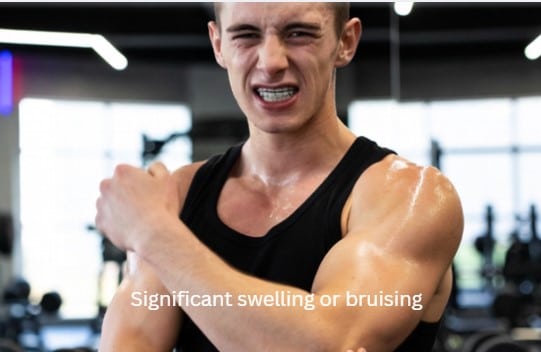
Can elbow pain be a sign of something more serious? Occasionally. If you have persistent numbness, tingling into the hand, or significant swelling, you should be get evaluated. These symptoms can indicate nerve involvement or a more significant structural issue.
How do I prevent elbow pain when increasing gym intensity? Progress gradually, warm up thoroughly, stretch your forearms daily, and include direct forearm strengthening work in your program. Do not add more than one new stressor at a time.
Does elbow pain mean I am lifting too heavy? Not always. Poor form, lack of warm-up, tight forearms, and overuse are just as common as going too heavy. But if pain appears shortly after increasing your working weight, reducing load is a reasonable first step.
Wrapping It All Up
Elbow pain after gym workout sessions is not a sign that you need to stop training permanently. It’s a signal that something in your approach needs attention. Whether you’re dealing with inner elbow pain from lifting weights, outer elbow pain from repetitive gripping, or aching elbows after your first week at the gym, the path forward is the same: understand the cause, make targeted changes, and let the tissue recover properly.
The lifters who manage their elbow health well are the ones who stay consistent over years, not the ones who push through pain until something breaks down. Take the warning seriously, fix the root cause, and you’ll be training without restriction sooner than you expect.