
How Long You Should Be Able to Hold a Squat for | According to Your Age
How Long You Should Be Able to Hold a Squat for | According to Your Age
Squats do not just measure how many reps you can crank out or how heavy you can lift. There’s another marker of fitness that often gets overlooked: your ability to hold the squat position itself. Whether you call, it a squat hold or an isometric squat, the time you can stay locked in that stance tells you a lot about your leg endurance, joint stability, and core control.
In addition, here is the thing: how long you should be able to squat depends heavily on your age. A 25-year-old athlete and a 60-year-old retiree will not have the same benchmarks, and that is completely normal. In this guide, we will break down realistic squat hold times across different age groups, explain why holding a squat position benefits your body in unique ways, and share practical tips to boost your endurance safely and effectively.
Key Takeaways: What You Should Remember
- Squat hold times vary by age, with younger adults typically holding longer than older adults.
- A squat hold is an isometric exercise that builds endurance, stability, and joint health.
- Average goals range from 90 to 120 seconds for people in their 20s down to 20 to 40 seconds for those over 60.
- Proper form matters more than duration. Focus on technique before pushing for longer holds.
- Regular practice, mobility work, and strength training all improve your squat hold time.
- Even small improvements lead to real-world benefits like better balance, stronger legs, and easier daily movement.
Quick Tips for Safer, Longer Squat Holds
Warm Up Properly: Spend at least five minutes on dynamic stretches and light cardio before testing your hold.
Start Small: If you are new to squat holds, begin with 15 to 20 seconds and build from there.
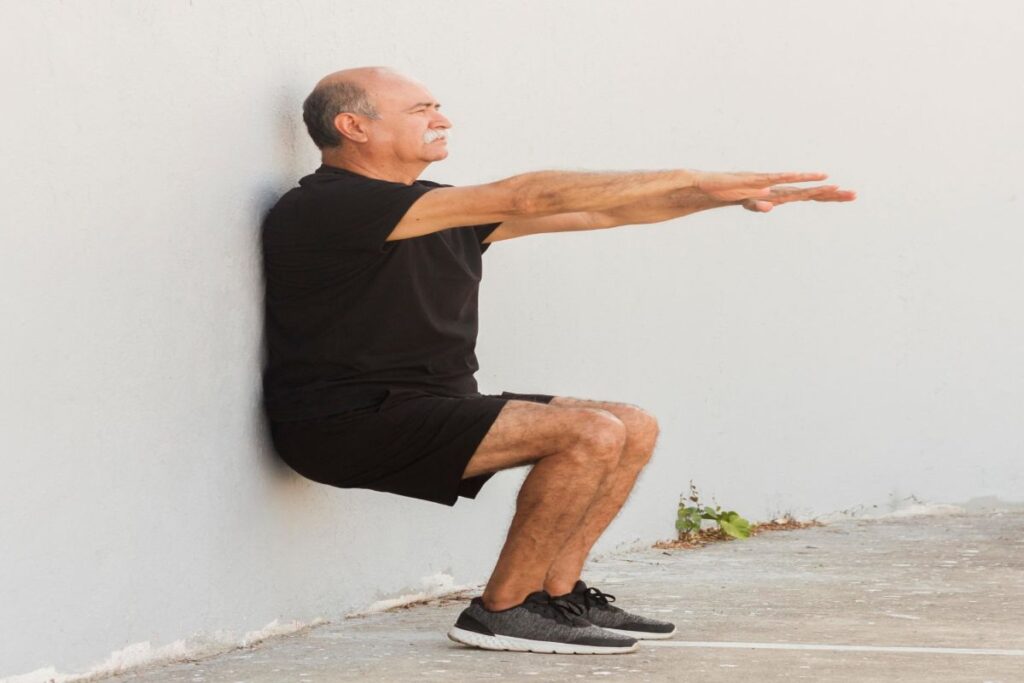
Use Support If Needed: Wall squats or holding onto a sturdy surface can help you build confidence and strength.
Track Your Progress: Keep a simple log of your hold times. Seeing improvement over weeks and months is motivating.
Listen to Your Body: Sharp pain is a warning sign. Stop immediately and rest if something feels wrong.
What Is a Squat Hold and Why Does It Matter?
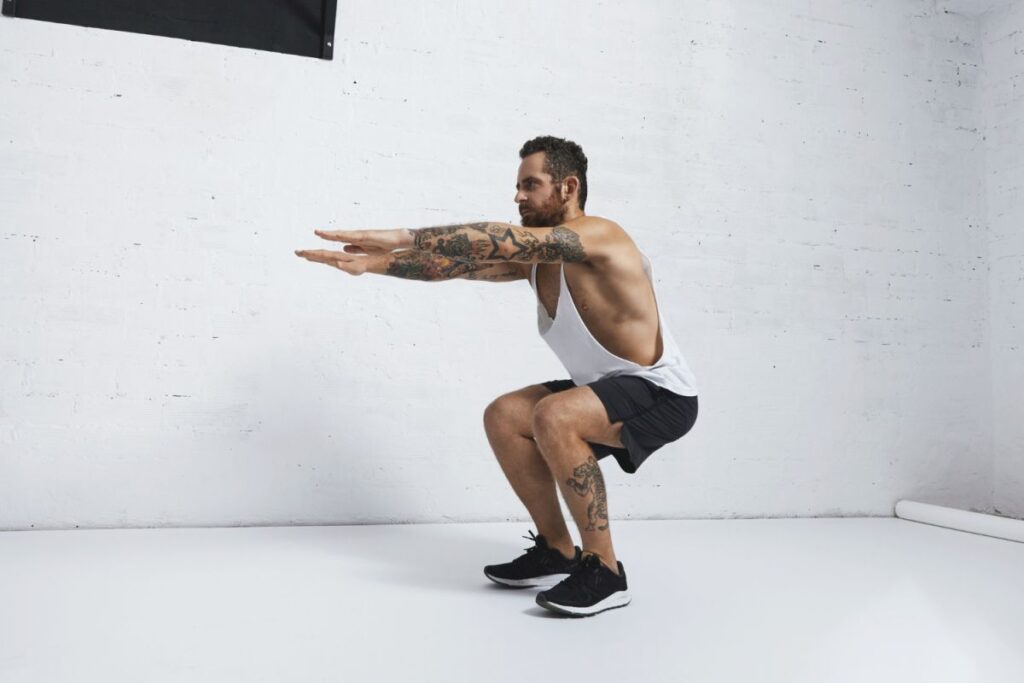
A squat hold is exactly what it sounds like. You lower yourself into a squat and stay there without moving. No bouncing, no reps, just pure static tension. This type of training is called isometric exercise, where your muscles work hard but do not change length.
So why bother with it? Holding a squat position benefits you in ways that standard squats do not fully address. It builds muscular endurance in your quads, glutes, hamstrings, and calves. It also trains your core to stay tight under pressure and teaches your joints to handle sustained loads. If you have ever wondered how long should you be able to squat without wobbling or collapsing, this test reveals where you stand.
For older adults, improving squat hold time can mean better balance and lower fall risk. For younger people, it often translates to improved athletic performance and greater control during dynamic movements.
The Science Behind Holding Squat Position Benefits
When you hold a squat, blood flow to your muscles gets restricted slightly, forcing them to adapt and grow stronger over time. This creates what has known as metabolic stress, a key driver of muscle endurance.
Your nervous system also gets a workout. Staying in a fixed position requires constant communication between your brain and muscles to maintain balance and alignment. Over time, this improves neuromuscular coordination, which helps with everything from running to lifting groceries.
Another bonus: squat holds are joint-friendly when done correctly. Unlike jumping or heavy lifting, they do not involve high-impact forces. This makes them a solid option for people recovering from injuries or dealing with joint sensitivity.
How Age Affects Your Squat Hold Time
Age plays a major role in determining how long you should be able to hold a squat. As we get older, muscle very naturally declines, a process called sarcopenia. Flexibility and joint health also tend to decrease unless you actively maintain them.
That said, age does not automatically mean weakness. People who stay active and prioritize strength training can often outperform younger, sedentary individuals. The key is setting realistic, age-appropriate goals and working toward them consistently.
Let us break down what’s typical for each age group.
Squat Hold Times for Ages 18 to 30
If you are in your 20s, your body is usually at or near peak physical capacity. Recovery is fast, muscle endurance is high, and your joints can handle a lot.
Average Goal: 90 to 120 seconds
Advanced Goal: 2 to 3 minutes or more
At this stage, you should aim to hold a bodyweight squat comfortably for at least a minute and a half. If you train regularly, hitting the two-minute mark is very achievable. Some athletes in this age range can hold a squat for five minutes or longer with dedicated practice.
Focus on building a strong foundation now. The habits you create in your 20s carry forward into later decades.
Squat Hold Times for Ages 31 to 40
Your 30s are still a strong decade, but recovery starts to slow slightly. If you have been sedentary, you might notice a dip in endurance compared to your 20s. However, with consistent training, you can maintain or even improve your performance.
Average Goal: 60 to 90 seconds
Advanced Goal: 2 minutes
At this age, how long should you be able to squat depends partly on your lifestyle. If you have stayed active, 90 seconds should feel manageable. If you are returning to fitness after a break, 60 seconds is a solid starting point.
Incorporate mobility drills and stretching into your routine. Tight hips and ankles become more common in your 30s, and addressing them early makes a big difference.
Squat Hold Times for Ages 41 to 50
In your 40s, muscle recovery takes a bit longer, and joint stiffness can creep in. However, this doesn’t mean you can’t perform well. Many people in this age group maintain impressive strength with the right training approach.
Average Goal: 45 to 75 seconds
Advanced Goal: 90 seconds to 2 minutes
If you are new to squat holds, start with shorter intervals and build gradually. Don’t compare yourself to younger lifters. Instead, track your own progress and celebrate improvements.
Warm-ups become even more important now. Spend a few minutes loosening up your hips, knees, and ankles before testing your hold time.
Squat Hold Times for Ages 51 to 60
Your 50s are a critical decade for maintaining independence and mobility. Leg strength directly affects your ability to climb stairs, garden, play with grandkids, or travel comfortably.
Average Target: 30 to 60 seconds
Advanced Target: 75 to 90 seconds
At this stage, holding the squat position benefits your balance and functional fitness more than raw strength. Even 30 seconds is meaningful if you are doing it with proper form.
Consider adding exercises like lunges and step-ups to your routine. These movements complement squat holds and keep your legs strong for daily activities.
Squat Hold Times for Ages 61 and Older
After 60, joint health and muscle preservation become top priorities. Squat holds are still valuable, but modifications may be necessary.
Average Goal: 20 to 40 seconds
Advanced Goal: 45 to 60 seconds
If you can hold a squat for 30 seconds in your 60s or beyond, you are doing well. If balance is an issue, try a wall squat or use a chair for support. The goal is to keep your muscles engaged without risking injury.
Even short holds make a difference. Research shows that just 20 seconds of static tension can help maintain muscle function and joint stability.
Squat Hold Time Benchmarks: Quick Reference Table
| Age Group | Average Goal | Advanced Goal |
| 18–30 | 90–120 seconds | 2–3+ minutes |
| 31–40 | 60–90 seconds | 2 minutes |
| 41–50 | 45–75 seconds | 90 seconds–2 minutes |
| 51–60 | 30–60 seconds | 75–90 seconds |
| 61+ | 20–40 seconds | 45–60 seconds |
How to Test Your Squat Hold Time Correctly
Testing your squat hold is simple, but technique matters. Here is how to do it right.
Stand with your feet shoulder-width apart, toes pointing slightly outward. Lower yourself until your thighs are roughly parallel to the floor. Your knees should track over your toes, not cave inward. Keep your chest up and your back straight.
Start a timer the moment you reach the bottom position. Hold as long as you can while maintaining proper form. Stop if your heels lift, your posture breaks down, or you feel sharp pain.
Write down your time and compare it to the benchmarks for your age. If you are below the average range, don’t worry. Improvement happens quickly with consistent practice.
Common Mistakes That Shorten Your Hold Time
Even experienced lifters make mistakes that limit their squat hold performance. Here are the most common ones.
Leaning Too Far Forward: This shifts weight onto your toes and strains your lower back. Keep your chest lifted and your weight centered over your midfoot.
Knees Caving Inward: Weak glutes often cause this. Focus on pushing your knees outward as you hold the squat.
Holding Your Breath: This raises blood pressure and makes you dizzy. Breathe steadily throughout the hold.
Squatting Too Shallow: Going only halfway down reduces the challenge and limits benefits. Aim for thighs parallel to the floor unless mobility issues prevent it.
How to Improve Your Squat Hold Duration
Want to add more seconds to your hold? These strategies will help.
Strengthen Your Supporting Muscles
Your quads, glutes, and hamstrings do most of the work during a squat hold. Exercises like Bulgarian split squats, step-ups, and goblet squats build strength in these areas.
Don’t skip single-leg work. Movements like single-leg deadlifts and pistol squat progressions improve balance and expose weaknesses.
Build a Strong Core
Your core keeps you stable during a squat hold. Planks, dead bugs, and Pallof presses are excellent choices. Aim for three to four core sessions per week.
A strong core also protects your lower back, which is especially important as you age.
Practice Squat Holds Regularly
You can’t improve what you don’t practice. Add squat holds to your routine two to three times per week. Start with 20 to 30 seconds and increase by five to ten seconds each week.
If you are asking how many squats should I do a day, consider swapping some reps for holds. Both have value, but holds target endurance in a unique way.
Improve Your Mobility
Tight hips, ankles, or hamstrings make holding a squat uncomfortable. Spend five to ten minutes daily on mobility drills like deep squat stretches, ankle circles, and hip openers.
Better mobility also reduces injury risk and makes squats feel more natural.
Expert Tip: Pair Squat Holds with Dynamic Squats
Fitness trainers often recommend combining squat holds with regular squats. This approach builds both endurance and explosive power.
Try this simple routine: perform 10 bodyweight squats, and then hold the bottom position for 30 seconds. Rest for one minute and repeat for three to four sets. This combo challenges your muscles in different ways and accelerates progress.
How Squat Holds Compare to Other Squat Variations
You might wonder how squat holds fit into a broader training program. They are not a replacement for traditional squats, but they are a powerful complement.
Regular squats build strength through a full range of motion. They are great for increasing muscle size and power. Squat holds, on the other hand, zero in on endurance and stability.
If you are curious about what is a good squat weight kg woman female, that’s a different metric altogether. Loaded squats test max strength, while holds test how long muscles can sustain tension. Both matter and both deserve a place in your routine.
How Squat Holds Support Daily Life
The benefits of squat holds extend far beyond the gym. Think about everyday movements: getting in and out of a car, picking something up from the floor, or kneeling to tie your shoes. All of these require the same muscles and control you develop through squat holds.
For older adults, maintaining the ability to squat and stand up without assistance is a marker of functional independence. It reduces reliance on others and lowers the risk of falls.
For younger people, strong squat holds translate to better performance in sports, hiking, cycling, and weightlifting.
Why Steps Per Day Goal by Age Isn’t Enough
Many people focus on walking as their primary fitness activity. While walking is fantastic for cardiovascular health, it does not fully address lower-body strength and endurance.
That is where squat holds come in. They target muscles that walking doesn’t emphasize. If you are hitting your steps per day goal by age but still struggle with stairs or balance, adding squat holds can fill that gap.
How Much Should I Be Able to Squat for 10 Reps?
This question often comes up alongside squat hold discussions. While hold time measures endurance, rep strength measures power and muscle capacity.
A general guideline for how much should I be able to squat for 10 reps is roughly 75% of your one-rep max. However, remember, bodyweight squat holds don’t require any external weight, making them accessible to almost everyone.
If you are just starting out, master bodyweight holds before worrying about loaded squats. Build a solid foundation first.
Adjusting Your Goals Over Time
Your squat hold goals should evolve as your fitness improves. Retest every four to six weeks to track progress. If you started at 30 seconds and now hold 50, that is a win worth celebrating.
As you age, your goals may shift from increasing time to maintaining it. That is perfectly fine. The real victory is staying active, mobile, and strong at any age.
Don’t compare yourself to others. Your fitness journey is personal, and progress looks different for everyone.
Finding Balance Between Challenge and Safety
Pushing yourself is important, but so is staying injury-free. Squat holds should feel challenging, not painful. If your knees ache or your lower back tightens during a hold, stop and reassess your form.
Consider working with a trainer or physical therapist if you are dealing with chronic pain or mobility limitations. They can help you modify movements to fit your needs.
Moving Forward with Confidence
Understanding how long you should be able to hold a squat for, according to your age, gives you a clear target to work toward. It is not about perfection. It is about building strength, staying mobile, and supporting your body through every stage of life.
Whether you are 22 and training for a marathon or 65 and working to keep up with your grandkids, squat holds offer real, measurable benefits. Start where you are, practice consistently, and watch your progress unfold. Every second you add to your hold time is a step toward a stronger, healthier version of yourself.