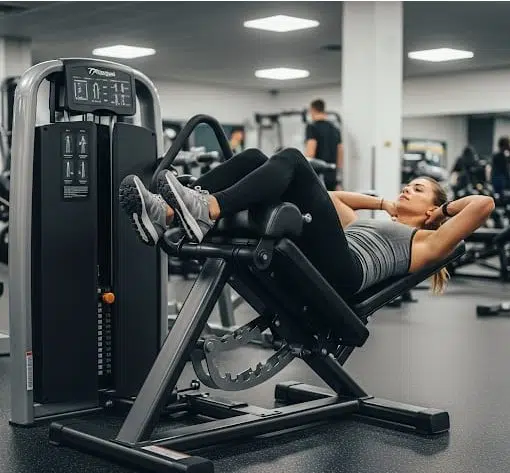
Ab Exercise Machine at the Gym | What You Need to Know Before You Start
Ab Exercise Machine at the Gym | What You Need to Know Before You Start
Most people walk up to an ab machine at the gym, pick a weight, do a few sets, and move on. However, if you’re not using these machines correctly, you’re leaving serious results on the table.
Ab exercise machines are built for one purpose: to load your core with resistance in a way that’s controlled, repeatable, and safe. Whether you’re a beginner still figuring out how to actually feel your abs working, or someone who has been training for years and hit a plateau, these machines have a place in your routine.
Here is what you actually need to understand about them.
Why the Ab Machine Works Better Than You Think
Free-weight ab work like floor crunches and sit-ups is fine, but it relies entirely on your body weight. Once that becomes easy, you have no clean way to add load without straining your neck or losing form. The ab crunch machine solves this problem directly.
You sit down, position yourself against the padded support, grab the handles, and crunch forward against a weight stack. The movement is guided, the resistance is adjustable, and your spine stays in a supported position throughout. That setup lets you progressively overload your abs the same way you would any other muscle group.
Progressive overload is the foundation of muscle development. Without it, you adapt, and then you stop growing. The ab machine gives you a straightforward way to keep increasing the challenge over time.
The Muscles You’re Targeting
The primary muscle the ab crunch machine works is the rectus abdominis. That’s the long muscle that runs vertically along the front of your stomach. It’s responsible for spinal flexion, which is the forward bending motion you perform on the machine.
Depending on the machine type and your positioning, you’ll also get some activation from the obliques and the deeper transverse abdominis, especially if you’re controlling the movement with a slow eccentric phase on the way back up.
Quick Tip:
Don’t rush through reps. The real work happens when you slow down the return phase. Let the weight pull you back in a controlled way instead of snapping up between reps. That tension is where your abs actually develop.
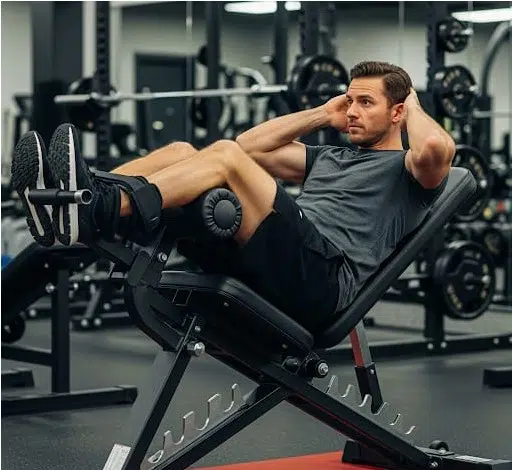
Common Ab Machines at the Gym: A Quick Comparison
| Machine | Primary Muscle Targeted | Best For | Difficulty Level |
| Ab Crunch Machine | Rectus Abdominis | Beginners to Advanced | Beginner |
| Cable Crunch (Kneeling) | Rectus Abdominis + Obliques | Intermediate to Advanced | Intermediate |
| Roman Chair / Hyperextension Bench | Lower Back + Core Stabilizers | Core balance training | Intermediate |
| Captain’s Chair (Leg Raise) | Lower Abs + Hip Flexors | Lower ab isolation | Intermediate |
| Rotary Torso Machine | Obliques | Waist definition | Beginner to Intermediate |
| Ab Roller Machine | Full Core | Functional strength | Advanced |
| Decline Bench | Rectus Abdominis | Added range of motion | Intermediate |
Use this table as a starting point when you walk into the gym. If your goal is visible abs, the crunch machine and cable crunch should anchor your sessions. If you want functional core strength that carries over to compound lifts, mix in the captain’s chair and rotary torso machine as well.
5 Things to Know Before Using an Ab Machine at the Gym
- Set the seat height correctly. If the pivot point of the machine does not align with your hip flexors, you’re not targeting your abs efficiently. Most machines have a seat adjustment for this reason. Take 30 seconds to dial it in before you start.
- Do not use your hip flexors to drive the movement. This is the most common mistake. If you feel the work mostly in your upper thighs or hips, you are pulling with the wrong muscles. Reset your position and focus on initiating the crunch from your midsection.
- Start lighter than you think you need to. A weight that feels too easy at rep one will start burning by rep 10 if your form is right. Going too heavy too fast almost always means your form breaks down and your hip flexors take over.
- Breathe out on the crunch. Exhaling as you contract helps engage your core more fully and keeps your intra-abdominal pressure managed. Holding your breath through reps is a habit worth breaking early.
- Ab machines work best as part of a broader core routine. They isolate the rectus abdominis well, but a complete core program should also include work for your obliques and stabilizers. Pair machine crunches with planks, rotational movements, or cable woodchops for a more complete result.
How to Build This Into Your Routine
Three to four sets of 12 to 20 reps on the ab crunch machine, two to three times per week, is a solid starting point. Give your abs 48 hours between sessions to recover, since they are a muscle group like any other and they need rest to grow.
If you are training at a gym in Riyadh or anywhere else with a solid equipment selection, you will often find multiple versions of this machine. Some use a weight stack; others use a cable and pulley system. The mechanics are slightly different but the principles are the same. Adjust, control the movement, and load progressively.
Once you are consistently handling heavier weights with clean form, you will notice the difference. Not just visually, but in how stable your entire body feels during compound lifts like squats and deadlifts. A strong core transfers to everything else you do in the gym.
Another popular variant is the captain’s chair
Another popular variant is the captain’s chair or vertical knee raise machine, which supports your back and forearms while you lift your legs, effectively engaging the lower abs and obliques. This machine is particularly good for those who struggle with lower back pain during traditional floor exercises.
Beyond these common types, you might encounter decline benches with leg restraints, ab rollers, and even sophisticated cable machines that can be adapted for a wide range of core exercises. Each machine offers a slightly different angle of attack, targeting various parts of the abdominal wall and obliques. This variety is a huge advantage, allowing you to diversify your core routine and prevent your muscles from adapting too quickly.
However, simply using an ab exercise machine at the gym is not a magic bullet. Proper technique remains paramount. Before you even touch the weights, it is crucial to understand the movement. For most crunch machines, the focus should be on initiating the movement from your core, not pulling with your arms or straining your neck. Imagine bringing your rib cage towards your pelvis, squeezing your abdominal muscles at the peak of the contraction. Controlled movements, both on the concentric (lifting) and eccentric (lowering) phases, are far more effective than fast, jerky reps.
Breathing is another critical component. Exhale as you contract your abs and inhale as you return to the starting position. This not only helps to stabilize your core but also ensures adequate oxygen flow to your working muscles. If you find yourself holding your breath, chances are you are using too much weight or are not focusing on the mind-muscle connection.

While the ab exercise machine at the gym offers undeniable benefits, it is important to view it as one tool in a comprehensive core training strategy. Relying solely on machines can lead to imbalances, as they often isolate specific muscles without fully engaging the entire core musculature responsible for stability and functional movement.
Incorporating exercises that challenge your core in different planes of motion, such as planks, side planks, Russian twists, and stability ball exercises, is crucial for developing a truly strong and functional core. These exercises demand more from your stabilizers and mimic real-life movements, preparing your body for a wider range of activities.
Here is a quick reference guide to common ab machines and their functions:
| Machine Name | Primary Muscles Targeted |
| Ab Crunch Machine | Rectus Abdominis |
| Captain’s Chair | Lower Abs, Obliques |
| Decline Bench | Entire Abdominal Wall |
| Cable Machine (with rope) | Obliques, Rectus Abdominis |
| Ab Roller | Core Stabilizers, Abs |
Ab Exercise Machine at the gym
Moreover, nutrition plays a significant role in revealing those hard-earned abs. Even with the most dedicated machine workouts, a layer of body fat can obscure your definition. A balanced diet rich in lean protein, complex carbohydrates, healthy fats, and plenty of vegetables is essential for reducing body fat and allowing your abdominal muscles to shine through. Consistency in both your training and your diet is the ultimate key to success.
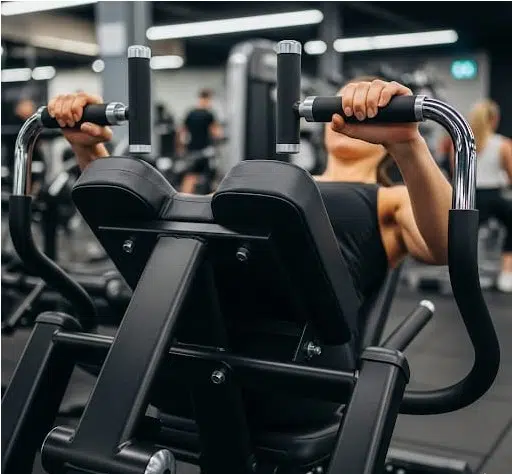
For those new to the gym environment, do not hesitate to ask a certified personal trainer for guidance on how to use the ab exercise machine at the gym correctly. They can assess your form, suggest appropriate weights, and help you design a well-rounded core routine that aligns with your fitness goals. There are many gyms in your city offering introductory sessions with trainers, which can be an invaluable resource.
In conclusion, the ab exercise machine at the gym is a valuable asset in your fitness arsenal. It offers a structured, effective way to target and strengthen your abdominal muscles, contributing to improved posture, reduced risk of injury, and a more aesthetically pleasing physique. By understanding its proper use, integrating it with a diverse range of core exercises, and maintaining a healthy diet, you can unlock the full potential of these machines and achieve the strong, defined core you desire.
Therefore, next time you are at your local gym, do not shy away from exploring the various ab machines your core will thank you.