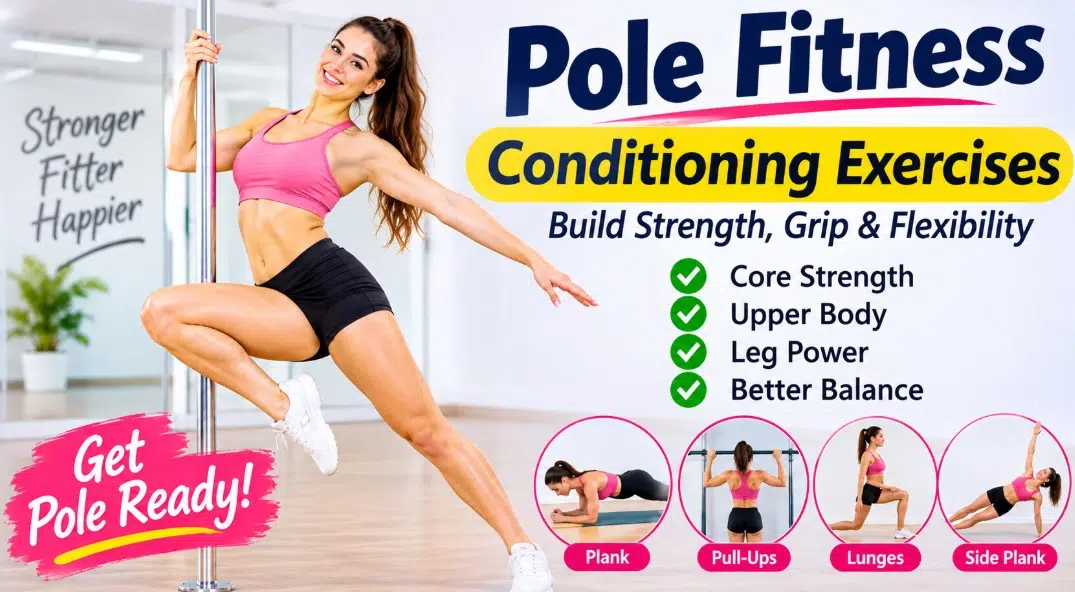
Pole Fitness Conditioning Exercises || Build Strength Grip, Flexibility and || Core Control
Pole Fitness Conditioning Exercises || Build Strength Grip, Flexibility and || Core Control
Pole fitness is a physically demanding activity that combines strength training, balance, flexibility and body coordination. Whether you are new to pole dancing or already practising basic spins and climbs, preparing your muscles before attempting difficult movements makes a meaningful difference. Pole Fitness Conditioning Exercises help develop the physical abilities needed to support your body weight, maintain controlled positions and move confidently around the pole. You do not need to begin with advanced tricks or expensive equipment.
Simple exercises such as planks, push-ups, resistance band rows and glute bridges provide a useful starting point. A well-planned conditioning routine also gives your muscles time to adapt gradually. At BestGymExercises.com, our focus is on practical fitness guidance, so this guide explains which exercises to perform, how to organise your training and how to improve strength safely at home or in the gym.
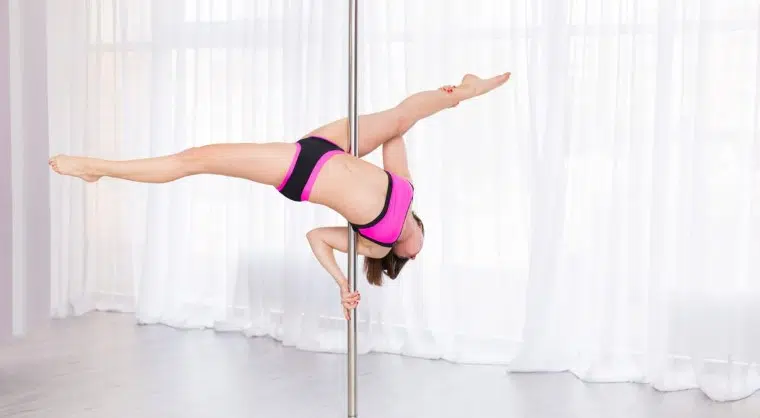
Key Takeaways
- Build upper-body strength to support pulling, pushing and controlled pole movements.
- Train your core to improve balance, stability and body positioning.
- Develop grip strength gradually instead of relying on your hands alone.
- Include flexibility and mobility exercises alongside resistance training.
- Allow enough recovery between demanding workouts to support muscle development.
What Is Pole Fitness Conditioning?
Pole conditioning involves preparing your body for the physical demands of pole dancing. It combines exercises for the shoulders, arms, back, abdominal muscles, hips and legs. These movements help develop the strength and control needed for climbing, holding positions, changing direction and maintaining balance.
Unlike a routine focused entirely on flexibility or cardio, conditioning works on several physical abilities together. For example, a pole climb requires pulling strength, abdominal control, leg coordination and sufficient grip. Training these areas separately before combining them makes learning new movements more manageable.
How Conditioning Supports Better Performance
Good preparation helps you approach pole training with greater control. Stronger shoulders support upper-body movements, while abdominal strength helps prevent unnecessary swinging. Hip and leg strength also contribute to controlled transitions and stable positioning.
Conditioning is not a replacement for learning technique from a qualified instructor. It is a supporting part of your training. Beginners benefit from mastering basic strength movements before attempting inversions, advanced spins or unsupported holds.
Why Conditioning Matters Before Pole Training
Pole dancing places different demands on your body depending on the movement being performed. Some positions require pulling your weight upward, while others involve pushing away from the pole or maintaining a fixed body position. Without adequate preparation, beginners often struggle with grip, shoulder control and core stability.
A consistent strength programme helps your body adapt to these demands. It also gives you a chance to identify weaker areas before attempting more challenging skills. If your shoulders tire quickly, for example, you might need additional upper-body training before increasing the difficulty of your pole sessions.
Reducing Unnecessary Training Stress
Muscles, tendons and joints need time to adapt to unfamiliar movements. Increasing training intensity too quickly often leads to excessive soreness or poor technique. Start with manageable repetitions and gradually increase the workload.
Warm up before each session and avoid practising difficult movements when you are exhausted. If you experience sharp pain, numbness or unusual joint discomfort, stop the exercise and seek appropriate professional advice.
Essential Muscle Groups Used in Pole Fitness
1. Core Muscles
Your abdominal muscles, obliques and deeper trunk muscles help stabilise your body. They are involved in knee lifts, controlled leg movements and maintaining different positions.
A strong core also helps you manage movement without excessive swinging. Planks, dead bugs and hollow body holds are useful exercises for developing this ability.
2. Shoulders, Arms and Back
The shoulders, biceps, triceps and upper-back muscles contribute to pulling and pushing movements. Your back muscles are particularly important when learning controlled climbs and other movements involving upper-body support.
Rows, assisted pull-ups and push-ups develop strength in these areas. Shoulder stability exercises are equally important because strength without good movement control is not enough for demanding pole positions.
3. Grip and Forearms
Grip strength helps you maintain contact with the pole. Your forearms and hand muscles work during many movements, particularly when holding your body in position.
Start with light grip exercises and controlled resistance training. Avoid excessive squeezing or prolonged hanging sessions when your hands and forearms are already tired.
4. Hips and Legs
Your glutes, quadriceps, hamstrings and inner-thigh muscles help with leg positioning, balance and controlled movement. Lunges, bridges and mobility exercises prepare these muscles for different pole techniques.
12 Best Pole Fitness Conditioning Exercises
The following Pole Fitness Conditioning Exercises cover the major muscle groups involved in pole training. Most require little equipment and are suitable for beginners when performed with correct technique.
1. Forearm Plank
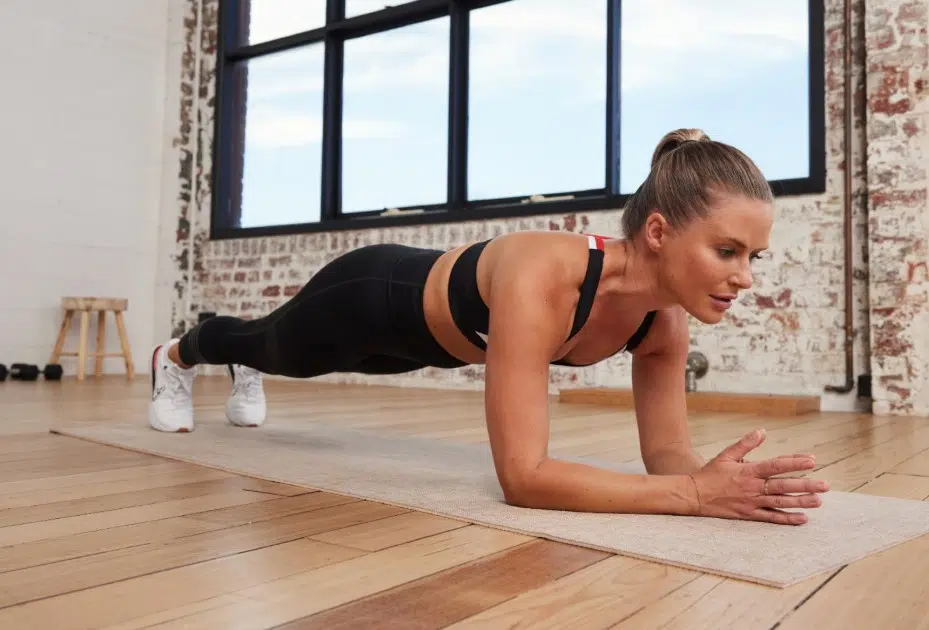
Main muscles: Abdominals, shoulders and back.
Start on your forearms and toes with your elbows positioned below your shoulders. Keep your body in a straight line from your head to your heels. Tighten your abdominal muscles and avoid allowing your lower back to sag.
Hold the position for 15 to 30 seconds when starting. Complete two or three rounds, resting between attempts. Increase the holding time gradually as your technique improves.
Quick Tip: Focus on maintaining a steady body position rather than holding the plank for as long as possible.
2. Push-Ups
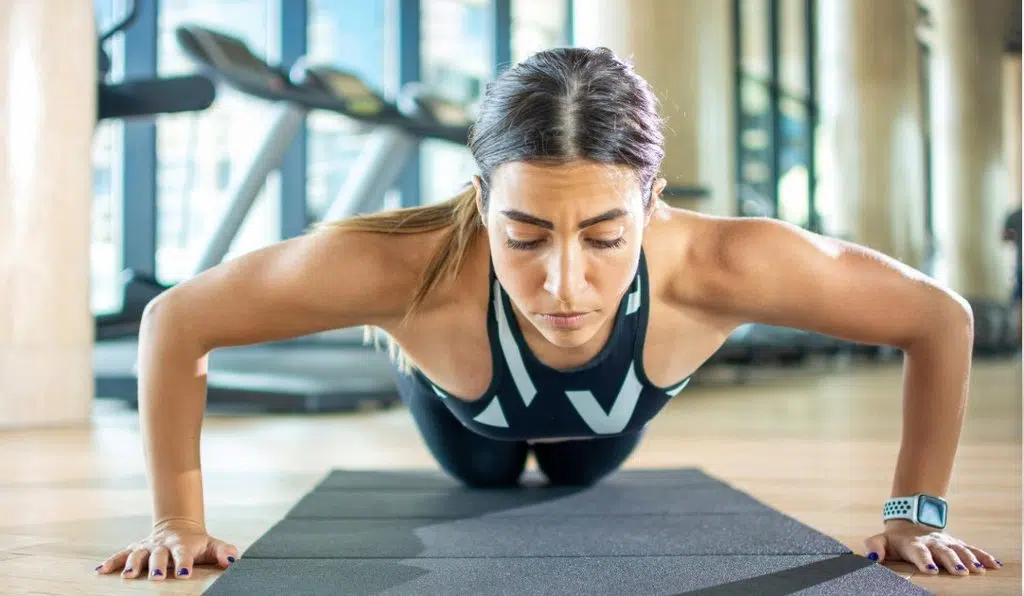
Main muscles: Chest, shoulders and triceps.
Begin in a high plank position with your hands slightly wider than shoulder width. Lower your chest towards the floor while keeping your elbows at a comfortable angle. Push through your hands to return to the starting position.
Beginners who struggle with standard push-ups should start with wall push-ups or incline push-ups using a stable bench. Perform two sets of six to ten controlled repetitions.
Push-ups help develop the pushing strength required for upper-body support and controlled transitions.
3. Assisted Pull-Ups
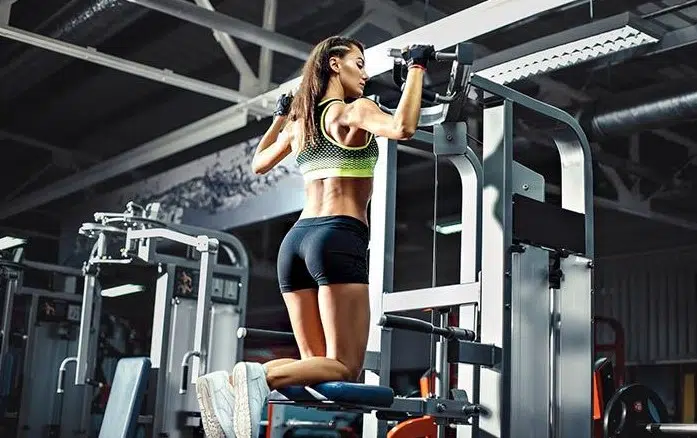
Main muscles: Back, biceps and forearms.
Use an assisted pull-up machine or a resistance band designed for pull-up assistance. Hold the bar with a comfortable grip and pull your body upwards without swinging. Lower yourself slowly and maintain control.
Start with two sets of five to eight repetitions. If you do not have access to a pull-up station, resistance band rows provide another option for strengthening the back.
Never jump into unsupported hanging movements if your shoulders or grip are not prepared.
4. Dead Bugs
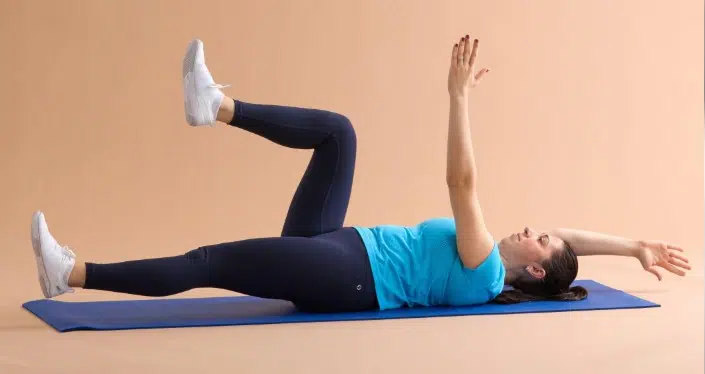
Main muscles: Deep abdominal muscles and hip flexors.
Lie on your back with your arms pointing towards the ceiling and your knees bent at 90 degrees. Slowly extend your right arm and left leg while keeping your lower back gently supported against the floor. Return to the starting position and switch sides.
Complete eight to ten repetitions on each side. Move slowly and avoid arching your back.
Dead bugs improve coordination between your upper and lower body, which is useful when practising controlled leg movements.
5. Glute Bridges
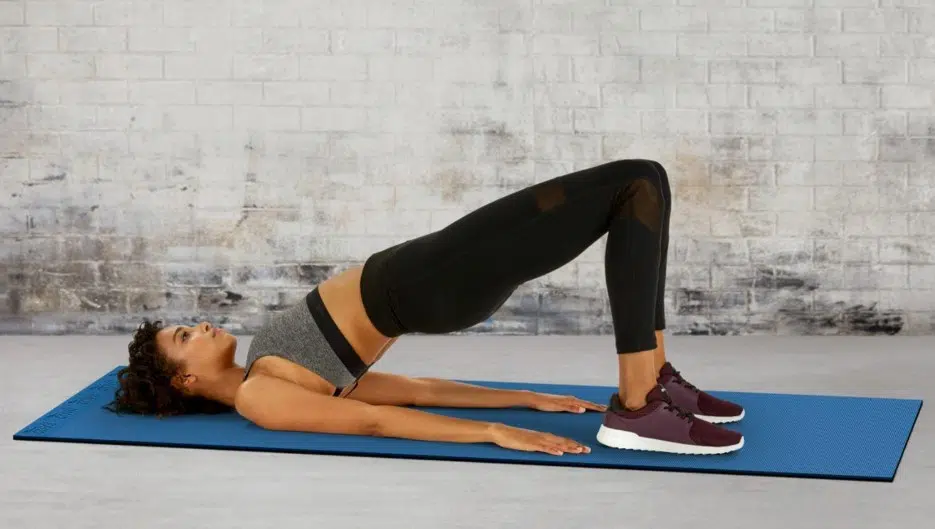
Main muscles: Glutes, hamstrings and lower-body stabilisers.
Lie on your back with your knees bent and feet flat on the floor. Place your arms beside your body. Tighten your glutes and lift your hips until your shoulders, hips and knees form a comfortable line.
Pause briefly at the top before lowering slowly. Perform two or three sets of 12 repetitions.
Glute bridges strengthen the muscles around your hips and help develop lower-body control. Avoid pushing your lower back into excessive extension.
6. Resistance Band Rows
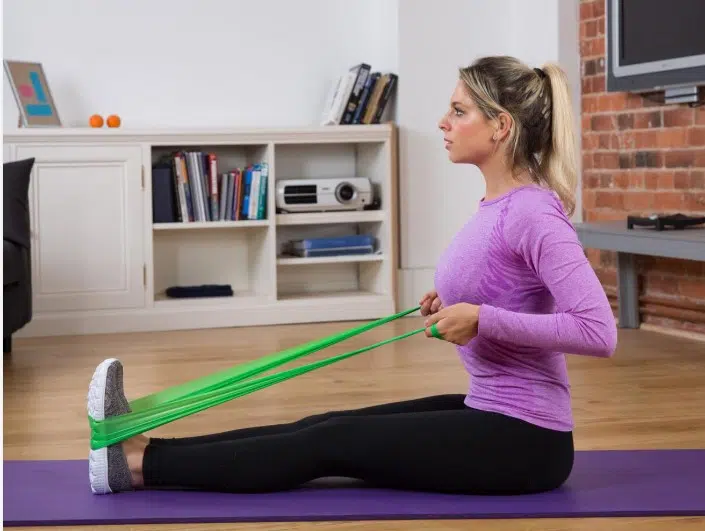
Main muscles: Upper back, biceps and rear shoulders.
Attach a resistance band to a secure anchor point at chest height. Hold both ends with your arms extended. Pull the band towards your torso while drawing your shoulder blades gently together.
Return slowly to the starting position. Complete two or three sets of 10 to 12 repetitions.
These are useful Pole fitness strength exercises because they train the pulling muscles without requiring a full pull-up. Check the band and anchor before every session.
7. Hollow Body Holds
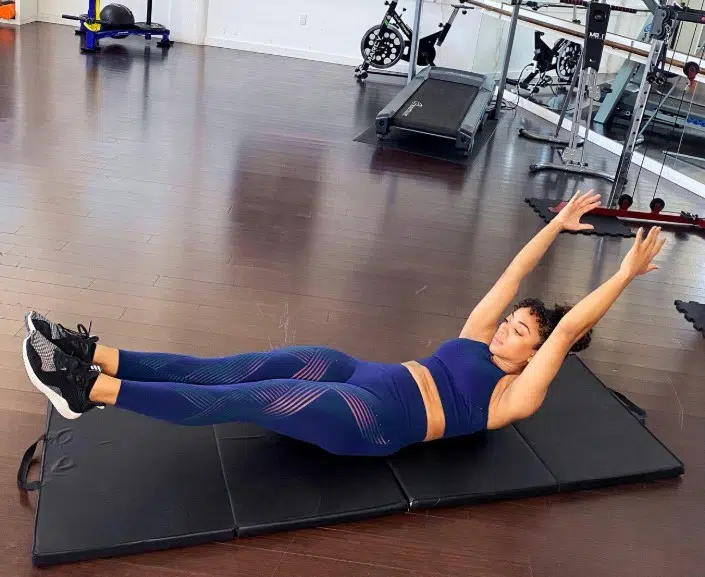
Main muscles: Abdominals and hip flexors.
Lie on your back and gently press your lower back towards the floor. Lift your shoulders and legs slightly while keeping your arms extended overhead or beside your body.
Hold for 10 to 20 seconds. Beginners should bend their knees or keep their arms beside their hips to reduce the difficulty.
Complete two or three rounds. Stop if your lower back begins lifting away from the floor.
8. Scapular Push-Ups
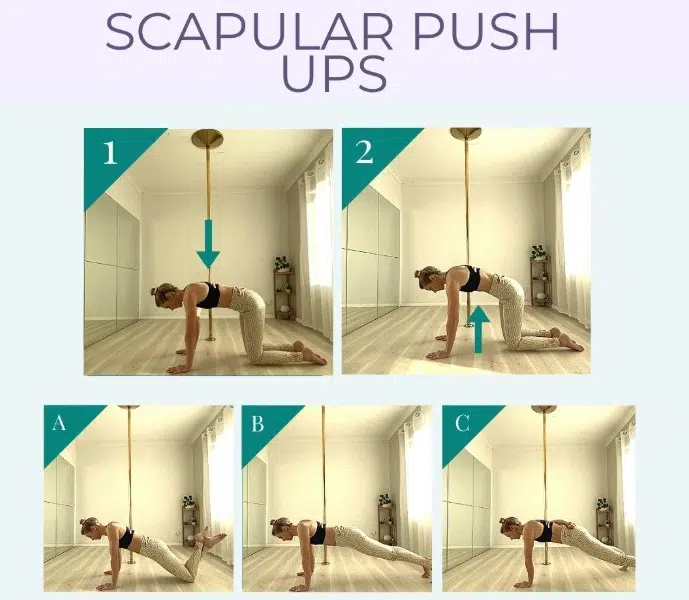
Main muscles: Shoulder stabilisers and upper back.
Start in a high plank position with your arms straight. Without bending your elbows, allow your chest to move slightly towards the floor as your shoulder blades come together. Then push the floor away to spread your shoulder blades.
Perform eight to twelve controlled repetitions.
This exercise teaches you to move and control your shoulder blades. It is useful preparation for activities involving pushing, pulling and upper-body support.
9. Hanging Knee Raises
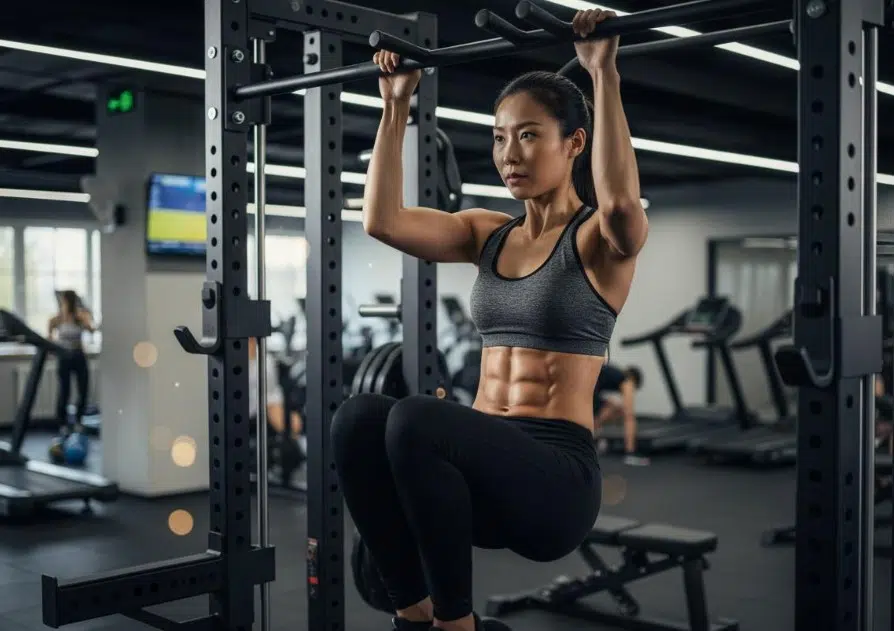
Main muscles: Abdominals, hip flexors and forearms.
Hold a stable pull-up bar with both hands and allow your body to hang only if you have sufficient shoulder and grip strength. Bend your knees and lift them towards your chest without swinging.
Lower your legs slowly. Start with two sets of five repetitions.
If hanging is too difficult, perform lying knee raises on a mat. The goal is controlled abdominal movement rather than lifting your knees as high as possible.
10. Reverse Lunges
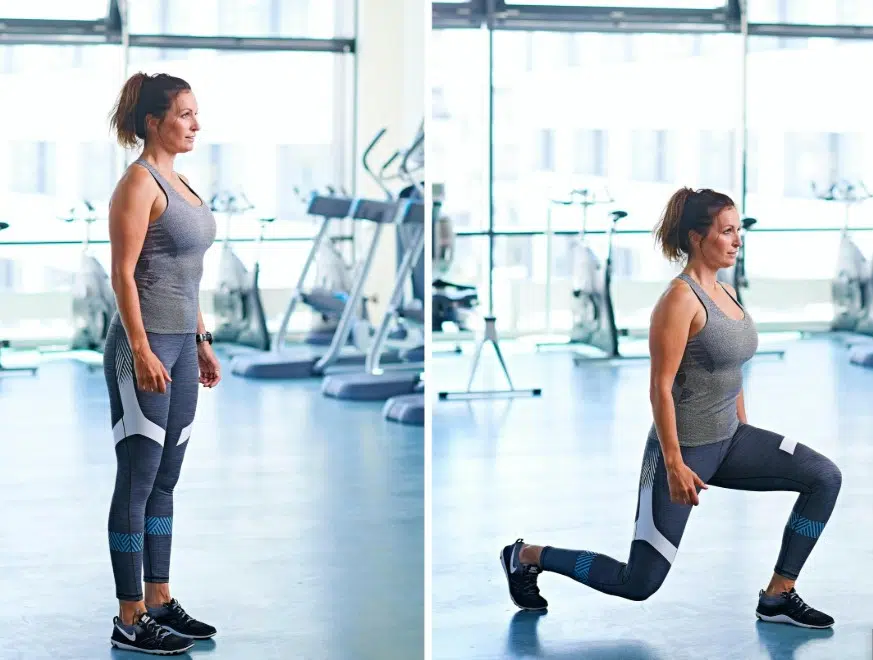
Main muscles: Quadriceps, glutes and hamstrings.
Stand with your feet hip-width apart. Step backwards with one foot and lower your body until both knees bend comfortably. Push through your front foot to return to standing.
Perform eight to ten repetitions on each side.
Reverse lunges help develop leg strength and balance. Hold a stable support if needed, particularly when learning the movement.
11. Side Planks
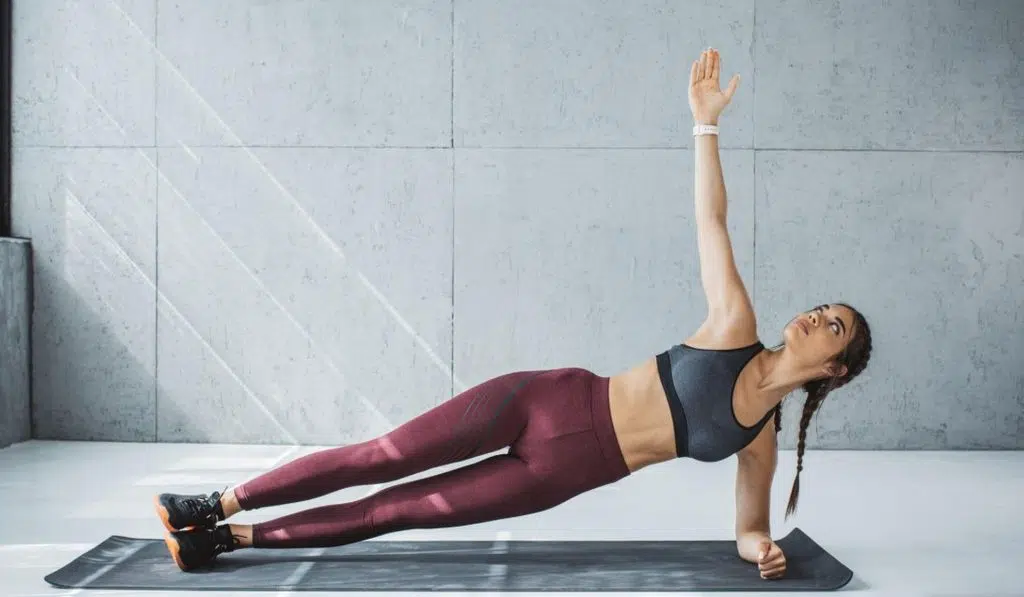
Main muscles: Obliques, shoulders and hip stabilisers.
Lie on one side with your elbow below your shoulder. Lift your hips while keeping your body aligned. Hold for 15 to 25 seconds before changing sides.
Beginners should keep their knees bent and supported on the floor. Complete two rounds on each side.
Side planks strengthen the muscles responsible for controlling sideways movement. This is useful when developing better body positioning.
12. Seated Straddle Stretches
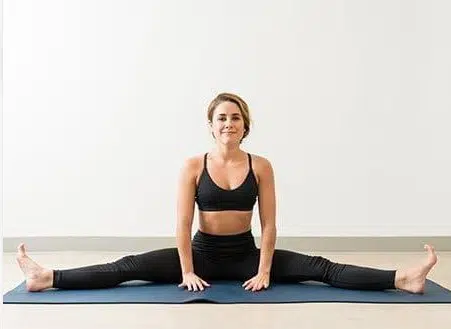
Main muscles: Inner thighs and hip mobility.
Sit on the floor with your legs extended comfortably into a wide V shape. Keep your spine long and place your hands on the floor in front of you. Lean forward gently without forcing your body into a deeper stretch.
Hold for 20 to 30 seconds and repeat twice.
Move gradually and avoid bouncing. Flexibility develops over time, so a comfortable stretch is more useful than forcing a position.
Pole Conditioning Exercises Comparison Table
The table below gives you a simple overview of each movement and its main purpose.
| Exercise | Main training focus | Beginner target |
| Forearm plank | Core stability | 15 to 30 seconds |
| Push-ups | Chest and arms | 6 to 10 reps |
| Assisted pull-ups | Back and grip | 5 to 8 reps |
| Dead bugs | Core coordination | 8 to 10 per side |
| Glute bridges | Hip strength | 12 reps |
| Band rows | Back strength | 10 to 12 reps |
| Hollow holds | Abdominal endurance | 10 to 20 seconds |
| Scapular push-ups | Shoulder control | 8 to 12 reps |
| Knee raises | Core and grip | 5 reps |
| Reverse lunges | Leg strength | 8 to 10 per side |
| Side planks | Oblique strength | 15 to 25 seconds |
| Straddle stretches | Hip mobility | 20 to 30 seconds |
Repetitions are starting suggestions rather than fixed requirements. Adjust them according to your fitness level and movement quality.
Beginner Pole Dance Conditioning Routine
A beginner pole dance conditioning routine should focus on consistency rather than intensity. Two or three conditioning sessions each week provide a reasonable starting point for many people. Allow recovery time between demanding sessions.
Start with five minutes of gentle movement, such as walking, arm circles and controlled leg swings. Then select four or five exercises from the list above. Finish with comfortable mobility work.
Example Weekly Training Schedule
| Day | Training activity |
| Monday | Full-body conditioning |
| Tuesday | Rest or gentle walking |
| Wednesday | Beginner pole technique |
| Thursday | Rest and mobility |
| Friday | Core and upper-body strength |
| Saturday | Light flexibility practice |
| Sunday | Rest |
You should adjust the schedule according to your existing fitness level, work commitments and recovery. Beginners who are completely new to exercise should start with two short sessions each week.
Intermediate Pole Dance Conditioning Workout
Once basic exercises become comfortable, you can gradually increase their difficulty. An intermediate pole dance conditioning workout should include more controlled pulling movements, longer core holds and additional single-leg exercises.
For example, progress from incline push-ups to floor push-ups. Increase resistance during rows or perform slower repetitions. Add controlled knee raises when your grip and shoulder strength are ready.
Avoid increasing repetitions, resistance and training frequency at the same time. Choose one area to progress and monitor how your body responds.
Example Intermediate Session
- Push-ups: 3 sets of 10 repetitions.
- Resistance band rows: 3 sets of 12 repetitions.
- Forearm plank: 3 sets of 30 seconds.
- Reverse lunges: 3 sets of 10 per leg.
- Side planks: 2 sets of 25 seconds per side.
- Dead bugs: 2 sets of 12 per side.
Rest for approximately 45 to 90 seconds between sets. Take longer breaks if your technique starts to deteriorate.
Pole Conditioning Gym Workout
A gym provides additional equipment for developing strength. You do not need a dedicated pole fitness facility to train the supporting muscles.
A useful Pole conditioning gym workout includes lat pulldowns, seated cable rows, assisted pull-ups, chest presses and controlled leg exercises. These movements train similar muscle groups used during pole practice.
| Gym exercise | Suggested sets | Repetitions |
| Lat pulldown | 2 to 3 | 10 to 12 |
| Seated cable row | 2 to 3 | 10 to 12 |
| Chest press | 2 | 8 to 10 |
| Assisted pull-up | 2 | 5 to 8 |
| Leg press | 2 to 3 | 10 to 12 |
| Cable woodchop | 2 | 10 per side |
Select a resistance that allows you to finish every repetition with good technique. If you are new to gym equipment, ask a qualified fitness professional to demonstrate correct setup and movement.
Home Conditioning Without a Pole
You do not need a pole installed at home to prepare your body. Many pole dance conditioning exercises use bodyweight movements or inexpensive resistance equipment.
A floor mat, resistance band and stable exercise space are enough for a basic routine. You might also use a light pair of dumbbells if you already own them.
Try combining planks, push-ups, bridges, lunges and resistance band rows into a 25-minute session. Perform each movement at a comfortable pace and rest when needed.
Important: Do not use an unstable door, furniture or improvised overhead support for hanging exercises. Install a home pole according to the manufacturer’s instructions and seek professional guidance before attempting advanced movements.
Flexibility and Mobility for Pole Training
Strength is only one part of pole fitness. Good mobility helps you move through positions with better control and comfort. Focus on the shoulders, hips, hamstrings and upper back.
Before exercise, use dynamic movements such as arm circles, gentle leg swings and shoulder rotations. Save longer static stretches for after training or a separate flexibility session.
Improving Shoulder Mobility
Shoulder circles, wall slides and gentle chest stretches help maintain comfortable shoulder movement. Avoid forcing your arms into positions that cause pinching or pain.
Improving Hip Flexibility
Hip flexor stretches, gentle lunges and seated straddle stretches help develop lower-body mobility. Work within a comfortable range and increase the depth gradually.
Remember that flexibility varies between individuals. You do not need to achieve advanced splits to start learning basic pole movements.
How to Build a Consistent Pole Conditioning Routine
A useful programme should fit your current abilities and give you enough time to recover. Start with manageable sessions and keep a simple record of your exercises, repetitions and holding times.
For example, if you hold a plank for 15 seconds during your first session, aim to improve your control before increasing the duration. Once the movement feels stable, add five seconds or choose a slightly more challenging variation.
Consistency matters more than completing a difficult workout once and then avoiding exercise for several weeks.
Common Pole Fitness Training Mistakes
1. Attempting Advanced Moves Too Early
Inversions, hands-free movements and complex combinations require preparation and instruction. Learn the basics before progressing.
2. Ignoring Shoulder Stability
Strong arms alone do not guarantee safe upper-body movement. Include shoulder control exercises and avoid training through pain.
3. Training Grip Until Exhaustion
Excessive grip work can fatigue the forearms and affect your ability to hold the pole securely. Use manageable sets and allow recovery.
4. Skipping Warm-Ups
Cold muscles and joints are not prepared for demanding activity. Begin with gentle movement and gradually increase intensity.
5. Neglecting Rest Days
Your muscles adapt between workouts. Repeating intense sessions without sufficient recovery often affects performance and exercise quality.
Equipment and Budget: What Do You Need?
You do not need to purchase expensive equipment to begin general conditioning. Start with items that support safe and consistent exercise.
| Equipment | Purpose | Budget guidance |
| Exercise mat | Floor exercises | Entry-level options |
| Resistance bands | Rows and assisted exercises | Affordable options |
| Light dumbbells | Additional resistance | Optional |
| Water bottle | Hydration | Basic requirement |
| Grip aid | Hand moisture management | Check product suitability |
For example, a $25 starter budget might cover a basic resistance band set or a simple exercise mat, depending on local prices. You do not need to buy everything immediately.
If you plan to purchase a home pole, check the ceiling structure, installation requirements, product specifications and safety instructions. A professional installation assessment is worthwhile when you are unsure about your space.
Is Pole Fitness Good Exercise?
Many people ask whether Pole fitness good exercise is an appropriate description. Pole fitness combines resistance-based movement, balance, coordination and flexibility work. Depending on the session, it also provides cardiovascular activity.
It trains several muscle groups through bodyweight support and controlled movement. However, the physical demands vary considerably between beginner classes and advanced routines.
It is also worth remembering that pole fitness is not suitable for every individual or every fitness goal. People returning from injury or living with joint limitations should seek guidance from an appropriate healthcare professional before starting demanding training.
Quick Tips for Better Training Results
- Train consistently rather than relying on occasional intense workouts.
- Keep your movements slow enough to maintain control.
- Record your repetitions and holding times.
- Use resistance bands to support weaker movements.
- Practise both sides of your body.
- Hydrate before and after exercise.
- Stop when pain or unusual discomfort develops.
- Give demanding muscle groups time to recover.
Quick Tip: If you struggle with a particular pole movement, identify the physical skill involved. For example, difficulty holding your knees up might indicate a need for more abdominal strength and grip preparation.
Expert Tip: Build your training around movement quality. A controlled five-repetition set is more useful than ten rushed repetitions performed with poor posture. For new pole skills, work with a qualified instructor who understands spotting, equipment checks and safe progressions.
Frequently Asked Questions
1. How Often Should Beginners Practise Pole Conditioning?
Two or three conditioning sessions per week are a reasonable starting point for many beginners. Keep sessions manageable and leave recovery time between demanding workouts. If you also attend pole classes, adjust your strength sessions to avoid excessive fatigue.
2. Do You Need Upper-Body Strength Before Starting Pole Fitness?
You do not need advanced upper-body strength to begin a beginner class. However, developing basic shoulder, arm and back strength helps prepare you for pulling and supporting movements. Wall push-ups, resistance band rows and light strength exercises are useful starting options.
3. How Long Does It Take to Improve Grip Strength?
Progress differs according to your starting fitness, training frequency and recovery. Some beginners notice improvements after several weeks of consistent practice, while others need more time. Train grip gradually and avoid prolonged hanging when your forearms are fatigued.
4. Are Pole Conditioning Exercises Suitable for Home Workouts?
Yes. Many conditioning movements, including planks, push-ups, lunges, bridges and dead bugs, require little or no equipment. Resistance bands provide additional options. However, practising pole tricks at home requires properly installed equipment and suitable safety precautions.
5. Should You Do Strength Training or Flexibility Training First?
Both are useful, but their timing matters. Begin your session with a general warm-up and dynamic mobility exercises. Complete strength training while your muscles are fresh, then include comfortable static stretches afterwards. Separate flexibility sessions are another option.
Final Thoughts: Prepare Your Body for Better Pole Training
Developing strength, flexibility, balance and coordination takes time. The best approach is to start with manageable movements and gradually increase the challenge as your technique improves. Include core exercises, pulling movements, shoulder stability work and lower-body training in your weekly schedule. Pay attention to recovery and avoid rushing into advanced pole tricks. The right preparation makes training more structured and helps you understand which physical skills need attention. Use these Pole Fitness Conditioning Exercises as a starting point, track your progress and seek qualified instruction when learning new techniques. Consistent practice and sensible progression will help you build a stronger foundation for pole fitness.